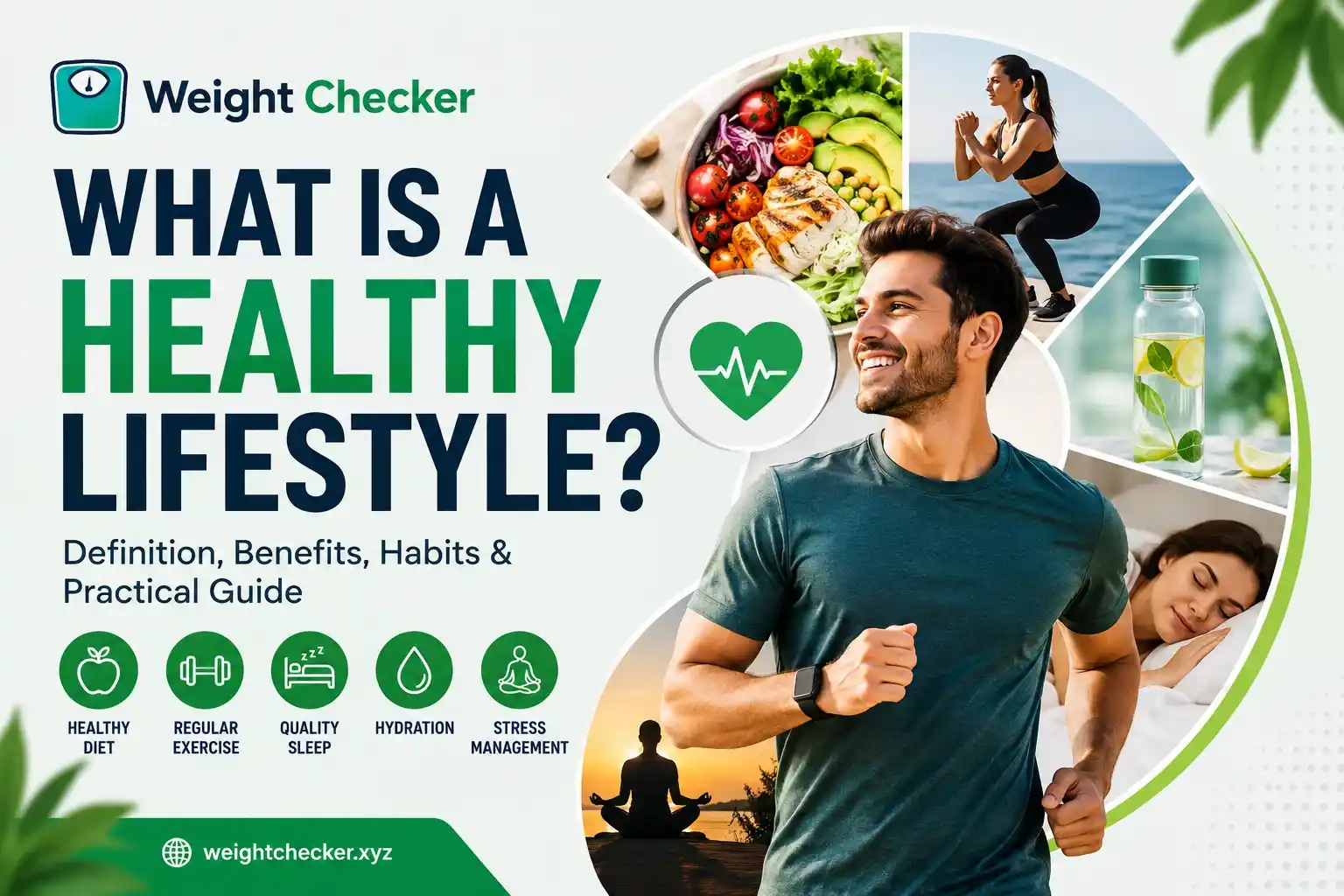
A healthy lifestyle is a pattern of everyday choices that supports your physical health, mental well being, energy, fitness, and long-term quality of life. It generally includes eating a balanced diet, staying physically active, getting enough sleep, drinking enough fluids, maintaining a healthy body weight, managing stress, and avoiding harmful habits.
A healthy lifestyle does not mean following a perfect diet or exercising intensely every day. Instead, it is about building realistic habits that you can maintain consistently.
For Weight Checker, healthy living connects naturally with nutrition, weight management, fitness, hydration, body composition, and health calculations. Your calorie, protein, water-intake, BMI, BMR, TDEE, and other calculators can help readers understand their individual needs while they build healthier routines.
Quick answer: A healthy lifestyle means consistently making choices that support your physical and mental well being, including nutritious eating, regular movement, adequate sleep, hydration, stress management, and healthy weight management habits.
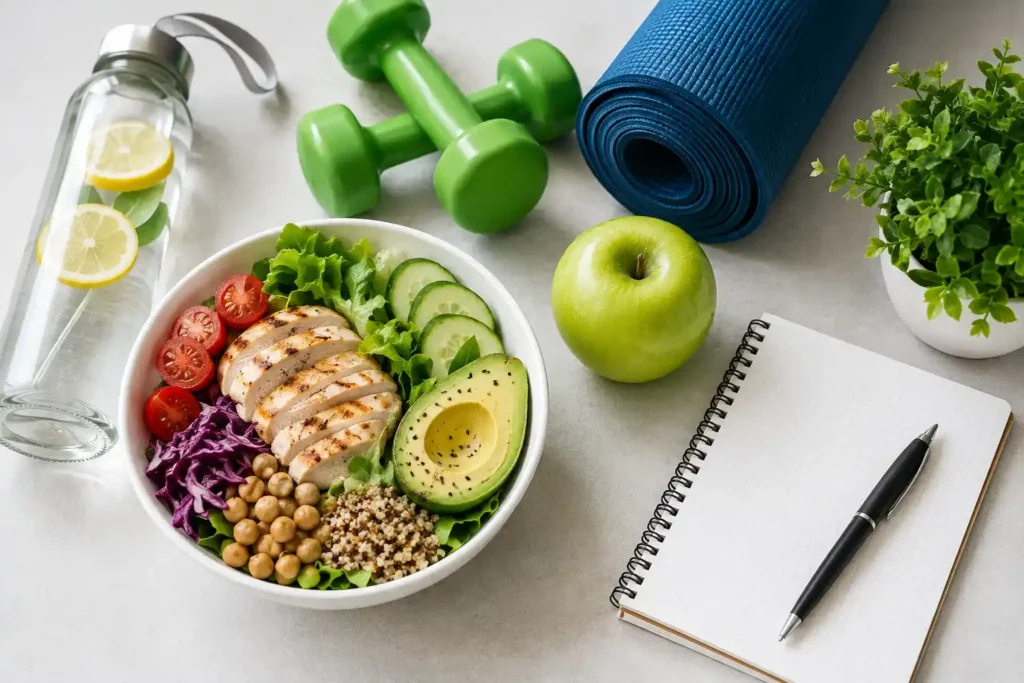
Why Is a Healthy Lifestyle Important?
Your daily habits can influence your energy, fitness, body composition, sleep, mood, and overall health. Healthy eating patterns and regular physical activity can also help people achieve and maintain a healthy weight.
A healthy lifestyle can help you:
- Support a healthy body weight
- Improve physical fitness and strength
- Maintain better energy throughout the day
- Support cardiovascular health
- Improve sleep quality
- Support mental and emotional well being
- Build stronger everyday habits
- Reduce the risk of some chronic diseases
- Improve overall quality of life
Healthy living is best viewed as a long term process rather than a short-term diet or fitness challenge.
8 Key Parts of a Healthy Lifestyle
A healthy lifestyle is made up of several interconnected habits. Focusing on only one area such as exercise while ignoring sleep, nutrition, or stress may make it harder to achieve sustainable results.
1. Eat a Balanced and Nutritious Diet
Nutrition is one of the foundations of healthy living. A balanced eating pattern provides your body with energy, protein, vitamins, minerals, fiber, healthy fats, and carbohydrates.
Try to include a variety of:
- Fruits and vegetables
- Whole grains
- Beans and legumes
- Lean sources of protein
- Fish, poultry, eggs, or other protein-rich foods
- Nuts and seeds
- Dairy or suitable alternatives
- Healthy sources of unsaturated fats
WHO recommendations emphasize eating a variety of foods, including fruits, vegetables, whole grains, legumes, and other nutrient-rich foods, while limiting excessive amounts of salt, added sugars, and unhealthy fats.
Does healthy eating mean avoiding all unhealthy foods?
No. A healthy diet does not have to be perfect.
The goal is to make nutrient-dense foods the foundation of your diet while keeping highly processed foods, sugary drinks, and foods high in added sugar, salt, or unhealthy fats more limited.
2. Stay Physically Active
Regular physical activity is another major part of a healthy lifestyle.
Physical activity includes more than going to the gym. Walking, cycling, sports, household activities, dancing, swimming, and structured workouts can all contribute to your daily movement.
Exercise can help support:
- Cardiovascular fitness
- Muscle strength
- Bone health
- Weight management
- Mobility
- Energy levels
- Sleep
- Mental well-being
Physical activity is broadly defined as bodily movement that requires energy expenditure, while exercise is a planned and structured form of physical activity.
Simple ways to become more active
If you are currently inactive, start gradually:
- Walk more during the day.
- Take the stairs when practical.
- Go for short walks after meals.
- Try beginner strength training.
- Add cycling, swimming, or sports you enjoy.
- Break up long periods of sitting.
- Increase your activity gradually.
The best exercise routine is one that you can perform consistently.
3. Get Enough Quality Sleep
Sleep is an important part of overall health and recovery.
Poor sleep can make it harder to maintain healthy habits, manage energy, concentrate, and recover from physical activity.
Practical sleep habits include:
- Keep a relatively consistent sleep schedule.
- Create a relaxing bedtime routine.
- Keep your sleeping environment comfortable.
- Limit stimulating activities close to bedtime.
- Exercise regularly, but do not sacrifice sleep to exercise.
The CDC notes that nutrition, physical activity, and sleep are important components of physical health.
4. Drink Enough Water and Stay Hydrated
Hydration is another important component of healthy living.
Water is involved in many normal body functions, and fluid needs can vary depending on factors such as activity, climate, diet, and individual circumstances.
Instead of assuming everyone needs exactly the same amount of water, consider your personal needs and daily activity.
You can use the Weight Checker Water Intake Calculator to estimate your daily water needs and use the result as a practical starting point.
Healthy hydration habits
- Drink water regularly throughout the day.
- Increase fluid intake when you are losing more fluid through sweating.
- Carry a reusable water bottle.
- Choose water instead of sugary beverages more often.
- Pay attention to your body’s thirst signals.
5. Maintain a Healthy Body Weight
Healthy weight management is not simply about seeing a particular number on the scale.
A healthy approach considers factors such as:
- Height
- Weight
- Age
- Sex
- Activity level
- Body composition
- Nutrition
- Muscle mass
- Waist measurements
Different people can be healthy at different body weights.
For readers interested in weight management, Weight Checker provides tools such as BMI, BMR, TDEE, calorie, ideal weight, body fat, protein, macro, and weight loss calculators.
These tools can help you understand different aspects of your health and nutrition rather than relying on body weight alone.
6. Eat Enough Protein
Protein is an important nutrient for maintaining and building body tissues, including muscle.
Protein-rich foods can include:
- Eggs
- Chicken
- Fish
- Lean meat
- Milk and yogurt
- Beans
- Lentils
- Chickpeas
- Tofu
- Nuts and seeds
Your protein needs depend on factors such as body size, age, activity level, and fitness goals.
If you want a personalized estimate, the Weight Checker Protein Calculator can help you estimate daily protein requirements.
7. Manage Stress
Stress is a normal part of life, but chronic or poorly managed stress can negatively affect well-being.
Healthy ways to manage stress may include:
- Regular physical activity
- Spending time with friends and family
- Relaxation or breathing exercises
- Taking regular breaks
- Getting adequate sleep
- Spending time outdoors
- Practicing hobbies
- Talking to someone you trust
- Seeking professional support when needed
CDC resources also identify exercise, sleep, balanced nutrition, relaxation techniques, social support, and professional help as possible components of stress management.
8. Avoid or Limit Harmful Habits
Healthy living also involves reducing behaviors that can harm your health.
Depending on your circumstances, this may include:
- Avoiding tobacco and nicotine products
- Limiting excessive alcohol consumption
- Avoiding recreational drug use
- Limiting excessive sugary drinks
- Avoiding consistently poor sleep habits
- Reducing prolonged sedentary time
Small changes can add up over time. You do not need to completely transform your lifestyle overnight.
Healthy Lifestyle and Weight Management
A healthy lifestyle can support sustainable weight management because body weight is influenced by multiple factors, including food intake, physical activity, sleep, behavior, and individual characteristics.
Rather than relying on extreme diets, focus on sustainable habits:
- Understand your approximate calorie needs.
- Eat mostly nutrient-dense foods.
- Consume adequate protein.
- Stay physically active.
- Include strength training when appropriate.
- Get sufficient sleep.
- Manage stress.
- Track your progress over time.
For calorie planning, readers can explore the Weight Checker TDEE Calculator and Weight Checker Calorie Calculator.
Healthy Lifestyle vs. Dieting
A diet often refers to a particular way of eating or a temporary nutrition strategy.
A healthy lifestyle is broader.
| Dieting | Healthy Lifestyle |
| May be short-term | Long-term approach |
| Often focuses on food | Includes food, exercise, sleep, stress, and habits |
| May focus heavily on weight | Focuses on overall health and sustainable progress |
| Can involve strict rules | Encourages realistic habits |
| May be difficult to maintain | Designed for consistency |
A healthy lifestyle does not require perfection. Consistency is generally more useful than following an unrealistic plan for a few weeks.
How to Start a Healthy Lifestyle
If you are currently trying to improve your health, avoid changing everything at once.
Start with a few manageable habits.
Week 1: Improve Your Food Choices
- Add more vegetables to meals.
- Eat fruit regularly.
- Include a protein source with meals.
- Choose whole grains more often.
- Drink more water.
Week 2: Increase Movement
- Walk regularly.
- Reduce unnecessary sitting.
- Add beginner workouts.
- Try strength training two or more days per week if appropriate.
Week 3: Improve Sleep
- Establish a consistent bedtime.
- Create a relaxing nighttime routine.
- Reduce distractions before bed.
Week 4: Build Long-Term Consistency
- Track your progress.
- Set realistic goals.
- Adjust habits that are difficult to maintain.
- Focus on progress instead of perfection.
The CDC similarly emphasizes that healthy habits are built through practical changes over time rather than overnight transformation.
A Simple Healthy Lifestyle Checklist
Use this checklist as a daily reminder:
- Eat a variety of nutritious foods.
- Include a good protein source.
- Eat fruits and vegetables.
- Drink enough fluids.
- Move your body throughout the day.
- Exercise according to your fitness level.
- Get adequate sleep.
- Take time to manage stress.
- Limit highly processed foods and sugary drinks.
- Avoid tobacco and other harmful substances.
- Track your progress without obsessing over perfection.
How Weight Checker Can Help With Healthy Living
Weight Checker is designed around practical health, nutrition, fitness, and weight-management tools.
The website currently provides calculators covering areas such as:
- BMI
- BMR
- TDEE
- Daily calories
- Ideal weight
- Body fat
- Protein
- Macronutrients
- Water intake
- Weight loss
- Weight gain
- Calories burned
- Waist-to-height ratio
- Lean body mass
It also organizes health information into areas such as Weight Management, Nutrition, Body Composition, Fitness, and Healthy Lifestyle.
You can explore the Weight Checker health calculators to estimate different health and nutrition metrics.
Important: Health calculators provide estimates, not medical diagnoses. Individual nutrition and exercise needs can vary, especially if you have a medical condition, take medication, are pregnant, or have other special circumstances. Speak with a qualified healthcare professional for personalized medical advice.
Final Thoughts
A healthy lifestyle is not about being perfect, it is about making better choices consistently.
Focus on the fundamentals: eat a balanced diet, consume adequate protein, stay active, get enough sleep, drink enough fluids, manage stress, and develop sustainable habits.
For people interested in understanding their nutrition and body metrics, Weight Checker provides free health calculators that can help estimate BMI, BMR, TDEE, calories, protein, water intake, body fat, and other useful measurements.
Start with one or two realistic changes today. Over time, those small habits can become the foundation of a healthier lifestyle.
Sources: CDC and WHO guidance on nutrition, physical activity, sleep, stress management, and healthy living.
Frequently Asked Questions About a Healthy Lifestyle
What is a healthy lifestyle in simple words?
A healthy lifestyle means regularly making choices that support your physical and mental well-being. This includes eating nutritious foods, staying active, sleeping adequately, staying hydrated, managing stress, and avoiding harmful habits.
What are the 5 main parts of a healthy lifestyle?
Five major components are:
- Healthy nutrition
- Regular physical activity
- Adequate sleep
- Stress management
- Healthy weight and lifestyle habits
Other factors, such as hydration, avoiding tobacco, and maintaining social connections, can also contribute to overall well-being.
What are 10 healthy lifestyle habits?
Ten useful habits include:
- Eat a balanced diet.
- Eat enough protein.
- Eat fruits and vegetables regularly.
- Drink enough water.
- Exercise regularly.
- Include strength training.
- Get adequate sleep.
- Manage stress.
- Avoid tobacco and harmful substances.
- Maintain a healthy relationship with food and exercise.
How can I start living a healthy lifestyle?
Start with small changes that are realistic for your current routine. For example, improve one meal, walk daily, drink more water, establish a regular sleep schedule, and gradually introduce exercise.
Can a healthy lifestyle help with weight loss?
Yes. Healthy eating, regular physical activity, adequate sleep, and sustainable calorie management can support healthy weight loss. However, weight change is influenced by many individual factors.
Do I need to exercise every day to be healthy?
No. You do not necessarily need intense exercise every day. A combination of regular physical activity, planned exercise, strength training, and everyday movement can contribute to a healthy lifestyle.
Is healthy eating the same as dieting?
No. Healthy eating is a long-term approach to nourishing your body, while dieting may refer to a specific eating pattern or temporary strategy. A sustainable lifestyle does not require extreme food restriction.
How much water should I drink each day?
Water needs vary from person to person and can depend on factors such as activity, environment, diet, and individual circumstances. A water-intake calculator can provide an estimate, but it should not replace professional advice when specific medical needs are involved.
What is the best healthy lifestyle?
There is no single perfect lifestyle for everyone. The best healthy lifestyle is one that provides nutritious food, regular movement, sufficient sleep, good hydration, effective stress management, and habits you can realistically maintain over time.