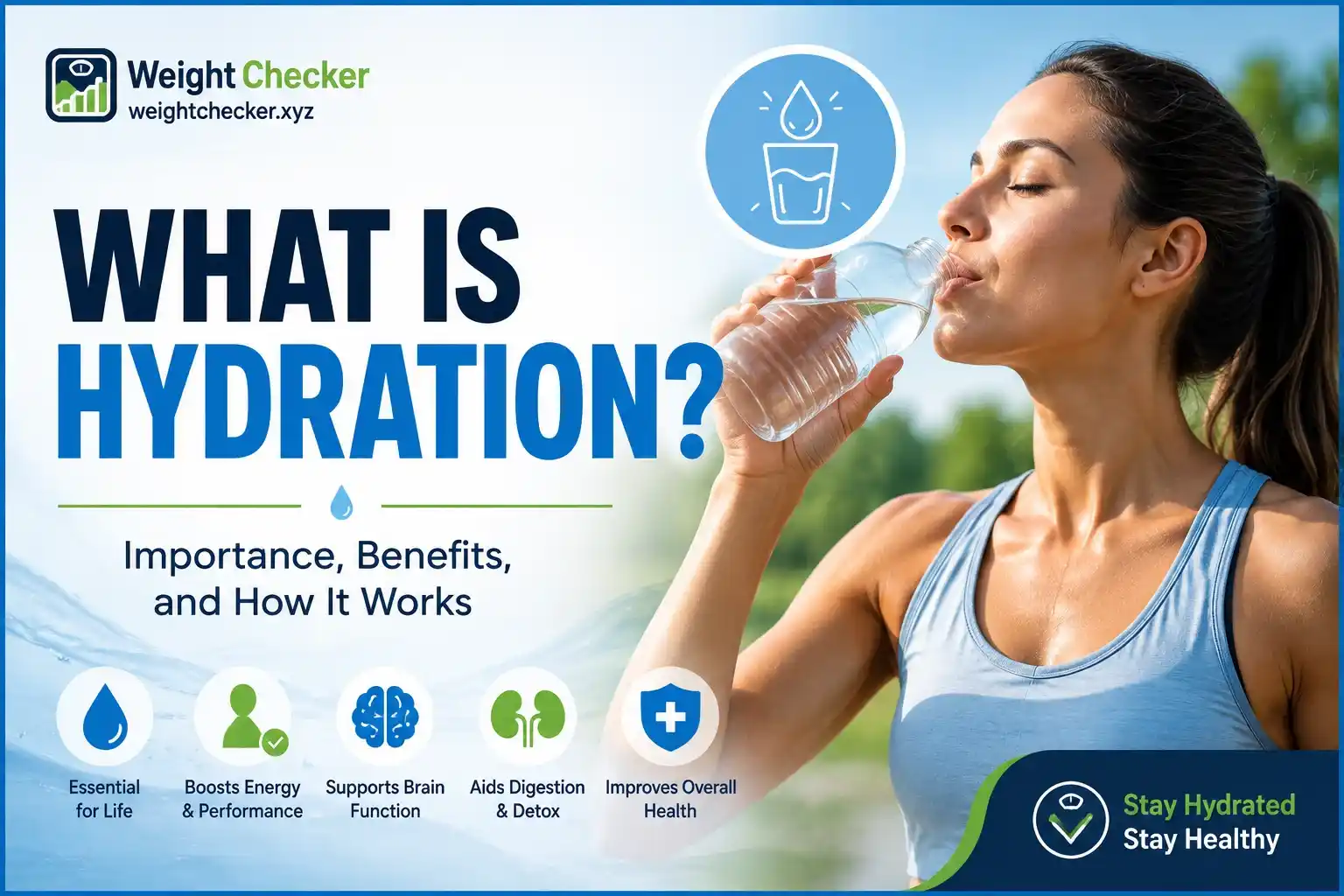
Hydration is one of the most important parts of maintaining overall health. Your body depends on water to support essential functions, including temperature regulation, digestion, circulation, nutrient transport, and waste removal.
But what is hydration exactly?
Hydration is the process of providing your body with enough water and fluids to function properly. When you lose more fluid than you consume, dehydration can occur. On the other hand, maintaining an appropriate fluid balance helps your body perform its normal functions efficiently.
For people focused on health, fitness, weight management, exercise, or overall wellness, understanding hydration can be especially useful. At Weight Checker, we believe that healthy habits work best when you understand how your body functions, not just when you follow random rules.
This guide explains what hydration is, why hydration is important, how it works, its benefits, signs of dehydration, and practical ways to stay hydrated.
What Is Hydration?
Hydration is the process of maintaining an adequate amount of water and other fluids in the body so that it can function properly.
Your body constantly gains and loses fluids. You consume fluids through:
- Water
- Other beverages
- Foods with high water content
At the same time, your body loses fluids through:
- Urine
- Sweat
- Breathing
- Bowel movements
Hydration is essentially about maintaining a healthy fluid balance between the fluids entering and leaving your body.
Quick Answer
Hydration means supplying the body with enough fluids, primarily water, to support normal functions such as temperature regulation, circulation, digestion, and waste removal.
Why Is Hydration Important?
Water is essential for human survival and plays a role in many systems throughout the body.
Proper hydration helps support:
- Normal body temperature
- Blood circulation
- Digestion
- Nutrient transportation
- Joint lubrication
- Kidney function
- Waste removal
- Physical performance
- Cognitive function
When the body does not receive enough fluids, it may not function as efficiently.
Even mild fluid loss can make some people feel thirsty, tired, or less focused.
Hydration Supports the Entire Body
Think of water as part of your body’s internal support system. It helps transport important substances, regulate temperature, and maintain the fluid environment needed by cells and organs.
This is why hydration is important not only during exercise but throughout the day.
How Does Hydration Work in the Body?
Hydration works through a continuous process of fluid intake, absorption, distribution, and fluid loss.
1. You Consume Fluids
Hydration begins when you drink water or other fluids and eat foods containing water.
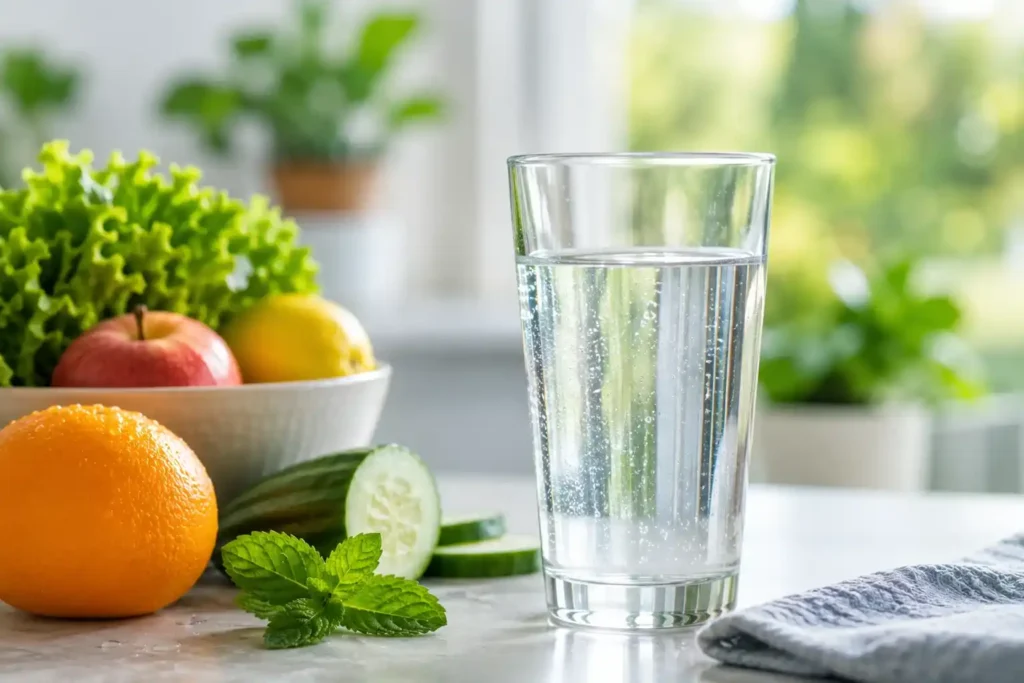
Examples of water-rich foods include:
- Watermelon
- Oranges
- Cucumbers
- Strawberries
- Lettuce
- Soups and broths
These fluids enter your digestive system.
2. Your Body Absorbs Water
Water is absorbed through the digestive system and enters the bloodstream.
From there, it can be transported throughout the body.
3. Water Supports Cells and Body Functions
Your body uses water in many ways. It helps create the environment needed for normal cellular processes and supports systems throughout the body.
Water also helps transport substances such as nutrients through body fluids.
4. Your Body Regulates Fluid Balance
The body has mechanisms that help regulate how much water it retains or removes.
The kidneys play an important role in this process by helping regulate fluid levels and producing urine.
5. You Lose Fluids
Fluid leaves your body through several pathways, including:
- Urination
- Sweating
- Breathing
- Bowel movements
To maintain hydration, fluids lost need to be replaced over time.
The Importance of Water in the Human Body
Water is found throughout the body and is a major component of many tissues and fluids.
It supports numerous important functions.
Water Helps Regulate Body Temperature
When your body becomes hot, sweating helps release heat.
As sweat evaporates from the skin, it can help cool the body.
This is especially important during:
- Exercise
- Hot weather
- Physical labor
- Sports and other activities
Water Supports Circulation
Blood contains a large amount of water. Proper fluid balance helps support normal circulation and the transport of substances throughout the body.
Water Supports Digestion
Fluids play an important role in the digestive process.
Adequate fluid intake can help support normal digestion and regular bowel movements.
Water Helps Transport Nutrients
Your body needs to move nutrients to different tissues and cells.
Water is an important part of the fluids involved in this transportation process.
Water Helps Remove Waste
The kidneys help filter waste products from the blood and remove them through urine.
Adequate hydration supports normal kidney function and urine production.
Benefits of Staying Hydrated
Maintaining good hydration can support many aspects of health and daily performance.
1. Supports Physical Performance
During exercise, the body can lose fluid through sweat.
Significant fluid loss may negatively affect physical performance and make exercise feel more difficult.
Staying hydrated before, during, and after activity can help support normal exercise performance.
This is particularly important for people who:
- Go to the gym
- Run or cycle
- Play sports
- Work outdoors
- Exercise in hot weather
For readers of Weight Checker, hydration can be an important part of a balanced fitness and wellness routine.
2. Helps Support Normal Body Temperature
Water plays a key role in the body’s temperature regulation process.
Sweating is one of the ways the body releases heat. When fluids are not adequately replaced during heavy sweating, maintaining fluid balance can become more difficult.
3. May Help You Feel More Alert
Hydration is connected to normal brain function.
When you are dehydrated, you may experience symptoms such as:
- Thirst
- Tiredness
- Headache
- Difficulty concentrating
- Feeling less alert
Maintaining regular fluid intake throughout the day may help support normal cognitive performance.
4. Supports Digestive Health
Fluids are important for the digestive system.
Drinking enough fluids can help support normal digestion and bowel regularity as part of an overall healthy diet and lifestyle.
Fiber intake and physical activity can also play important roles.
5. Supports Kidney Function
The kidneys help regulate fluid balance and remove waste products from the body.
Drinking adequate fluids supports normal urine production and overall fluid regulation.
6. Supports Exercise Recovery
After exercise, you may lose fluids through sweat.
Replacing lost fluids is an important part of post workout recovery.
Depending on the duration and intensity of exercise, as well as how much you sweat, your hydration needs may vary.
7. May Support Healthy Weight Management Habits
Drinking water is not a magic weight-loss solution. However, hydration can fit into a healthy weight-management routine.
For example, water is generally calorie free, making it a useful alternative to many sugar-sweetened drinks.
Some people may also find that drinking water before or with meals helps them develop more mindful eating habits.
For sustainable weight management, hydration should be combined with:
- A balanced eating pattern
- Appropriate calorie intake
- Regular physical activity
- Adequate sleep
- Consistent healthy habits
What Happens When You Are Dehydrated?
Dehydration occurs when your body loses more fluids than it takes in.
The severity of dehydration can vary.
Common Signs of Mild Dehydration
Possible signs include:
- Feeling thirsty
- Dry mouth
- Darker urine
- Urinating less frequently
- Tiredness
- Headache
- Dizziness
- Reduced exercise performance
Urine color can sometimes provide a general clue about hydration, but it is not a perfect measurement because various factors can affect urine color.
Important Note
Severe dehydration can be serious. Symptoms such as confusion, fainting, inability to keep fluids down, or signs of severe illness may require prompt medical attention.
How Much Water Should You Drink Per Day?
There is no single amount of water that is perfect for every person.
Your hydration needs can depend on several factors, including:
- Age
- Body size
- Activity level
- Climate
- Temperature
- Pregnancy or breastfeeding
- Diet
- Health conditions
- Medications
- How much you sweat
Because needs vary, the popular advice to drink exactly 8 glasses of water every day should not be considered a universal requirement for everyone.
A better approach is to pay attention to your overall fluid intake, thirst, activity level, and environment.
A Simple Hydration Strategy
You can start with these practical habits:
- Drink fluids regularly throughout the day.
- Drink when you are thirsty.
- Increase fluids when exercising or sweating heavily.
- Pay attention to hot weather.
- Include water-rich foods in your diet.
- Avoid relying exclusively on sugary drinks for hydration.
Your individual needs may be different from someone else’s.
Can You Get Hydration From Food?
Yes. Hydration does not come only from drinking water.
Many foods contain significant amounts of water and contribute to your total daily fluid intake.
Examples include:
- Watermelon
- Cucumber
- Oranges
- Grapefruit
- Strawberries
- Tomatoes
- Lettuce
- Celery
- Yogurt
- Soups
Including fruits and vegetables in your diet can support both hydration and overall nutrition.
However, drinking fluids regularly is still important.
Is Water the Only Way to Stay Hydrated?
No. Water is an excellent choice for hydration, but other beverages and foods can also contribute to your total fluid intake.
Depending on your individual circumstances, fluids may include:
- Milk
- Unsweetened beverages
- Soups
- Herbal teas
- Other drinks
However, some beverages may also contain significant amounts of added sugar, calories, caffeine, or other ingredients.
For everyday hydration, plain water is often a simple and calorie-free option.
What Are Electrolytes and How Do They Relate to Hydration?
Electrolytes are minerals that help support important functions in the body.
Examples include:
- Sodium
- Potassium
- Calcium
- Magnesium
- Chloride
Electrolytes help regulate fluid balance and support functions such as nerve and muscle activity.
For most people following a normal diet and participating in ordinary daily activity, plain water and regular meals may be sufficient.
However, electrolyte replacement may become more relevant during situations involving significant fluid and electrolyte loss, such as prolonged or intense exercise with heavy sweating.
The best approach depends on the individual situation.
Hydration and Exercise
Hydration becomes especially important when you exercise because your body may lose fluids through sweat.
Your fluid needs can increase depending on:
- Exercise intensity
- Exercise duration
- Temperature
- Humidity
- Clothing
- Individual sweat rate
Before Exercise
Start your workout reasonably well hydrated.
Drinking fluids regularly during the day can help you prepare rather than trying to drink a large amount immediately before exercising.
During Exercise
During longer or more intense activity, drink fluids as needed.
The ideal amount can vary based on your sweat rate and exercise conditions.
After Exercise
After exercising, replace fluids lost through sweating.
This can be particularly important after long workouts or exercise in hot conditions.
Hydration and Weight Loss
Many people ask whether drinking more water helps with weight loss.
Water alone does not cause fat loss.
However, hydration can support healthy habits that contribute to weight management.
For example:
- Water contains no calories.
- Replacing sugary beverages with water may reduce calorie intake.
- Drinking fluids regularly supports normal physical function.
- Proper hydration can support exercise and daily activity.
For a successful weight-loss strategy, focus on the bigger picture.
That includes:
- Managing calorie intake
- Eating enough protein and nutrients
- Exercising regularly
- Getting enough sleep
- Maintaining healthy habits consistently
At Weight Checker, hydration should be viewed as one important part of a complete health and weight-management strategy.
Simple Tips to Stay Hydrated
Staying hydrated does not have to be complicated.
Try these simple habits:
1. Keep Water Nearby
Keep a reusable water bottle at your desk, in your bag, or during workouts.
Having water easily available can make regular drinking more convenient.
2. Drink Throughout the Day
Instead of waiting until you feel extremely thirsty, develop a habit of drinking fluids regularly.
3. Drink More During Hot Weather
Higher temperatures can increase sweating and fluid loss.
Pay extra attention to hydration during hot days.
4. Hydrate Around Exercise
Drink fluids before, during, and after exercise according to your needs and activity level.
5. Eat Water-Rich Foods
Add fruits and vegetables with high water content to your meals and snacks.
6. Choose Water Instead of Sugary Drinks More Often
Replacing some high-calorie sugary beverages with water can support a healthier overall diet.
7. Create a Routine
You might drink water:
- After waking up
- With meals
- Before and after exercise
- During work or study breaks
- Before going to bed, while avoiding excessive intake that disrupts sleep
Small habits can make hydration easier to maintain.
Can You Drink Too Much Water?
Yes. Although water is essential, consuming excessive amounts in a short period can be dangerous in some circumstances.
Drinking extremely large quantities of water can disrupt the body’s electrolyte balance.
The goal is not to drink as much water as possible. The goal is to maintain appropriate hydration based on your individual needs.
People with certain medical conditions or those taking medications that affect fluid balance should seek personalized guidance from a qualified healthcare professional.
Hydration Myths You Should Know
Myth 1: Everyone Needs Exactly 8 Glasses of Water
Hydration needs vary from person to person.
Activity level, climate, body size, diet, and other factors can influence how much fluid someone needs.
Myth 2: Only Plain Water Counts
Other beverages and water-containing foods can contribute to total fluid intake.
Myth 3: You Only Need Water When You Exercise
Your body needs fluids every day, even when you are not physically active.
Myth 4: More Water Is Always Better
Excessive water intake can also cause problems. Balance is important.
Myth 5: Thirst Is the Only Sign You Need to Consider
Thirst is an important signal, but hydration needs can also change based on activity, weather, illness, and other circumstances.
Hydration vs. Dehydration: What Is the Difference?
| Hydration | Dehydration |
| Adequate body fluid balance | The body loses more fluid than it takes in |
| Supports normal body functions | Can interfere with normal body function |
| Achieved through fluids and water-rich foods | May occur due to insufficient intake or excessive fluid loss |
| Important for daily health and physical activity | May cause symptoms such as thirst, fatigue, and dizziness |
How to Know if You Are Properly Hydrated
There is no single everyday method that works perfectly for everyone.
However, you can consider several general signs:
- You are drinking fluids regularly.
- You do not feel unusually thirsty.
- Your urine is generally not consistently very dark.
- You feel reasonably well during normal daily activities.
- You replace fluids after heavy sweating or exercise.
If you have ongoing concerns about hydration, kidney function, or unusual fluid loss, speak with a qualified healthcare professional.
Key Takeaways
Hydration is the process of maintaining enough fluids in your body to support normal health and function.
Here are the most important points to remember:
- Hydration is essential for overall health.
- Water supports temperature regulation, circulation, digestion, and waste removal.
- Your body constantly gains and loses fluids.
- Hydration needs vary from person to person.
- Exercise, heat, and sweating can increase fluid needs.
- Water-rich foods also contribute to hydration.
- Water can support healthy weight-management habits but does not directly cause fat loss.
- Both dehydration and excessive water intake can create problems.
- The best hydration strategy is to maintain consistent and appropriate fluid intake based on your individual needs.
Final Thoughts
Hydration is a simple but essential part of a healthy lifestyle. Your body depends on fluids to support countless everyday processes, from regulating body temperature to supporting digestion and physical activity.
Rather than focusing on a single universal number of glasses per day, pay attention to your body’s needs, your activity level, your environment, and your overall fluid intake.
For anyone working toward better health, fitness, or weight management, hydration should be part of the foundation. Combined with balanced nutrition, regular physical activity, quality sleep, and sustainable habits, proper hydration can support your overall wellness journey.
At Weight Checker, our goal is to help you better understand the factors that support a healthier lifestyle because sustainable health starts with practical knowledge and consistent habits.
Frequently Asked Questions About Hydration
What is hydration in simple words?
Hydration means giving your body enough water and fluids to function properly. Your body needs fluids for processes such as temperature regulation, circulation, digestion, and waste removal.
Why is hydration important?
Hydration is important because water supports many essential body functions. Adequate fluid intake helps maintain normal temperature regulation, circulation, digestion, kidney function, and physical performance.
What are the benefits of hydration?
The benefits of staying hydrated include support for normal body temperature, physical performance, digestion, circulation, kidney function, and overall daily functioning.
How does hydration work?
Hydration works by maintaining a balance between fluids entering and leaving your body. You consume fluids and water-rich foods, absorb water through the digestive system, and lose fluids through urine, sweat, breathing, and other processes.
How much water should I drink every day?
There is no single amount that is right for everyone. Your needs depend on factors such as body size, activity level, climate, diet, and overall health.
Can food help with hydration?
Yes. Fruits, vegetables, soups, yogurt, and other foods containing water can contribute to your daily fluid intake.
Is drinking water good for weight loss?
Water does not directly cause fat loss. However, replacing sugary drinks with water and maintaining good hydration can support healthy weight-management habits.
What are the signs of dehydration?
Common signs can include thirst, dry mouth, darker urine, fatigue, headache, dizziness, and reduced physical performance.
Do I need electrolytes to stay hydrated?
Most people can meet their hydration needs with regular fluids and a balanced diet. Electrolytes may become more important when there is significant fluid and electrolyte loss, such as prolonged intense exercise with heavy sweating.
Can you drink too much water?
Yes. Drinking excessive amounts of water in a short time can be harmful because it may disturb the body’s electrolyte balance.