When people want to check whether they have a healthy weight, they usually look at Body Mass Index (BMI) or body fat percentage. While both measurements are widely used, they measure different aspects of your body and provide different insights into your health.
BMI is a quick screening tool that estimates whether your body weight is appropriate for your height, while body fat percentage measures how much of your body is made up of fat compared to lean mass such as muscles, bones, and organs.
So, which number is more important? The answer depends on your health goals. In this guide, you’ll learn the differences between BMI and body fat, their strengths and limitations, and why using both together provides the most accurate picture of your overall health.
What Is Body Mass Index (BMI)?
Body Mass Index (BMI) is a simple height-based measurement used to estimate whether an adult has a healthy body weight. Healthcare providers, including the Centers for Disease Control and Prevention (CDC), use BMI as a screening tool for identifying people who may have a higher risk of weight-related diseases.
BMI is calculated using your weight and height. Although it does not directly measure body fat, it helps assess the likelihood of health conditions associated with overweight and obesity.
BMI Categories for Adults
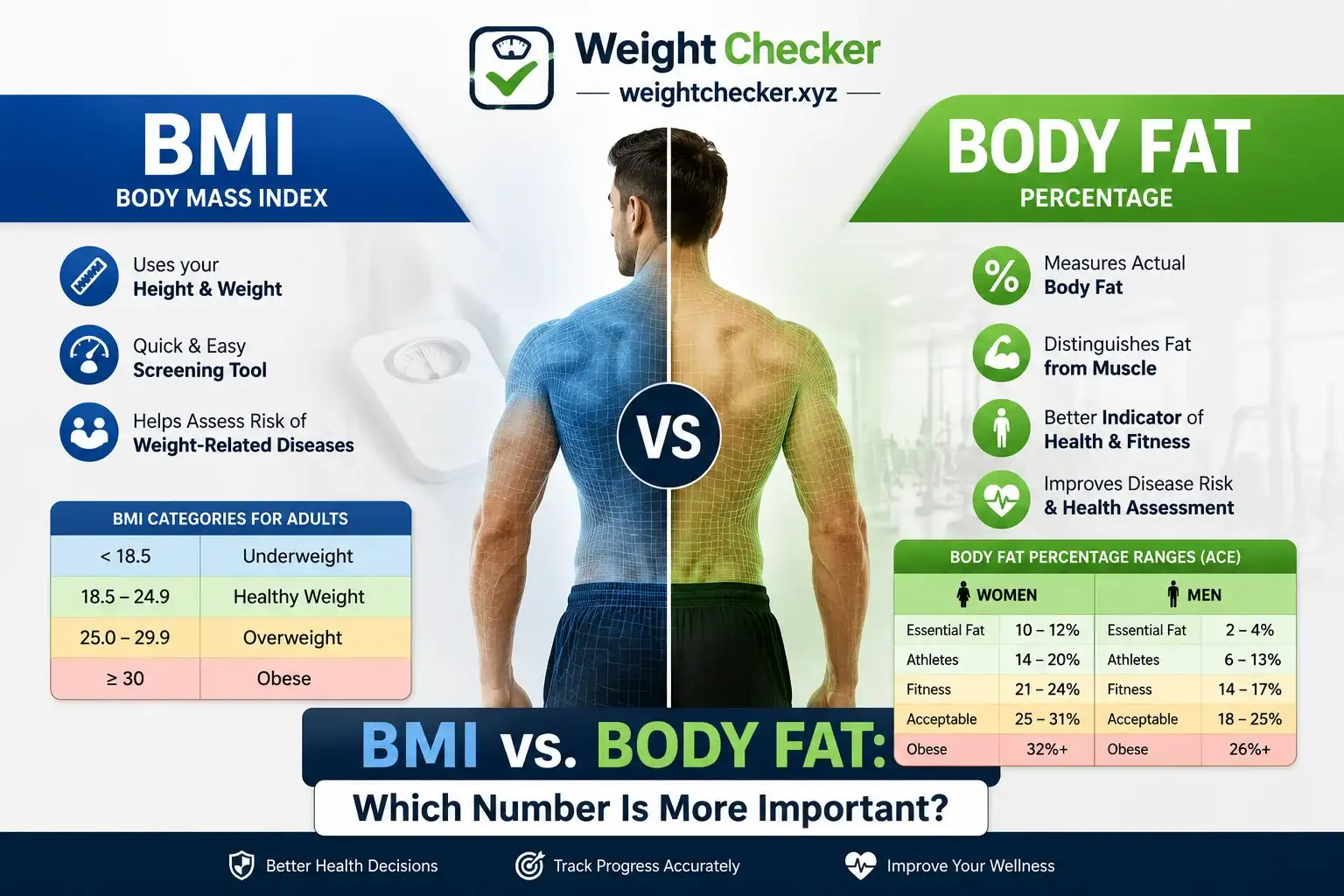
| BMI Value | Weight Status |
| Less than 18.5 | Underweight |
| 18.5 – 24.9 | Recommended (Healthy Weight) |
| 25.0 – 29.9 | Overweight |
| 30 or Greater | Obese |
These BMI values are commonly used to estimate the risk of developing chronic diseases such as:
- Heart disease
- Type 2 diabetes
- Stroke
- Certain cancers
- High blood pressure
- Metabolic disorders
A higher BMI generally increases the risk of these conditions, making BMI a useful health indicator for large populations.
How BMI Helps Assess Disease Risk
BMI remains one of the most commonly used screening tools because it is:
- Quick and easy to calculate
- Inexpensive
- Suitable for large populations
- Helpful for identifying obesity risk
- Recommended by many health organizations
Doctors often use BMI during routine health examinations to determine whether further testing is needed.
Limitations of BMI
Although BMI is useful, it has important limitations.
BMI cannot distinguish between:
- Fat
- Muscle mass
- Bone density
- Body composition
For example, a highly trained athlete may have a high BMI because of increased muscle mass rather than excess body fat.
Likewise, research has shown that some Americans have a normal BMI but a high body fat percentage, a condition known as Normal Weight Obesity. These individuals may still have an increased risk of cardiovascular disease and metabolic health problems despite appearing to have a healthy weight.
Because BMI doesn’t measure body composition, it should never be the only indicator of personal fitness or overall health.
What Is Body Fat Percentage?
Body fat percentage measures the percentage of your total body weight that comes from fat. Unlike BMI, this measurement distinguishes between fat mass and lean mass, providing a much clearer picture of an individual’s overall health.
Many health experts consider body fat percentage a more accurate assessment because it directly measures body composition rather than simply comparing weight to height.
For individuals who work out regularly or have high muscle mass, body fat analysis often provides a much better understanding of their fitness level than BMI alone.
Recommended Body Fat Percentage for Adults
Women
| Category | Body Fat Percentage |
| Essential Fat | 10–12% |
| Athletes | 14–20% |
| Fitness | 21–24% |
| Acceptable | 25–31% |
| Obese | 32%+ |
Men
| Category | Body Fat Percentage |
| Essential Fat | 2–4% |
| Athletes | 6–13% |
| Fitness | 14–17% |
| Acceptable | 18–25% |
| Obese | 26%+ |
These ranges, recommended by the American Council on Exercise (ACE), help evaluate fitness, body composition, and obesity classification.
Why Body Fat Percentage Gives a Better Health Picture
Body fat percentage offers several advantages over BMI because it:
- Measures actual body fat
- Distinguishes fat from muscle
- Estimates lean body mass
- Provides a more accurate assessment of obesity
- Helps predict disease risk
- Better reflects metabolic health
- Improves fitness evaluation
- Helps monitor athletic performance
Someone with a normal BMI but high body fat may still face increased risks of diabetes, heart disease, and other chronic illnesses.
Methods for Measuring Body Fat Percentage
Several methods are available for measuring body fat.
Skinfold Measurement
Skinfold calipers estimate body fat by measuring the thickness of fat beneath the skin. While affordable, accuracy depends on the experience of the tester.
Bioelectrical Impedance Analysis (BIA)
Many smart scales used in homes and gyms use bioelectrical impedance analysis. This method estimates body fat by sending a harmless electrical current through the body.
Although convenient, hydration levels can affect the results, leading to error rates of up to eight percent.
X-ray Analysis (DEXA)
DEXA scans provide one of the most accurate measurements of body composition by separating fat, muscle, and bone mass. However, they are more expensive and less readily available.
Water Displacement
Hydrostatic weighing measures body density using water displacement. It is highly accurate but requires specialized equipment and is less practical for everyday use.
BMI vs. Body Fat: Key Differences
| Feature | BMI | Body Fat Percentage |
| Measures | Weight relative to height | Actual body fat |
| Includes Muscle Mass | No | Yes |
| Body Composition | No | Yes |
| Accuracy | Moderate | Higher |
| Disease Prediction | Good | Better |
| Fitness Assessment | Limited | Excellent |
| Best For | Population screening | Individual health evaluation |
Which Number Is More Important?
For most adults, body fat percentage provides a more accurate understanding of overall health because it measures actual body composition rather than body size alone.
However, BMI still plays an important role because it is:
- Fast
- Affordable
- Easy to calculate
- Useful for large-scale screening
- Recommended by healthcare organizations
The best approach is to use both BMI and body fat percentage together.
For example:
- A high BMI with low body fat may indicate increased muscle mass rather than obesity.
- A normal BMI with high body fat may suggest hidden health risks that BMI alone cannot detect.
Combining both measurements gives healthcare providers a more complete picture of cardiovascular risk, metabolic health, obesity risk, and overall fitness.
When Should You Measure Body Fat?
You should consider measuring your body fat percentage periodically if you:
- Are trying to lose weight
- Regularly exercise
- Build muscle
- Monitor body composition
- Improve athletic performance
- Track long-term health and fitness progress
Periodic body fat analysis provides better insight into changes that a regular bathroom scale cannot show.
Can BMI and Body Fat Be Used Together?
Yes. Most healthcare professionals recommend using both measurements because they complement each other.
BMI serves as a useful first screening tool, while body fat percentage provides a more detailed evaluation of body composition, fat distribution, lean mass, and overall health status.
Using both together leads to better risk assessment, improved disease prediction, and more informed health decisions
Final Thoughts
There isn’t a single number that tells the complete story of your health. BMI remains an excellent screening tool for identifying potential weight-related health risks, but body fat percentage provides a more accurate assessment of body composition, fitness level, and disease risk.
If your goal is to understand your true health status rather than simply your weight, using both BMI and body fat percentage together offers the most reliable and comprehensive evaluation. This combined approach helps you make better decisions about nutrition, exercise, weight management, and long-term wellness.
Frequently Asked Questions (FAQs)
Is BMI more important than body fat percentage?
No. BMI is useful for screening, but body fat percentage offers a more accurate assessment of body composition and overall health.
Can you have a normal BMI but high body fat?
Yes. This condition is called normal weight obesity, where a person has a healthy BMI but excess body fat that may increase disease risk.
Why do athletes often have a high BMI?
Athletes usually have greater muscle mass, which increases body weight without increasing body fat. BMI cannot distinguish muscle from fat.
Which measurement is better for weight loss?
Body fat percentage is generally better because it shows whether you’re losing fat while maintaining lean muscle mass.
Should I rely only on BMI?
No. BMI should be used alongside body fat percentage, waist circumference, physical activity level, and other health indicators for the most accurate evaluation