Maintaining a healthy weight is one of the most effective ways to reduce the risk of chronic diseases and improve overall well-being. The BMI chart for Adults (Body Mass Index chart) is a quick screening tool that helps determine whether your weight falls within a healthy range based on your height.
Although BMI does not directly measure body fat, it is widely used by healthcare professionals as an initial indicator of weight-related health risks.
In this guide, you’ll learn:
- What an adult BMI chart is
- BMI categories and healthy weight ranges
- How to calculate BMI
- BMI chart for adults
- Ideal weight recommendations
- BMI limitations
- Frequently Asked Questions
What is an Adult BMI Chart?
A BMI chart for adults is a table that classifies body weight using your height and weight. It helps identify whether you are:
- Underweight
- Healthy (Normal) Weight
- Overweight
- Obese (Class I, II, or III)
BMI is intended for adults aged 20 years and older, regardless of gender.
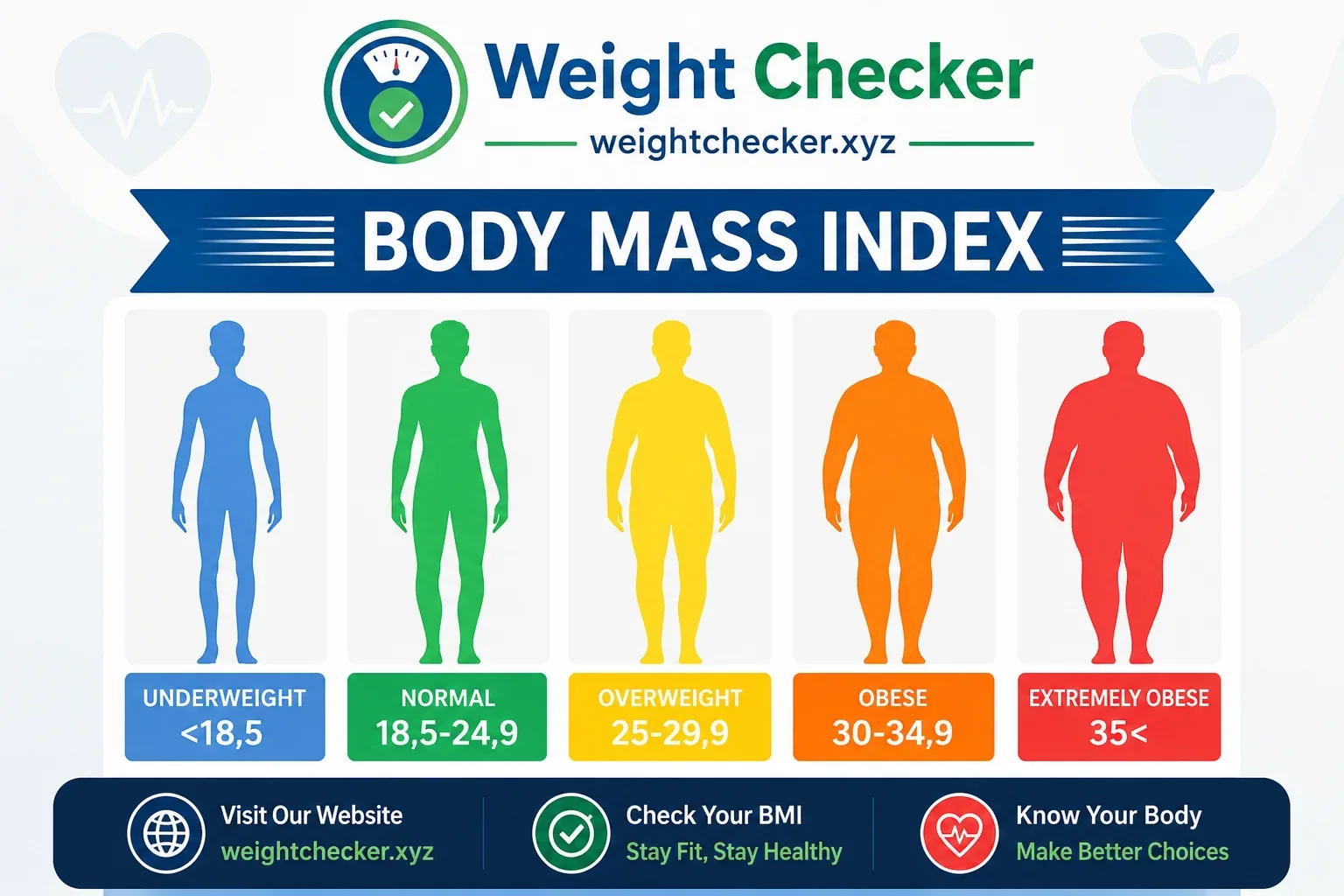
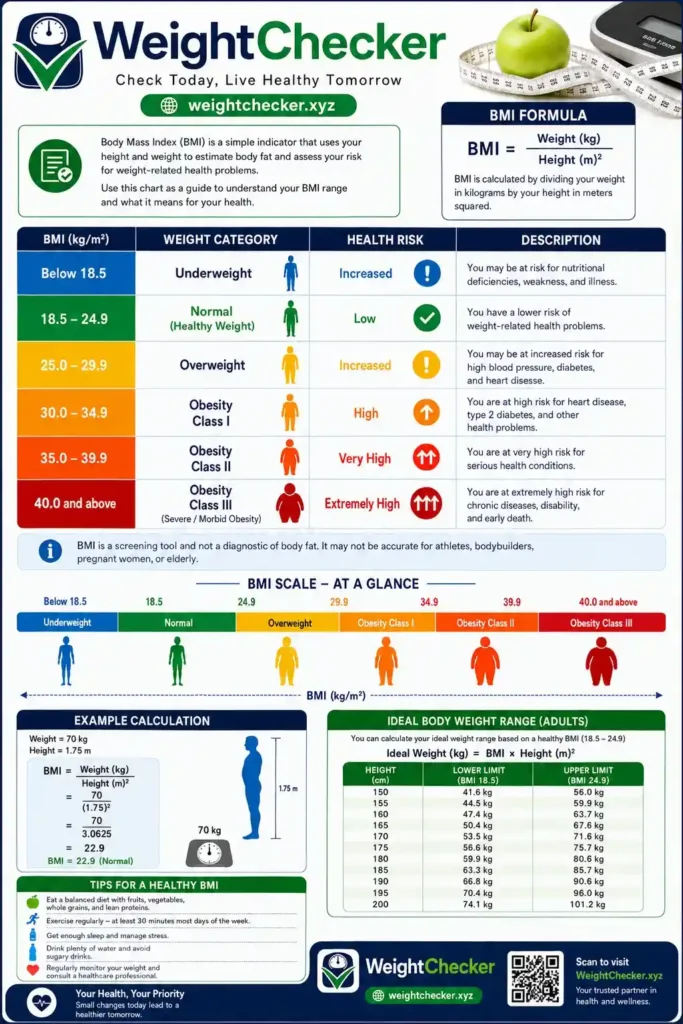
Adult BMI Categories
| BMI (kg/m²) | Weight Category | Health Risk |
| Below 18.5 | Underweight | Increased |
| 18.5 – 24.9 | Healthy Weight | Low |
| 25.0 – 29.9 | Overweight | Increased |
| 30.0 – 34.9 | Obesity Class I | High |
| 35.0 – 39.9 | Obesity Class II | Very High |
| 40.0 and above | Obesity Class III | Extremely High |
BMI Formula
The BMI formula is simple:
BMI = Weight (kg) ÷ Height² (m²)
Example
Weight = 70 kg
Height = 1.75 m
BMI = 70 ÷ (1.75 × 1.75)
BMI = 22.9
Result:
Healthy Weight
Adult BMI Chart Explained
Underweight (BMI Below 18.5)
People in this category weigh less than recommended for their height.
Possible health risks include:
- Nutritional deficiencies
- Weakened immune system
- Fatigue
- Osteoporosis
- Reduced muscle strength
Improving nutrition and consulting a healthcare professional can help achieve a healthier weight.
Healthy Weight (BMI 18.5–24.9)
This is considered the ideal BMI range for most adults.
Benefits include:
- Lower risk of heart disease
- Better blood pressure
- Reduced diabetes risk
- Improved mobility
- Better overall health
Maintaining a balanced diet and regular exercise can help keep BMI within this range.
Overweight (BMI 25–29.9)
Being overweight means carrying extra body weight that may increase health risks.
Potential concerns include:
- High blood pressure
- High cholesterol
- Sleep apnea
- Joint pain
- Type 2 diabetes
Lifestyle changes such as healthy eating and increased physical activity are recommended.
Obesity Class I (BMI 30–34.9)
Class I obesity significantly raises the likelihood of developing chronic diseases.
Common risks include:
- Heart disease
- Stroke
- Diabetes
- Fatty liver disease
- Arthritis
Weight management should become a priority at this stage.
Obesity Class II (BMI 35–39.9)
Individuals with Class II obesity have a much greater chance of developing severe health complications.
Risks include:
- Severe hypertension
- Cardiovascular disease
- Sleep disorders
- Reduced mobility
- Chronic inflammation
Medical guidance is often recommended.
Obesity Class III (BMI 40+)
Also known as severe or morbid obesity, this category has the highest health risks.
Potential complications include:
- Heart failure
- Kidney disease
- Certain cancers
- Severe diabetes
- Reduced life expectancy
Professional medical treatment and long-term weight management plans may be necessary.
Why BMI Matters
Using an adult BMI chart can help you:
- Understand your weight category
- Track weight changes over time
- Identify possible health risks
- Set realistic fitness goals
- Support discussions with healthcare providers
BMI is most effective when combined with other health assessments.
Healthy Weight Tips
Maintaining a healthy BMI doesn’t require extreme diets. Focus on sustainable habits:
- Eat plenty of fruits and vegetables
- Choose whole grains over refined grains
- Include lean protein sources
- Stay physically active for at least 150 minutes each week
- Drink enough water
- Sleep 7–9 hours every night
- Reduce sugary drinks and processed foods
- Manage stress through healthy coping strategies
Limitations of BMI
Although BMI is useful, it has limitations.
BMI does not measure:
- Body fat percentage
- Muscle mass
- Bone density
- Fat distribution
For example, athletes with high muscle mass may have a high BMI while still being healthy.
Pregnant women, older adults, and bodybuilders may require additional assessments beyond BMI.
Who Should Use the BMI Chart for Adults?
The BMI chart is designed for:
- Adults aged 20 years and older
- Men
- Women
- General health screening
- Weight management
It is not intended for:
- Children
- Teenagers
- Pregnant women
- Professional athletes
- Individuals with significant muscle mass
Final Thoughts
An adult BMI chart is one of the simplest tools for evaluating whether your weight falls within a healthy range. While it cannot diagnose body fat or overall health on its own, it provides a reliable starting point for understanding weight-related risks and setting realistic wellness goals.
For the best results, use BMI alongside healthy lifestyle habits, regular physical activity, balanced nutrition, and professional medical advice when needed.
Frequently Asked Questions (FAQs)
What is a healthy BMI for adults?
A healthy BMI for most adults falls between 18.5 and 24.9.
Does BMI differ for men and women?
No. The standard adult BMI categories are the same for both men and women, although body composition may differ.
Is BMI accurate?
BMI is a useful screening tool but should not be used as the only measure of health. Waist circumference, body fat percentage, medical history, and lifestyle should also be considered.
How often should I check my BMI?
Checking your BMI every few months is usually sufficient, especially if you are actively managing your weight or fitness goals.
Can I have a high BMI and still be healthy?
Yes. Individuals with high muscle mass, such as athletes, may have a higher BMI without having excess body fat.