
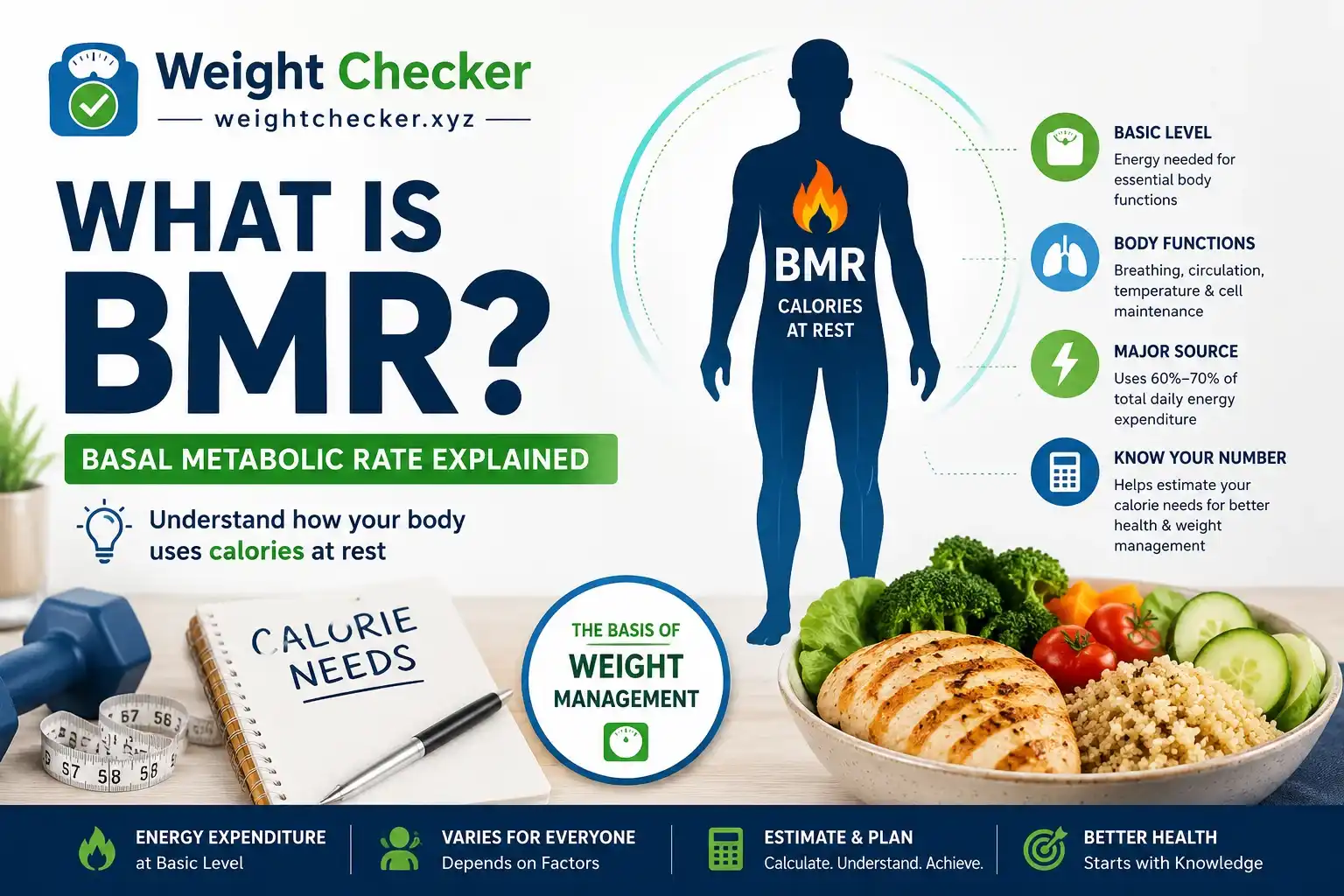
Basal Metabolic Rate (BMR) is one of the most important numbers for understanding your body’s daily calorie needs. Whether your goal is weight loss, weight gain, or maintaining a healthy weight, knowing your BMR helps you estimate how many calories your body uses just to stay alive.
Your Basal Metabolic Rate represents the basic level of energy expenditure needed to keep your body functions working while you are completely at rest. It varies from person to person because factors such as sex, weight, height, age, and body composition all influence your metabolic rate.
Various equations can estimate your BMR, giving you a starting point for understanding your daily calorie requirements.
What Is Basal Metabolic Rate (BMR)?
Basal Metabolic Rate (BMR) is the minimum number of calories your body needs to perform essential bodily functions while at complete rest. These vital body functions include:
- Breathing
- Blood circulation
- Maintaining body temperature
- Cell growth and repair
- Supporting healthy cells
- Brain and nervous system activity
- Organ function
Your BMR is the major source of your daily energy expenditure, accounting for approximately 60% to 70% of your total energy use. Around 10% of your daily energy is used to process food (known as the thermic effect of food), while the remaining energy supports physical movement, exercise, and other daily activities.
Understanding your Basal Metabolic Rate is an important part of weight management because it helps you understand your calorie usage. However, BMR is only one piece of the overall health and nutrition puzzle.
What Factors Affect My Basal Metabolic Rate?
Many factors influence your basal metabolic rate (BMR). Some can be changed through lifestyle choices, while others are determined by genetics and biology.
1. Body Size and Body Composition
People with larger body size generally have a higher BMR because they have more body tissue and cells that require energy to maintain.
Having more lean muscle tissue significantly increases metabolism since muscle tissue burns more calories than adipose tissue (body fat). Although fat cells require energy, they use much less compared to muscle.
2. Sex
Generally, males have a higher Basal Metabolic Rate than females because testosterone promotes greater lean muscle mass, which increases calorie burning.
3. Age
As people age, muscle mass naturally declines. Hormonal changes and neurological changes also slow metabolism, causing BMR to gradually decrease.
4. Genetics, Race, and Ethnicity
Your genes, genetics, race, and ethnicity may influence metabolism. While researchers continue studying these differences, inherited traits play a role in determining metabolic rate.
5. Skipping Meals and Fasting
Extended fasting, skipping meals, or starvation may cause the body to conserve energy. From an evolution standpoint, this helps protect against losing weight too quickly by reducing the number of calories your body burns until you consume calories again.
6. Environmental Temperature
Living in a cold environment increases calorie burning because your body must maintain a healthy body temperature, often through shivering.
In a warm environment, your body expends energy through sweating to regulate temperature.
7. Thyroid Hormones
Abnormal thyroid hormone levels greatly affect metabolism.
- Hyperthyroidism increases calorie burning.
- Hypothyroidism slows metabolism.
8. Illness or Injury
When your body is recovering from an illness, injury, or infection, it uses additional energy for repairing tissues, temporarily increasing your BMR.
9. Stimulants
Certain stimulants such as caffeine, nicotine, and amphetamines can temporarily increase metabolism. However, some stimulants carry significant health risks and should never be used for weight loss.
10. Growth, Pregnancy, and Lactation
Infants and children naturally have higher metabolic rates because of rapid growth.
During pregnancy, increased body mass and the developing fetus raise calorie needs.
During lactation, producing breast milk may increase calorie expenditure by approximately 15% to 25%, according to various studies.
11. Menopause
During menopause, hormone changes often contribute to reduced muscle mass and slower metabolism.
What Is a Normal Basal Metabolic Rate?
There is no single normal basal metabolic rate because every person’s BMR depends on many factors.
According to scientists, average values include:
| Person | Average BMR |
| Average male | 1,696 calories (7,100 kilojoules) per day |
| Average female | 1,410 calories (5,900 kilojoules) per day |
These are only averages. Your race, ethnicity, body composition, and lifestyle all affect your energy expenditure and calorie expenditure.
If you want an accurate estimate of the calories your body needs for basic functioning, food, physical activity, and overall energy use, consult a healthcare provider or registered dietitian. They can calculate a more realistic number based on your unique circumstances.
How Do I Calculate My BMR?
The most accurate way to calculate BMR is through laboratory testing performed under strict conditions by an expert.
Testing typically requires:
- Complete rest
- Being mentally calm
- Being physically calm
- Remaining in an awake state
- Avoiding sleep
- Fasting for 12 to 14 hours after your last meal
- Staying in a comfortable temperature or thermally neutral environment
- Maintaining a stable body temperature
Because laboratory testing isn’t practical for most people, scientists developed equations to estimate BMR.
Harris-Benedict Equation
For males
BMR = 88.362 + (13.397 × weight in kilograms) + (4.799 × height in centimeters) − (5.677 × age in years)
For females
BMR = 447.593 + (9.247 × weight in kilograms) + (3.098 × height in centimeters) − (4.330 × age in years)
These formulas provide an estimate rather than an exact measurement.
Resting Metabolic Rate (RMR) Calculations
Resting Metabolic Rate (RMR) and BMR are similar, but they are slightly different.
While BMR measures the amount of energy your body uses for basic function at complete rest, RMR also includes low-effort daily activities such as:
- Going to the bathroom
- Getting dressed
- Sitting quietly
- Light movement around the house
As a result, RMR is usually about 10% higher than BMR and often provides a more practical estimate of daily calorie needs.
RMR Formula for Males
RMR = 4.38 × weight (pounds) + 14.55 × height (inches) − 5.08 × age (years) + 260
RMR Formula for Females
RMR = 3.35 × weight (pounds) + 15.42 × height (inches) − 2.31 × age (years) + 43
These equations estimate calorie needs during low-energy activities rather than complete rest.
How Can I Increase My BMR?
Although your genetics, age, and height cannot be changed, there are healthy ways to support your metabolism.
Build Lean Muscle Mass
Increasing lean muscle mass is one of the most effective ways to raise your BMR because muscle tissue requires more energy than fat to maintain its structure.
Perform Resistance Training
Include resistance training and strength-training exercises in your weekly routine, such as:
- Lifting weights
- Pilates
- Kettlebell training
- Bodyweight exercises
Stay Physically Active
Regular aerobic exercise supports overall health and helps maintain muscle, even though strength training has the greatest impact on BMR.
Avoid Unsafe Shortcuts
Some people naturally have a fast metabolism, while others experience hypermetabolism because of serious illness, cancer, or hyperthyroidism.
Avoid using stimulants to increase metabolism because they may be harmful to your health.
If you have concerns about your metabolism or weight, speak with a healthcare provider.
A Note from Cleveland Clinic
According to the Cleveland Clinic, understanding your BMR is the first step toward taking charge of your weight and overall health.
Your body is unique, and many factors influence your metabolism. Working with metabolism experts, a healthcare provider, or a registered dietitian can help you create a personalized plan that matches your unique body, personal goals, and long-term success on your journey toward better health.
Frequently Asked Questions (FAQs)
What is Basal Metabolic Rate (BMR)?
Basal Metabolic Rate (BMR) is the minimum number of calories your body needs to perform essential bodily functions such as breathing, blood circulation, maintaining body temperature, and supporting organ function while completely at rest.
Why is BMR important?
BMR is important because it represents 60% to 70% of your total daily energy expenditure. Knowing your BMR helps estimate your calorie needs for weight loss, weight gain, or weight maintenance.
What factors affect BMR?
Factors affecting BMR include age, sex, weight, height, body size, lean muscle mass, body fat, genetics, thyroid hormone levels, pregnancy, menopause, illness, environmental temperature, and physical growth.
Is BMR the same as metabolism?
No. BMR is one part of your metabolism. Metabolism includes your Basal Metabolic Rate, calories used to digest food, and calories burned through physical activity.
What is the difference between BMR and RMR?
BMR measures calories burned while your body is at complete rest under strict testing conditions. Resting Metabolic Rate (RMR) includes calories burned during light daily activities, making it about 10% higher than BMR.
How can I calculate my BMR?
You can estimate your BMR using the Harris-Benedict equation by entering your age, sex, weight, and height. Online BMR calculators also use these formulas for quick results.
Can I increase my BMR naturally?
Yes. Building lean muscle through resistance training, lifting weights, staying physically active, and maintaining a healthy lifestyle can help increase your BMR over time.
What is considered a normal BMR?
There is no universal normal BMR. The average male has a BMR of about 1,696 calories (7,100 kJ) per day, while the average female has about 1,410 calories (5,900 kJ) per day. Individual results vary based on body composition and other personal factors.
Does age lower BMR?
Yes. As you age, muscle mass gradually decreases and hormonal changes occur, causing your Basal Metabolic Rate to slow over time.
Is BMR useful for weight loss?
Yes. Understanding your BMR helps you estimate your daily calorie needs, create a calorie deficit safely, and develop an effective weight management plan based on your body’s energy requirements.