If you’re trying to lose weight, one of the smartest nutrition changes you can make is increasing your protein intake. But how much protein do you actually need? Is more always better? And what is the best protein intake for weight loss?
The answer depends on your body weight, activity level, age, and calorie goals. Eating the right amount of protein can help reduce hunger, preserve muscle, improve metabolism, and make weight loss easier to maintain.
In this guide from Weight Checker, you’ll learn exactly how much protein you need for effective and healthy weight loss.
Quick Answer
For most adults trying to lose weight, the best protein intake for weight loss is between 1.2 and 2.2 grams of protein per kilogram (0.54–1 gram per pound) of body weight per day.
General recommendations:
- Sedentary adults: 1.2–1.4 g/kg
- Moderately active: 1.4–1.8 g/kg
- Highly active or strength training: 1.6–2.2 g/kg
- Older adults: 1.2–2.0 g/kg
This amount helps preserve muscle while losing body fat and keeps you feeling fuller for longer.
Why Protein Is Important for Weight Loss
Protein does much more than build muscles.
When you’re in a calorie deficit, your body can lose both fat and muscle. Eating enough protein helps protect your lean muscle mass while encouraging your body to burn more fat.
Benefits include:
- Reduces hunger and cravings
- Keeps you full longer
- Preserves muscle during dieting
- Supports faster recovery after exercise
- Slightly increases calorie burning through digestion
- Helps maintain long-term weight loss
How Much Protein Do You Need?
A simple guideline is:
Protein (grams) = Body Weight (kg) × Protein Factor
Protein Recommendations
| Goal | Protein Intake |
| General health | 0.8 g/kg |
| Weight loss | 1.2–1.6 g/kg |
| Active weight loss | 1.6–2.2 g/kg |
| Muscle building | 1.6–2.4 g/kg |
Examples
| Weight | Daily Protein |
| 50 kg | 60–110 g |
| 60 kg | 72–132 g |
| 70 kg | 84–154 g |
| 80 kg | 96–176 g |
| 90 kg | 108–198 g |
| 100 kg | 120–220 g |
These are general recommendations and should be adjusted based on your health status and activity level.
Protein Intake by Activity Level
Sedentary Lifestyle
If you don’t exercise much:
- 1.2–1.4 g/kg
- Helps maintain muscle during calorie restriction
Moderate Exercise
If you work out 3–5 days each week:
- 1.4–1.8 g/kg
- Supports fat loss and recovery
Heavy Training
If you lift weights or perform intense workouts:
- 1.6–2.2 g/kg
- Maximizes muscle retention during weight loss
Can Too Much Protein Be Harmful?
Healthy people generally tolerate high-protein diets well.
However:
- Extremely high protein isn’t necessarily better.
- Balance protein with vegetables, fruits, healthy fats, and whole grains.
- People with kidney disease should follow medical advice before increasing protein intake.
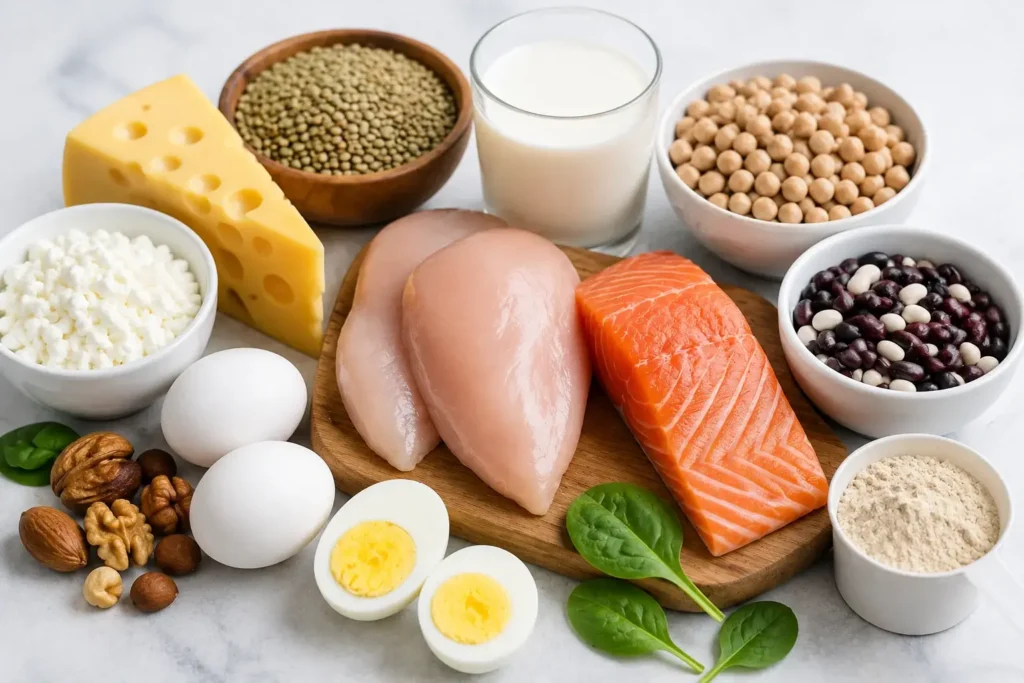
Best High-Protein Foods for Weight Loss
Choose lean, nutrient-dense protein sources.
Animal Protein
- Chicken breast
- Turkey
- Fish
- Tuna
- Salmon
- Eggs
- Greek yogurt
- Cottage cheese
- Lean beef
Plant Protein
- Lentils
- Chickpeas
- Beans
- Tofu
- Tempeh
- Edamame
- Quinoa
- Soy milk
- Nuts
- Seeds
Protein Content of Common Foods
| Food | Protein |
| Chicken breast (100 g) | 31 g |
| Salmon (100 g) | 25 g |
| Eggs (2 large) | 12 g |
| Greek yogurt (200 g) | 20 g |
| Cottage cheese (100 g) | 11 g |
| Lentils (1 cup cooked) | 18 g |
| Tofu (100 g) | 17 g |
| Tuna (100 g) | 29 g |
Should You Eat Protein at Every Meal?
Yes.
Instead of eating most of your protein at dinner, spread it throughout the day.
Example:
- Breakfast: 25–30 g
- Lunch: 30–35 g
- Snack: 15–20 g
- Dinner: 30–40 g
This supports muscle maintenance and helps keep you full between meals.
Best Time to Eat Protein
There isn’t one “perfect” time, but these times are especially beneficial:
- Breakfast to reduce hunger later in the day
- After workouts for muscle recovery
- During each meal to support fullness
- Evening snack if it fits your calorie goal
Consistency matters more than timing.
Protein and Calories
Protein works best when paired with a calorie deficit.
A balanced weight-loss diet should include:
- Protein: 25–35% of calories
- Healthy fats: 20–35%
- Carbohydrates: Remaining calories
Combining adequate protein with a moderate calorie deficit leads to sustainable fat loss.
Common Mistakes to Avoid
Many people make these protein-related mistakes:
- Eating too little protein
- Depending only on protein shakes
- Skipping breakfast
- Ignoring strength training
- Choosing processed meats frequently
- Forgetting fiber-rich foods
Aim for whole-food protein sources whenever possible.
Sample One-Day High-Protein Meal Plan
Breakfast
- Greek yogurt
- Oats
- Berries
Protein: 28 g
Snack
- Boiled eggs
Protein: 12 g
Lunch
- Grilled chicken
- Brown rice
- Mixed vegetables
Protein: 38 g
Snack
- Cottage cheese
Protein: 18 g
Dinner
- Baked salmon
- Sweet potato
- Broccoli
Protein: 35 g
Total Protein: Approximately 131 g
Tips to Increase Protein Intake
- Include protein in every meal.
- Choose lean meats and fish.
- Eat Greek yogurt instead of regular yogurt.
- Add beans or lentils to soups and salads.
- Snack on cottage cheese or boiled eggs.
- Use tofu or tempeh in vegetarian meals.
- Drink a protein shake only if you struggle to meet your daily goal through food.
Final Thoughts
Finding the best protein intake for weight loss is one of the most effective ways to improve your results. A daily intake of 1.2–2.2 g/kg of body weight, combined with a calorie-controlled diet and regular exercise, can help reduce hunger, preserve muscle, and promote sustainable fat loss.
At Weight Checker (weightchecker.xyz), we recommend calculating your daily calorie needs and protein goals together. Using a personalized calorie or TDEE calculator alongside a balanced, high-protein diet can make your weight-loss journey more accurate, effective, and easier to maintain.
Frequently Asked Questions (FAQs)
What is the best protein intake for weight loss?
Most adults benefit from 1.2–2.2 grams of protein per kilogram of body weight daily, depending on activity level and fitness goals.
Is 100 grams of protein enough for weight loss?
Yes, for many people. Whether it’s enough depends on your body weight and activity level. For someone weighing around 60–80 kg, 100 grams may be appropriate.
Can protein help burn belly fat?
Protein doesn’t specifically burn belly fat, but it helps preserve muscle, reduces hunger, and supports overall fat loss, including abdominal fat when combined with a calorie deficit.
Can I lose weight without eating more protein?
Yes, but adequate protein makes weight loss easier by improving satiety and helping maintain lean muscle.
Is whey protein good for weight loss?
Yes. Whey protein is a convenient way to meet your daily protein target, especially if you cannot get enough from whole foods.
How much protein should a woman eat for weight loss?
Most women benefit from 1.2–2.0 g/kg of body weight per day, depending on exercise habits and calorie intake.
Does eating more protein speed up metabolism?
Protein has a higher thermic effect than fats and carbohydrates, meaning your body uses more energy to digest it. While the effect is modest, it can contribute to overall calorie expenditure.