Building muscle isn’t just about lifting heavier weights, it’s also about eating enough calories. If you’re not consuming sufficient energy, your body won’t have the resources needed to repair and grow muscle tissue.
Whether you’re starting your fitness journey or struggling to gain size, understanding calories for muscle gain is one of the most important steps.
At Weight Checker, we help you calculate your calorie needs accurately so you can build lean muscle without unnecessary fat gain.
What Are Calories?
Calories are units of energy found in food and drinks.
Your body uses calories to:
- Keep your heart beating
- Support brain function
- Fuel workouts
- Repair muscles
- Build new muscle tissue
- Maintain body temperature
If you eat too few calories, muscle growth becomes difficult.
If you eat too many calories, you may gain excessive body fat.
The goal is to find the right balance.
Why Calories Matter for Muscle Gain
Muscle growth requires energy.
Every time you strength train, your muscles develop tiny tears. During recovery, your body repairs these tears and builds stronger muscle fibers.
This repair process requires:
- Energy (calories)
- Protein
- Carbohydrates
- Healthy fats
- Recovery and sleep
Without enough calories, your body prioritizes basic functions instead of building muscle.
What Is a Calorie Surplus?
A calorie surplus means eating more calories than your body burns each day.
This extra energy gives your body the resources needed to create new muscle tissue.
Example
Daily calories burned:
2,400 calories
Calories eaten:
2,700 calories
Surplus:
+300 calories
This is generally considered a good starting point for lean muscle gain.
How Many Calories Do You Need for Muscle Gain?
There isn’t one number that works for everyone.
Your calorie needs depend on:
- Age
- Gender
- Height
- Weight
- Activity level
- Training frequency
- Metabolism
- Body composition
A good guideline is:
| Goal | Daily Calorie Change |
| Lean Muscle Gain | +200 to +300 calories |
| Moderate Muscle Gain | +300 to +500 calories |
| Aggressive Bulking | +500 to +700 calories |
Most beginners should start with a 250–350 calorie surplus.
How to Calculate Calories for Muscle Gain
Follow these simple steps.
Step 1: Calculate Your Maintenance Calories
Your maintenance calories (also called TDEE) represent how many calories you burn each day.
You can estimate this using:
- Age
- Weight
- Height
- Activity level
Weight Checker’s calorie tools make this process quick and easy.
Step 2: Add a Calorie Surplus
After finding your maintenance calories:
- Add 250 calories for lean gains
- Add 500 calories for faster gains
Example:
Maintenance = 2,500 calories
Target = 2,800 calories
Step 3: Monitor Progress
Aim to gain approximately:
- 0.25–0.5% of your body weight per week
Example:
80 kg person
Healthy weekly gain:
- 0.2–0.4 kg
If you’re not gaining weight after 2–3 weeks, increase calories by 100–150 per day.
Best Macronutrients for Muscle Gain
Calories matter most, but where those calories come from also plays a major role.
Protein
Protein repairs and builds muscle.
Recommended intake:
- 1.6–2.2 grams per kilogram of body weight
Examples:
- Chicken
- Fish
- Eggs
- Greek yogurt
- Cottage cheese
- Lean beef
- Whey protein
- Tofu
Carbohydrates
Carbs provide workout energy and replenish glycogen stores.
Choose:
- Rice
- Oats
- Potatoes
- Sweet potatoes
- Whole grains
- Fruits
- Pasta
Healthy Fats
Healthy fats support hormone production, including testosterone.
Sources include:
- Nuts
- Seeds
- Olive oil
- Peanut butter
- Avocados
- Salmon
Aim for 20–35% of your calories from healthy fats.
Sample Calories for Muscle Gain
| Body Weight | Estimated Calories |
| 50 kg | 2,100–2,400 |
| 60 kg | 2,300–2,700 |
| 70 kg | 2,500–3,000 |
| 80 kg | 2,800–3,300 |
| 90 kg | 3,000–3,600 |
These are estimates. Individual calorie needs vary.
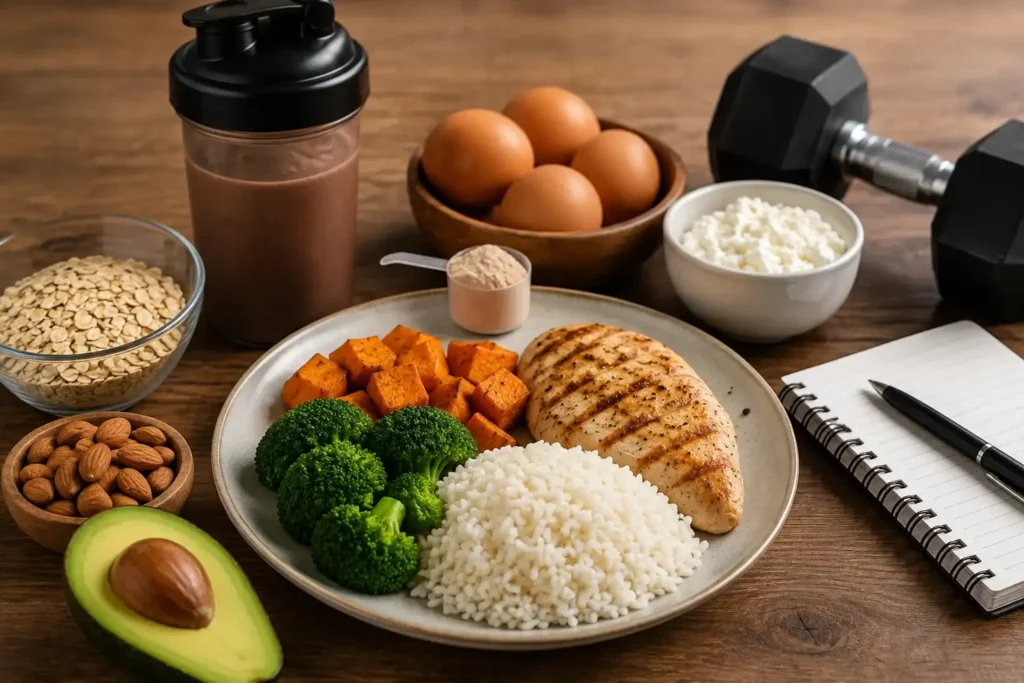
Foods That Help Build Muscle
Prioritize nutrient-dense foods.
High-Protein Foods
- Chicken breast
- Turkey
- Eggs
- Tuna
- Salmon
- Lean beef
- Cottage cheese
- Greek yogurt
Healthy Carbs
- Rice
- Oatmeal
- Potatoes
- Whole wheat bread
- Pasta
- Bananas
- Beans
Healthy Fats
- Almonds
- Walnuts
- Peanut butter
- Olive oil
- Avocados
- Chia seeds
Best Meal Timing for Muscle Growth
Meal timing is less important than total daily intake, but spreading protein throughout the day can help.
A simple plan:
- Breakfast
- Lunch
- Pre-workout meal
- Post-workout meal
- Dinner
- Optional evening protein snack
Aim for 20–40 grams of protein per meal.
Common Mistakes Beginners Make
Avoid these common errors:
- Eating too few calories
- Skipping protein
- Not tracking food intake
- Doing too much cardio
- Expecting overnight results
- Sleeping less than 7 hours
- Frequently changing workout programs
Consistency beats perfection.
How to Know If You’re Eating Enough
Signs your calorie intake is appropriate:
- Gradual weight gain
- Increased strength
- Better workout performance
- Faster recovery
- Improved energy levels
Signs you may need more calories:
- Weight isn’t increasing
- Constant fatigue
- Poor recovery
- Difficulty progressing in the gym
- Frequent hunger
Should You Dirty Bulk?
Dirty bulking means eating large amounts of unhealthy, high-calorie foods.
While it can increase body weight quickly, it often leads to excessive fat gain.
Instead, choose a lean bulk by eating mostly nutritious foods with a moderate calorie surplus.
Why Use Weight Checker?
At Weight Checker (weightchecker.xyz), our tools are designed to help you make smarter nutrition decisions.
Our calculators can help you:
- Estimate daily calorie needs
- Calculate maintenance calories
- Plan a calorie surplus
- Track weight changes
- Support healthy muscle gain goals
Using accurate calculations removes guesswork and helps you stay consistent.
Muscle Gain Tips
For the best results:
- Train with progressive overload
- Eat enough calories every day
- Prioritize protein
- Stay hydrated
- Sleep 7–9 hours nightly
- Track body weight weekly
- Be patient and consistent
Muscle growth takes time.
Final Thoughts
Understanding calories for muscle gain is the foundation of successful muscle building. A moderate calorie surplus, adequate protein intake, consistent strength training, and proper recovery work together to help you build lean muscle over time.
Rather than guessing how much to eat, use reliable calorie calculations and monitor your progress regularly. At Weight Checker, our goal is to simplify nutrition with practical tools and evidence-based guidance, helping beginners build muscle efficiently and sustainably.
Frequently Asked Questions (FAQs)
How many calories should I eat for muscle gain?
Most people should consume 200–500 calories above maintenance. Beginners often do well with a 250–350 calorie surplus.
Can I build muscle without a calorie surplus?
Beginners, people returning after a break, or individuals with higher body fat may build some muscle at maintenance. However, a modest calorie surplus generally supports faster muscle growth.
Is 3,000 calories enough for muscle gain?
It depends on your maintenance calories, body size, and activity level. For some people, 3,000 calories is a surplus; for others, it may only maintain weight.
What foods are best for muscle gain?
Focus on:
- Lean protein
- Whole grains
- Fruits
- Vegetables
- Healthy fats
- Dairy
- Legumes
How much protein do I need?
Aim for 1.6–2.2 grams per kilogram of body weight each day.
How fast should I gain weight?
A good target is 0.25–0.5% of your body weight per week to maximize muscle gain while limiting fat gain.
Can I gain muscle and lose fat at the same time?
Yes, especially if you’re new to resistance training or returning after a break. This process is called body recomposition, though progress is usually slower than focusing on one goal.