Building muscle is not just about lifting heavier weights it also depends on eating enough protein for muscle gain. Protein provides the amino acids your body needs to repair and build muscle tissue after workouts. Without adequate protein, your muscles recover more slowly and muscle growth becomes difficult, even with a perfect training routine.
Whether you’re a beginner starting strength training or someone looking to maximize lean muscle growth, understanding how much protein you need and how to consume it can make a significant difference.
At Weight Checker (weightchecker.xyz), we help you make evidence-based nutrition decisions using practical health tools and easy-to-understand guides.
Why Is Protein Important for Muscle Gain?
Protein is made up of amino acids, which are often called the building blocks of muscle.
When you perform resistance exercises such as weightlifting:
- Muscle fibers experience tiny tears.
- Your body repairs these fibers.
- The repaired fibers become stronger and larger.
- Protein supplies the amino acids needed for this repair process.
Without enough protein, your body cannot efficiently build new muscle tissue.
Benefits of Eating Enough Protein
- Supports muscle growth
- Speeds recovery after workouts
- Helps maintain lean muscle during fat loss
- Reduces muscle breakdown
- Improves workout performance
- Keeps you feeling full longer
How Much Protein Do You Need for Muscle Gain?
For most healthy adults aiming to build muscle, research suggests consuming approximately:
1.6–2.2 grams of protein per kilogram of body weight per day
Quick Examples
| Body Weight | Daily Protein |
| 50 kg | 80–110 g |
| 60 kg | 96–132 g |
| 70 kg | 112–154 g |
| 80 kg | 128–176 g |
| 90 kg | 144–198 g |
Individual needs may vary depending on:
- Training intensity
- Age
- Recovery
- Overall calorie intake
- Fitness goals
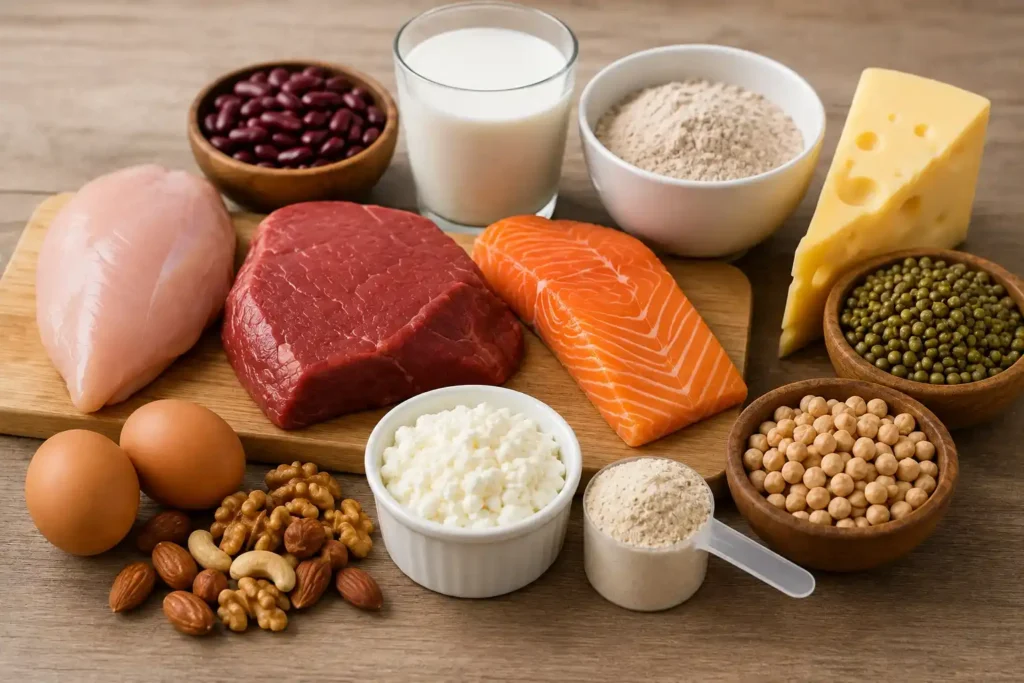
Best Sources of Protein for Muscle Gain
Choosing high-quality protein sources helps you get all the essential amino acids your body needs.
Animal Protein
- Chicken breast
- Turkey
- Lean beef
- Eggs
- Fish
- Greek yogurt
- Cottage cheese
- Milk
These are complete proteins, meaning they contain all essential amino acids.
Plant Protein
Vegetarians and vegans can also build muscle effectively by combining different protein sources.
Good options include:
- Lentils
- Chickpeas
- Beans
- Tofu
- Tempeh
- Edamame
- Soy milk
- Quinoa
- Peas
- Nuts and seeds
Combining foods like beans and rice throughout the day can improve overall protein quality.
Protein Timing for Muscle Gain
While your total daily protein intake matters most, spreading protein throughout the day may support muscle protein synthesis.
Aim to include protein in:
- Breakfast
- Lunch
- Dinner
- Post-workout meal
- Healthy snacks
Many people find it helpful to consume protein after resistance training to support recovery.
Is Protein Powder Necessary?
No.
Protein powder is a convenient option not a requirement.
Whole foods should provide most of your protein intake.
Protein powder may help if:
- You’re busy
- You struggle to meet protein needs
- You need a quick post-workout meal
- You’re traveling
Popular options include:
- Whey protein
- Casein protein
- Soy protein
- Pea protein
- Mixed plant protein
Can You Eat Too Much Protein?
Most healthy individuals can safely consume higher-protein diets within recommended ranges.
However:
- Extremely high protein intake offers little additional muscle-building benefit.
- Balance is important.
- Stay hydrated.
- Eat enough carbohydrates and healthy fats.
People with kidney disease or certain medical conditions should follow medical advice before significantly increasing protein intake.
Foods High in Protein
| Food | Approximate Protein |
| Chicken breast (100 g) | 31 g |
| Tuna (100 g) | 29 g |
| Lean beef (100 g) | 26 g |
| Greek yogurt (200 g) | 20 g |
| Cottage cheese (100 g) | 11 g |
| Eggs (2 large) | 12 g |
| Tofu (100 g) | 15 g |
| Lentils (1 cup cooked) | 18 g |
| Milk (1 cup) | 8 g |
| Peanut butter (2 tbsp) | 8 g |
Sample High-Protein Meal Plan
Breakfast
- Eggs
- Oatmeal
- Milk
Protein: ~30 g
Snack
- Greek yogurt
- Almonds
Protein: ~20 g
Lunch
- Grilled chicken
- Rice
- Vegetables
Protein: ~40 g
Snack
- Protein shake
- Banana
Protein: ~25 g
Dinner
- Salmon
- Sweet potato
- Salad
Protein: ~35 g
Total Protein: Approximately 150 g
Common Mistakes That Slow Muscle Growth
Avoid these common mistakes:
- Not eating enough calories
- Skipping protein at meals
- Depending only on supplements
- Missing workouts
- Poor sleep habits
- Ignoring recovery
- Inconsistent training
- Expecting overnight results
Consistency always beats perfection.
Protein and Calories Work Together
Protein alone cannot maximize muscle gain.
To build muscle efficiently, you generally need:
- Enough daily calories
- Progressive strength training
- Quality sleep
- Adequate hydration
- Consistent protein intake
A calorie surplus combined with sufficient protein supports muscle-building goals.
Use Weight Checker to Plan Your Nutrition
Knowing your protein target is easier when you understand your calorie needs.
At Weight Checker, you can estimate your daily calorie requirements and use them to create a balanced nutrition plan that supports muscle gain. Combining accurate calorie estimates with the right protein intake helps you make informed decisions for long-term progress.
Tips for Maximizing Muscle Growth
- Lift weights consistently.
- Eat protein with every meal.
- Sleep 7–9 hours each night.
- Stay hydrated.
- Eat enough calories.
- Focus on whole foods.
- Increase training intensity gradually.
- Track your progress over time.
Final Thoughts
Getting enough protein for muscle gain is one of the most important nutrition strategies for building lean muscle. Combined with regular resistance training, sufficient calories, quality sleep, and recovery, adequate protein helps your body repair and grow stronger over time.
Focus on consistent eating habits rather than quick fixes. Choose protein-rich whole foods, spread your intake across the day, and track your progress. With the right nutrition plan, muscle growth becomes a sustainable process rather than a guessing game.
Frequently Asked Questions (FAQs)
How much protein do I need for muscle gain?
Most active adults aiming to build muscle benefit from around 1.6–2.2 grams of protein per kilogram of body weight per day, depending on training volume and overall nutrition.
Is protein powder better than food?
No. Whole foods provide additional nutrients, while protein powder is mainly a convenient way to increase protein intake.
Can I build muscle without supplements?
Yes. Many people successfully build muscle using a balanced diet rich in protein and consistent strength training.
What is the best protein source?
There isn’t a single best option. Lean meats, fish, eggs, dairy, soy products, legumes, and other protein-rich foods can all support muscle growth when included in a balanced diet.
Should I eat protein before or after a workout?
Meeting your total daily protein goal is the priority. Including protein after exercise can also support recovery and muscle repair.
Can vegetarians build muscle?
Absolutely. A well-planned vegetarian diet with adequate protein from foods like soy, lentils, beans, dairy (if consumed), and grains can support muscle gain.