
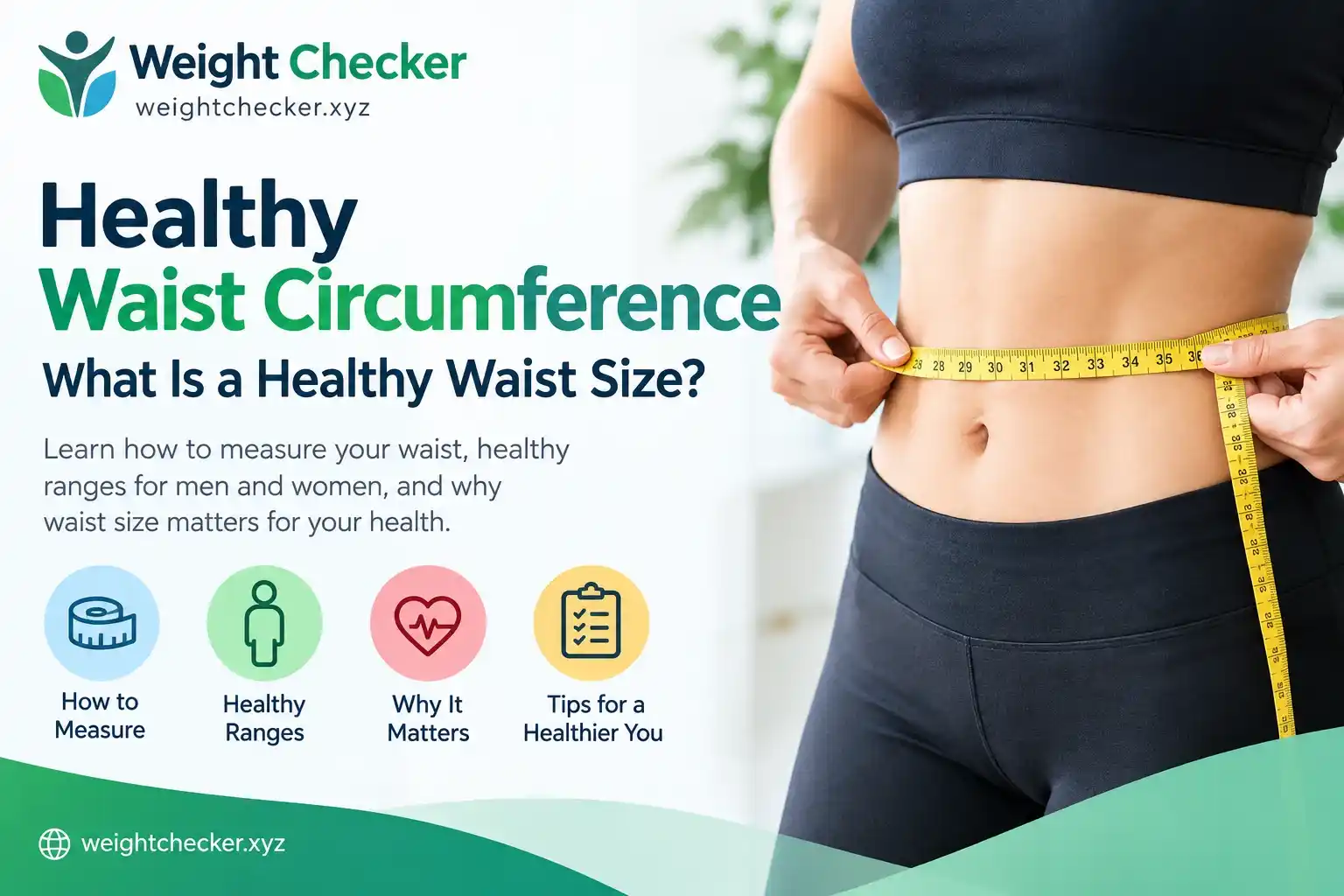
Waist circumference is a simple measurement that can help indicate how much fat is stored around your abdomen. While body weight and BMI are useful health measurements, waist circumference provides additional information about abdominal fat and potential health risks.
A healthy waist circumference generally means having a waist measurement below levels associated with increased health risks. However, healthy ranges can vary depending on sex, ethnicity, height, age, and individual health factors.
Measuring your waist is easy and requires only a measuring tape. When combined with other measurements such as BMI, body weight, and body fat percentage, it can give you a better overall picture of your health.
Quick Answer: For many adults, a waist circumference below 40 inches (102 cm) for men and below 35 inches (88 cm) for women is commonly used as a general health-risk threshold. These are risk thresholds rather than perfect definitions of an ideal waist size.
What Is Waist Circumference?
Waist circumference is the distance around your abdomen measured at a standardized location around the waist.
Unlike body weight, which tells you how much you weigh overall, waist circumference provides information about abdominal fat.
Excess fat around the abdomen, particularly visceral fat stored around internal organs, is associated with a higher risk of several health conditions.
Waist circumference can therefore be useful alongside:
- BMI
- Body weight
- Body fat percentage
- Blood pressure
- Blood glucose
- Cholesterol levels
- Physical activity levels
No single measurement can determine whether someone is healthy, so waist circumference should be viewed as one part of an overall health assessment.

Why Is Waist Circumference Important?
The location of body fat matters.
Two people can have the same body weight and BMI but have different amounts of abdominal fat. Someone carrying more fat around the abdomen may have a different metabolic risk profile than someone who carries more fat around the hips and thighs.
A larger waist circumference may be associated with increased risk of:
- Type 2 diabetes
- Heart disease
- High blood pressure
- Metabolic syndrome
- Fatty liver disease
- Other obesity related health problems
This is one reason healthcare professionals may measure waist circumference in addition to weight and BMI.
What Is a Healthy Waist Circumference?
There is no single waist measurement that is considered perfect for every adult.
However, commonly used clinical thresholds identify waist measurements associated with increased health risk.
General adult waist circumference thresholds
| Sex | Lower-risk range* | Increased-risk threshold |
| Men | Below 40 inches (102 cm) | 40 inches (102 cm) or more |
| Women | Below 35 inches (88 cm) | 35 inches (88 cm) or more |
*These are general thresholds, not a universal definition of an “ideal” waist size.
Some ethnic groups can have increased metabolic risk at lower waist measurements. For example, health organizations often use lower thresholds when assessing certain Asian populations.
Important: These numbers should not be interpreted as a diagnosis. Your healthcare professional may use different cutoffs depending on your ethnicity, medical history, and the guideline being followed.
Healthy Waist Circumference for Men
For men, a waist circumference of 40 inches (102 cm) or more is commonly considered a marker of increased health risk.
A waist measurement below this level does not automatically mean that a person is healthy, but it generally indicates a lower level of abdominal obesity according to this commonly used threshold.
Men should consider their waist circumference alongside:
- BMI
- Body fat percentage
- Blood pressure
- Blood sugar
- Cholesterol
- Exercise habits
- Diet
- Family medical history
Healthy Waist Circumference for Women
For women, a waist circumference of 35 inches (88 cm) or more is commonly used as a threshold associated with increased health risk.
Again, this is a risk threshold rather than an ideal waist measurement.
Women naturally have different body shapes and fat distributions, and factors such as pregnancy, age, genetics, and hormonal changes can affect waist size.
Healthy Waist Circumference by Age
There isn’t one universally accepted “healthy waist size” for every age.
Waist circumference tends to change throughout adulthood because of changes in:
- Muscle mass
- Body fat
- Hormones
- Physical activity
- Diet
- Metabolism
- Aging
Therefore, it is generally better to focus on overall health and trends in waist circumference rather than trying to reach a specific number solely based on age.
If your waist circumference is gradually increasing over time, especially alongside increasing body weight, blood pressure, or blood sugar, it may be worth discussing with a healthcare professional.
How to Measure Your Waist Circumference Correctly
Measuring your waist correctly is important because placing the tape in different locations can produce different results.
Follow these steps:
- Stand upright with your feet about shoulder-width apart.
- Remove or move aside bulky clothing around your waist.
- Find the measurement point recommended by your healthcare professional or chosen guideline.
- Wrap a flexible measuring tape around your abdomen.
- Keep the tape horizontal and level.
- Make sure the tape is snug but does not compress your skin.
- Breathe normally.
- Take the measurement after a normal exhalation.
- Record the measurement in inches or centimeters.
Measurement tip
Don’t pull the tape extremely tight. It should sit against your skin without squeezing your abdomen.
For tracking progress, try to measure under similar conditions each time, such as at the same time of day and using the same measurement technique.
Waist Circumference vs. BMI
BMI and waist circumference measure different things.
BMI estimates body weight relative to height, while waist circumference focuses on abdominal size.
For example, someone can have a BMI within the normal range but still carry a relatively high amount of abdominal fat.
On the other hand, someone with a higher BMI may have a large amount of muscle and relatively little body fat.
That’s why using multiple measurements can provide a more complete picture.
BMI can help answer:
“Is my body weight appropriate for my height?”
Waist circumference can help answer:
“How much abdominal size or central fat am I carrying?”
You can use both measurements together for a better understanding of your body composition and health.
Waist Circumference vs. Waist-to-Height Ratio
Another useful measurement is the waist-to-height ratio (WHtR).
It compares your waist circumference with your height.
The basic calculation is:
Waist-to-height ratio = Waist circumference ÷ Height
Both measurements should be in the same unit.
For example, if someone has:
- Waist = 80 cm
- Height = 170 cm
Their waist-to-height ratio would be approximately:
80 ÷ 170 = 0.47
Waist-to-height ratio can provide another way to assess central body fat, although different health organizations and researchers use different approaches and thresholds.
What Causes a Large Waist Circumference?
Several factors can contribute to an increasing waist size.
Common causes include:
- Consuming more calories than the body uses
- Low physical activity
- Excessive intake of highly processed foods
- High intake of sugary drinks
- Excess alcohol consumption
- Poor sleep
- Chronic stress
- Aging
- Hormonal changes
- Genetics
A larger waist isn’t necessarily caused by one factor. Lifestyle, genetics, age, and other health factors can all play a role.
How to Reduce Waist Circumference
You cannot reliably choose exactly where your body loses fat. Spot reduction isn’t generally possible.
Instead, reducing overall body fat through sustainable lifestyle habits can gradually reduce waist circumference.
1. Create a sustainable calorie deficit
If you have excess body fat, consuming fewer calories than your body uses can help promote weight loss.
Our Weight Checker tools can help you understand measurements such as BMI, BMR, TDEE, and calorie needs.
2. Eat a balanced diet
Focus on foods such as:
- Vegetables
- Fruits
- Whole grains
- Lean protein
- Beans and legumes
- Nuts and seeds
- Healthy fats
3. Increase physical activity
Regular activity can support weight management and cardiovascular health.
Consider combining:
- Walking
- Running
- Cycling
- Swimming
- Strength training
- Other enjoyable physical activities
4. Get enough sleep
Poor sleep can make healthy eating and weight management more difficult.
Try to maintain a consistent sleep schedule and prioritize adequate sleep.
5. Manage stress
Long term stress can influence eating behavior and lifestyle habits.
Activities such as exercise, relaxation, social connection, and adequate sleep may help with stress management.
Can You Have a Healthy Weight but a Large Waist?
Yes.
BMI and body weight don’t show exactly where body fat is stored.
Someone can have a relatively normal body weight while carrying more abdominal fat.
This is sometimes described as normal weight central obesity.
For this reason, waist circumference can provide useful information that body weight alone cannot.
Is a Smaller Waist Always Healthier?
No.
A smaller waist isn’t automatically healthier.
Trying to achieve an extremely small waist can lead to unhealthy dieting, inadequate nutrition, or excessive exercise.
The goal should be healthy body composition and sustainable habits, rather than achieving the smallest possible waist.
Your genetics, body structure, sex, age, and other factors influence your natural body shape.
When Should You Talk to a Doctor?
Consider speaking with a healthcare professional if you have:
- A rapidly increasing waist circumference
- Significant unexplained weight gain
- High blood pressure
- High blood sugar
- Abnormal cholesterol
- A strong family history of diabetes or heart disease
- Concerns about abdominal obesity
- Difficulty managing your weight despite consistent lifestyle changes
A healthcare professional can evaluate waist circumference alongside other measurements and medical factors.
Final Takeaway
Healthy waist circumference is an important health measurement because it provides information about abdominal fat that body weight and BMI may not capture.
For many adults, commonly used thresholds are:
- Men: below 40 inches (102 cm)
- Women: below 35 inches (88 cm)
However, these numbers should be treated as general health-risk thresholds, not perfect targets.
For a more complete picture of your health, consider waist circumference together with BMI, body fat percentage, activity level, diet, blood pressure, and other health indicators.
At Weight Checker, our goal is to make health and body-measurement information easier to understand so you can make more informed decisions about your wellness.
Frequently Asked Questions About Healthy Waist Circumference
What is a healthy waist circumference for men?
For many adult men, a waist circumference below 40 inches (102 cm) is commonly used as a lower-risk threshold. A measurement of 40 inches or more is associated with increased health risk.
What is a healthy waist circumference for women?
For many adult women, a waist circumference below 35 inches (88 cm) is commonly used as a lower-risk threshold. A measurement of 35 inches or more is associated with increased health risk.
Is a 32-inch waist healthy?
A 32-inch waist may fall below commonly used risk thresholds for many adults, but waist size alone cannot determine whether someone is healthy. Height, sex, ethnicity, body composition, and other health factors also matter.
Is a 36-inch waist healthy?
It depends on the person. A 36-inch waist is below the commonly used 40-inch threshold for men but above the commonly used 35-inch threshold for women. These are general risk markers rather than individual diagnoses.
How often should I measure my waist?
If you’re monitoring weight or body composition, measuring your waist periodically under consistent conditions can help you track changes. There is no need to measure it multiple times every day.
Can walking reduce waist circumference?
Yes. Regular walking increases physical activity and can support weight management. When combined with an appropriate diet and consistent lifestyle habits, walking may help reduce overall and abdominal body fat.
Can I lose belly fat specifically?
You cannot reliably control exactly where your body loses fat. Reducing overall body fat through nutrition, physical activity, strength training, sleep, and sustainable calorie control can help reduce abdominal fat over time.
Is waist circumference better than BMI?
Neither measurement is universally “better.” They provide different information. BMI relates body weight to height, while waist circumference provides information about abdominal size and central fat.
What is the healthiest waist size?
There is no single ideal waist size for everyone. A waist measurement below commonly used health-risk thresholds is generally associated with lower risk, but healthy waist size depends on individual characteristics.