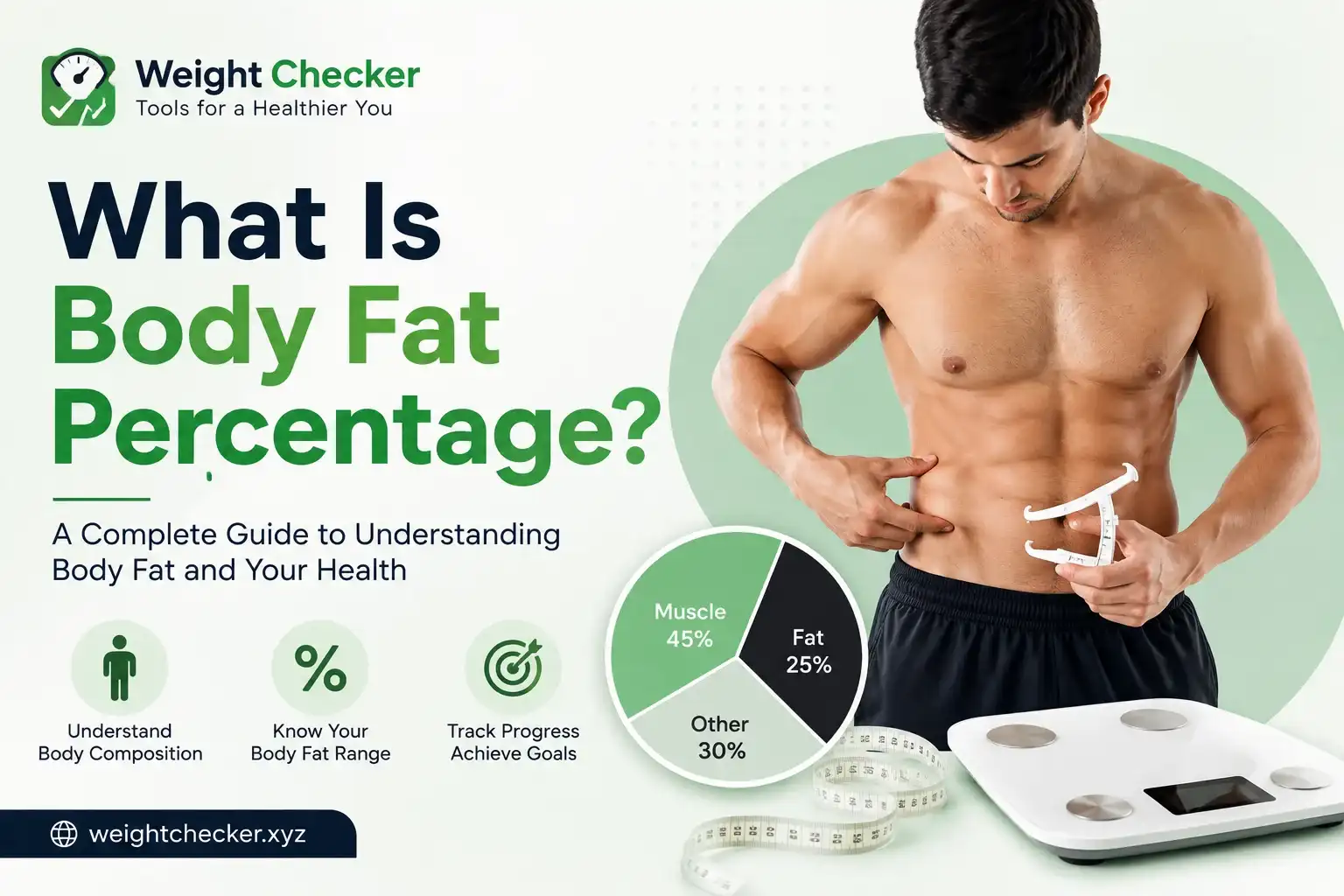
Body fat percentage is the amount of your total body weight that comes from fat. It is an important measure of body composition because it shows how much of your body is fat compared with lean tissues such as muscle, bones, organs, and water.
Unlike body weight or BMI, body fat percentage can provide additional insight into your overall body composition. Two people can weigh the same but have very different body fat percentages depending on how much muscle and fat they have.
In this guide, we’ll explain what body fat percentage is, how it is calculated, healthy body fat ranges, how body fat is measured, and why it matters for weight management and fitness.
What Is Body Fat Percentage?
Body fat percentage is the percentage of your total body weight that consists of fat.
For example, if someone weighs 80 kg and has a body fat percentage of 20%, approximately 16 kg of their body weight is fat.
The remaining 64 kg consists of other tissues and components, including:
- Muscle
- Bones
- Organs
- Water
- Connective tissues
Body fat is not necessarily unhealthy. Your body needs a certain amount of fat to perform essential functions.
Fat helps your body:
- Store energy
- Protect internal organs
- Insulate the body
- Absorb certain vitamins
- Produce and regulate hormones
- Support normal cellular functions
The goal is generally not to eliminate body fat but to maintain an appropriate amount for your individual needs.
How Is Body Fat Percentage Calculated?
Body fat percentage can be estimated using several different methods. Some methods are simple and inexpensive, while others require specialized equipment.
A basic relationship can be expressed as:
Body Fat Percentage = (Body Fat Mass ÷ Total Body Weight) × 100
For example:
If a person has:
- Total weight: 80 kg
- Body fat mass: 16 kg
Their estimated body fat percentage would be:
(16 ÷ 80) × 100 = 20%
However, most people do not know their exact body fat mass. Instead, body fat percentage is usually estimated using measurements or specialized devices.
Why Is Body Fat Percentage Important?
Body weight alone does not tell you what your body is made of.
For example, a muscular person may weigh more than someone with less muscle, even if the muscular person has less body fat.
Body fat percentage can therefore help provide a more detailed picture of body composition.
It may be useful for:
- Tracking changes during weight loss
- Monitoring muscle-building progress
- Understanding body composition
- Setting fitness goals
- Comparing changes over time
- Evaluating whether weight changes are primarily fat, muscle, or other tissue
For people working toward a healthier body composition, tracking body fat percentage alongside weight can provide useful information.
What Is a Healthy Body Fat Percentage?
There is no single body fat percentage that is considered ideal for everyone.
Body fat requirements vary depending on factors such as:
- Sex
- Age
- Genetics
- Activity level
- Fitness level
- Individual health circumstances
Women generally have higher essential body fat requirements than men because body fat plays important physiological and reproductive roles.
Athletes may also have lower body fat percentages than the general population.
Rather than focusing on one exact number, it is better to consider body fat percentage as part of your overall health and fitness picture.
Typical Body Fat Categories
Body fat classifications vary somewhat depending on the organization and measurement method. A commonly used general classification is:
| Category | Men | Women |
| Essential fat | About 2–5% | About 10–13% |
| Athletes | About 6–13% | About 14–20% |
| Fitness | About 14–17% | About 21–24% |
| Average range | About 18–24% | About 25–31% |
| Higher range | 25%+ | 32%+ |
These numbers are general reference ranges, not medical diagnoses. Different organizations may use different categories, and measurement methods can produce different results.
What Is Essential Body Fat?
Essential body fat is the minimum amount of body fat your body needs for normal physiological function.
It supports important processes including:
- Hormone production
- Cell function
- Organ protection
- Temperature regulation
- Normal reproductive function
- Energy storage
Having extremely low body fat can be unhealthy, particularly when maintained for extended periods.
Therefore, achieving the lowest possible body fat percentage is not necessarily a healthy goal.
Body Fat Percentage vs. BMI
Body fat percentage and BMI measure different things.
BMI (Body Mass Index) uses your height and weight to estimate whether your body weight falls within a particular range.
Body fat percentage estimates how much of your weight comes from fat.
For example, two people can have the same BMI but very different body compositions.
BMI can be useful for:
- Population-level screening
- General weight classification
- Quick health assessments
Body fat percentage can help with:
- Understanding body composition
- Tracking fat-loss progress
- Assessing changes in muscle and fat
- Fitness and physique goals
Neither measurement provides a complete picture of health by itself.
How Is Body Fat Percentage Measured?
There are several ways to estimate body fat percentage.
1. Skinfold Calipers
Skinfold calipers measure the thickness of fat under the skin at specific locations on the body.
The measurements are entered into an equation to estimate overall body fat percentage.
Advantages:
- Relatively inexpensive
- Portable
- Quick
Limitations:
- Accuracy depends on the person taking the measurements
- Results can vary between measurements
- Different equations may produce different estimates
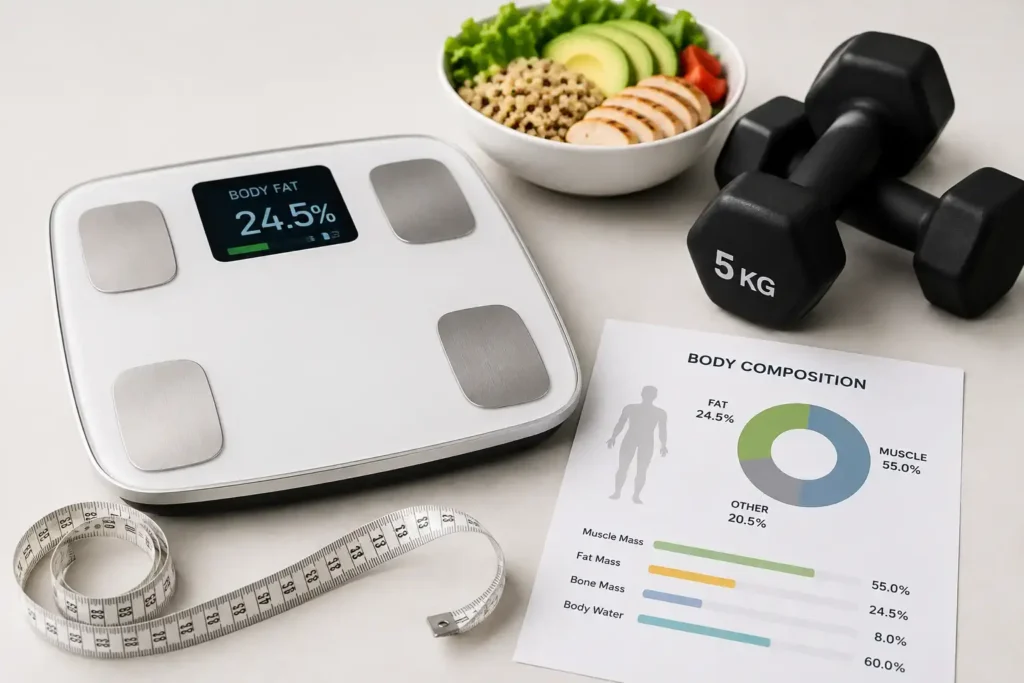
2. Bioelectrical Impedance Analysis
Bioelectrical impedance analysis, commonly called BIA, uses a small electrical current to estimate body composition.
Many modern smart scales use BIA technology.
BIA results can be affected by factors such as:
- Hydration
- Food intake
- Exercise
- Body temperature
- Time of day
For better tracking, try to measure under similar conditions each time.
3. DEXA Scan
A DEXA scan uses low-dose X-rays to estimate body composition and can provide information about fat mass, lean mass, and bone mineral content.
It is generally more sophisticated than home body-fat scales but is less convenient and more expensive.
4. Hydrostatic Weighing
Hydrostatic weighing estimates body composition by measuring body density while a person is submerged in water.
It can provide useful estimates but requires specialized equipment.
5. Body Circumference Measurements
Measurements such as waist circumference, along with other body measurements, can be used in certain formulas to estimate body fat percentage.
This method is convenient because it does not require specialized equipment.
Can You Calculate Body Fat Percentage at Home?
Yes, you can estimate body fat percentage at home using methods such as:
- Body circumference measurements
- Skinfold calipers
- BIA smart scales
- Online body fat calculators
However, home estimates should be viewed as approximations rather than exact measurements.
If you are tracking progress, consistency is often more useful than focusing on a single measurement.
For example, measuring under similar conditions each week can help you identify longer-term trends.
What Factors Affect Body Fat Percentage?
Your body fat percentage is influenced by many factors.
Age
Body composition can change as people get older. Muscle mass may decrease while fat mass can increase if physical activity and nutrition do not change.
Sex
Men and women naturally have different essential body fat requirements and typical body fat distributions.
Genetics
Genetics can influence where your body stores fat, how easily you gain or lose weight, and your natural body composition.
Physical Activity
Regular resistance training and physical activity can help maintain or increase lean muscle mass and support a healthier body composition.
Diet
Total calorie intake, protein intake, food quality, and overall dietary patterns can influence body composition.
Sleep and Stress
Sleep and stress can also affect behaviors and physiological processes related to appetite, physical activity, and weight management.
How Can You Lower Body Fat Percentage?
If your goal is to reduce body fat, the most important factor is generally maintaining a sustainable calorie deficit while preserving muscle mass.
Helpful strategies include:
- Eat a balanced, nutrient-dense diet
- Consume adequate protein
- Perform resistance training
- Include regular cardiovascular activity
- Monitor your calorie intake if appropriate
- Get adequate sleep
- Stay physically active throughout the day
- Set realistic weight-loss goals
- Track progress consistently
Rapid weight loss is not always better. A gradual, sustainable approach can make it easier to maintain your results.
Can You Lower Body Fat Without Losing Weight?
Yes.
Your body weight can remain relatively stable while your body composition changes.
For example, if you lose some body fat while gaining muscle, your scale weight may change very little.
This is sometimes called body recomposition.
That is why it can be useful to track several measurements rather than relying only on the number on the scale.
You can monitor:
- Body weight
- Waist circumference
- Body fat percentage estimates
- Strength
- Fitness performance
- Progress photos
How Often Should You Measure Body Fat Percentage?
There is no universal requirement for how often you should measure body fat percentage.
If you’re tracking body-composition changes, measuring approximately every few weeks under similar conditions can be more useful than checking multiple times every day.
Try to keep conditions consistent, including:
- Time of day
- Hydration
- Food intake
- Exercise status
- Measurement device
This can reduce some of the normal variation in estimates.
What Is a Good Body Fat Percentage for Weight Loss?
There is no single body fat percentage that everyone needs to reach for weight loss.
A reasonable target depends on factors such as:
- Current body composition
- Age
- Sex
- Fitness level
- Health status
- Personal goals
For many people, the goal should be improving overall health and body composition rather than reaching an extremely low body-fat percentage.
If you have a medical condition or are considering significant weight loss, it is best to discuss your goals with a qualified healthcare professional.
Body Fat Percentage and Weight Management
Body fat percentage can be a useful measurement for people using Weight Checker to understand their weight and body composition.
Weight is only one part of the picture. Tracking body composition can provide additional context when you’re working toward weight loss, muscle gain, or general fitness.
For example, if your weight stays similar but your waist measurement decreases and your strength improves, you may be experiencing positive changes in body composition.
This is why a healthy weight-management strategy should consider more than just the number displayed on a scale.
Key Takeaways
Body fat percentage tells you how much of your total body weight is fat. It provides information about body composition that body weight and BMI alone cannot provide.
The key points to remember are:
- Body fat is necessary for normal body function.
- Everyone needs a certain amount of essential body fat.
- Healthy body fat ranges vary by sex, age, and individual factors.
- Body fat can be estimated using calipers, BIA scales, circumference measurements, DEXA, and other methods.
- Home body-fat measurements are estimates, not exact values.
- Body fat percentage can be useful for tracking body-composition changes.
- Lower body fat is not automatically healthier.
- A sustainable approach to nutrition, exercise, sleep, and weight management is generally more important than chasing a specific number.
If you’re tracking your health and fitness goals, use body fat percentage alongside other measurements such as body weight, waist circumference, physical activity, and overall health rather than relying on a single number.
Frequently Asked Questions About Body Fat Percentage
What is body fat percentage in simple words?
Body fat percentage is the percentage of your total body weight that is made up of fat.
What is a normal body fat percentage?
A “normal” body fat percentage depends on age, sex, and other factors. Common adult reference ranges are roughly 18–24% for men and 25–31% for women, although classifications vary.
Is 20% body fat healthy?
A body fat percentage of 20% can fall within a commonly used healthy or average range for many adult men. For women, 20% may fall closer to an athletic or relatively lean range. Individual health cannot be determined from body fat percentage alone.
Is 30% body fat bad?
A body fat percentage around 30% can fall within a higher range depending on sex and age. It should not be interpreted as a diagnosis by itself. Other health measures and individual circumstances are also important.
Is body fat percentage better than BMI?
Neither measurement is universally better. BMI is a simple screening measure based on height and weight, while body fat percentage provides an estimate of body composition. Using both can provide more information than relying on either alone.
How accurate are body fat scales?
Home BIA scales provide estimates rather than exact measurements. Their readings can vary based on hydration, food intake, exercise, and other factors. They are often more useful for tracking trends under consistent conditions than for determining an exact body fat percentage.
How can I reduce my body fat percentage?
A sustainable calorie deficit, adequate protein, resistance training, regular physical activity, sufficient sleep, and a balanced diet can support fat loss while helping preserve lean muscle.
Can body fat percentage change without weight changing?
Yes. You can lose fat and gain muscle at the same time, resulting in little change in overall body weight.