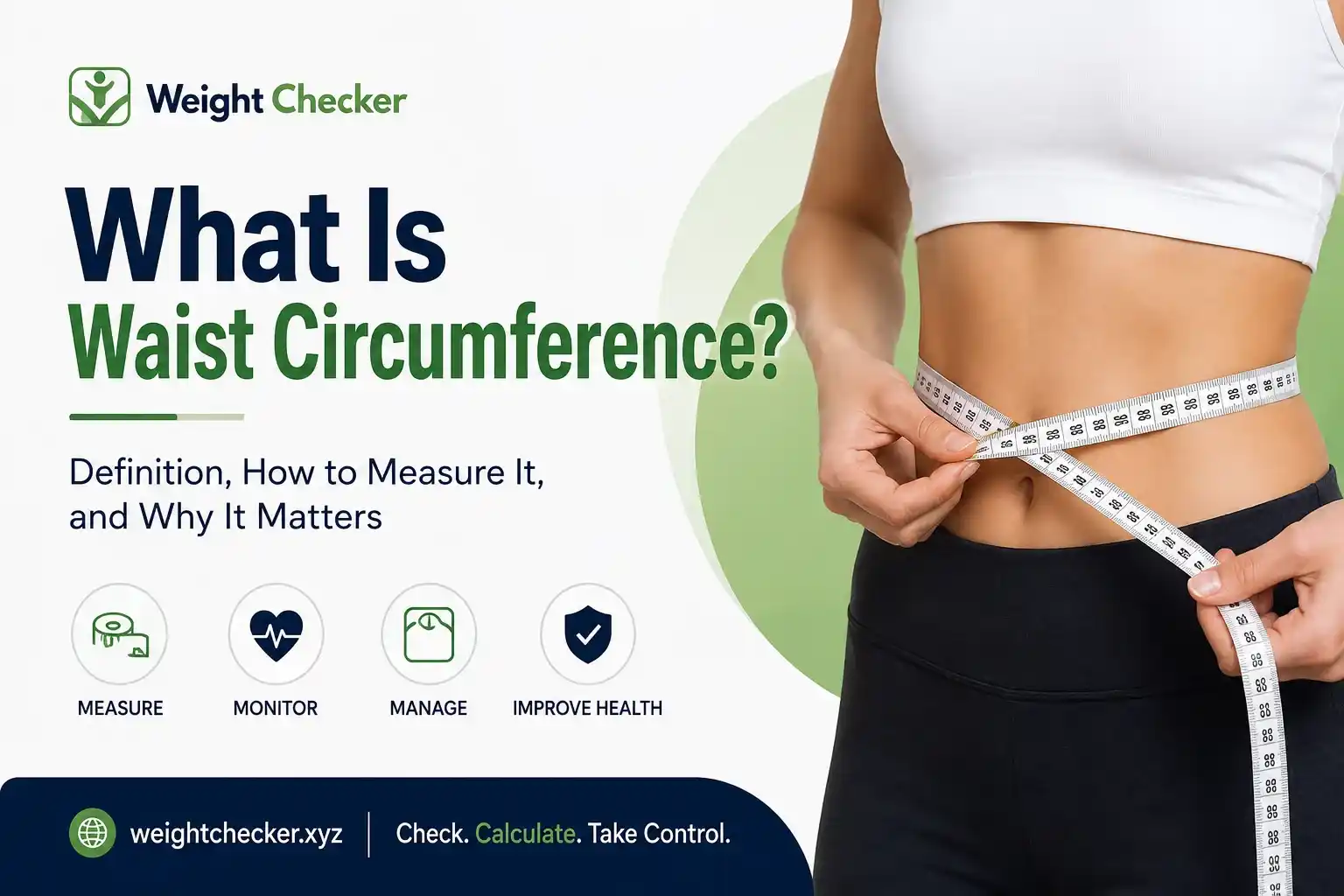
Waist circumference is the measurement around the abdomen at the waist. It is a simple body measurement that can help estimate how much fat is stored around the midsection and provide additional information about health risk alongside measures such as BMI, body weight, and body fat percentage.
Unlike body weight alone, waist circumference gives an indication of where some of your body fat is concentrated. Higher amounts of abdominal fat are associated with an increased risk of conditions such as type 2 diabetes and cardiovascular disease.
For this reason, measuring your waist can be a useful part of monitoring your overall health and body composition.
What Is Waist Circumference?
Waist circumference is the distance around your abdomen, measured with a flexible measuring tape. It is usually recorded in centimeters or inches.
Healthcare professionals use waist circumference as one of several measurements that can help assess abdominal obesity and potential health risks. The World Health Organization recognizes waist circumference as a useful measure when evaluating obesity-related disease risk.
Waist circumference can be particularly useful because two people can have the same body weight or BMI but have different amounts of abdominal fat.
Quick answer
If you are wondering, “What is waist circumference?”, the simplest answer is:
Waist circumference is the measurement around your waist or abdomen, usually taken with a measuring tape, and it can help indicate the amount of fat stored around your midsection.
It is not a complete measure of health by itself, but it can provide useful information when considered together with other measurements.

Why Is Waist Circumference Important?
Waist circumference matters because where your body stores fat can be relevant to health.
Fat concentrated around the abdomen is associated with a higher risk of several metabolic and cardiovascular conditions. The National Heart, Lung, and Blood Institute notes that people who carry more fat around the waist rather than the hips have a higher risk of heart disease and type 2 diabetes.
Measuring your waist can therefore help you:
- Monitor changes in abdominal fat
- Track changes during weight management
- Complement your BMI measurement
- Understand your body composition more completely
- Identify when abdominal fat may be higher than recommended
- Track progress over time
The World Health Organization also notes that waist circumference can provide additional information when assessing overweight and obesity.
How to Measure Waist Circumference Correctly
Measuring your waist circumference does not require special equipment. All you need is a flexible measuring tape.
Follow these steps:
- Stand upright with your feet comfortably together.
- Locate your waist measurement area according to the measurement method being used.
- Wrap a flexible measuring tape horizontally around your abdomen.
- Keep the tape snug but not tight.
- Make sure the tape is level and does not compress your skin.
- Breathe normally.
- Take the measurement at the end of a normal breath out.
- Record the result in inches or centimeters.
The NHLBI recommends placing the tape around the middle just above the hipbones and taking the measurement after breathing out.
Tips for a more consistent measurement
For tracking changes over time, try to measure under similar conditions each time.
- Use the same measuring tape.
- Measure at approximately the same time of day.
- Avoid pulling the tape tightly.
- Keep the tape level around your body.
- Take more than one measurement if you are unsure of the result.
- Record your measurements so you can compare them over time.
Consistency is more important than trying to make the tape as tight as possible.
Where Should You Measure Your Waist?
One common clinical approach is to measure around the abdomen just above the hipbones. The tape should remain horizontal and snug without pressing into the skin.
Different organizations and studies may use slightly different measurement protocols. Therefore, if you are comparing your measurement with a specific health guideline, use the measurement method associated with that guideline.
This is especially important because waist circumference cutoffs can vary according to sex, ethnicity, and the population being assessed.
What Is a Healthy Waist Circumference?
There is no single waist circumference that is ideal for every person.
Health-risk thresholds can differ depending on factors such as:
- Sex
- Ethnicity
- Age
- Population
- Measurement method
- Individual health factors
For example, the commonly used WHO thresholds identify increased risk at a waist circumference above 102 cm (40 inches) for men and 88 cm (35 inches) for women.
However, other guidelines use lower thresholds for certain ethnic groups. WHO documentation includes South Asian-specific values of more than 90 cm for men and more than 80 cm for women in the context of International Diabetes Federation criteria.
This is why waist circumference should not be interpreted using one universal number for everyone.
Important point
A waist measurement above a particular threshold does not automatically mean that a person has a disease. It is a risk indicator that should be considered alongside other information.
Waist Circumference vs. BMI
BMI and waist circumference measure different aspects of your body.
BMI uses your height and weight to estimate weight status. Waist circumference focuses specifically on the size of your abdomen and can provide additional information about fat distribution.
| Measurement | What It Tells You |
| BMI | Relationship between body weight and height |
| Waist circumference | Size of the waist and an indication of abdominal fat |
| Body fat percentage | Estimated proportion of your body weight that is fat |
| Waist-to-height ratio | Waist size relative to height |
Using more than one measurement can provide a broader picture than relying on body weight alone.
For example, someone who has a higher BMI because of greater muscle mass may have a different health profile from someone with the same BMI and a larger amount of abdominal fat.
Waist Circumference and Abdominal Fat
One of the main reasons waist circumference is useful is that it provides information about fat distribution.
Excess abdominal fat is associated with an increased risk of metabolic and cardiovascular problems. NHLBI specifically identifies a larger waist circumference as a risk factor for heart disease and type 2 diabetes.
This does not mean that every person with a larger waist will develop these conditions. Instead, waist circumference is one piece of information that can help identify potential risk.
Waist Circumference and Weight Loss
Waist circumference can be useful when tracking weight-loss progress.
Your body weight can change for several reasons, including changes in:
- Body fat
- Muscle
- Water
- Food stored in the digestive system
Therefore, monitoring waist circumference alongside body weight can give you another way to track physical changes.
For example, if your weight changes slowly but your waist measurement decreases over time, that may indicate a meaningful change in body composition.
For a more complete approach, you can also monitor your BMI, body fat percentage, calorie needs, and other measurements with the free health calculators available on Weight Checker.
Waist Circumference vs. Waist-to-Height Ratio
Waist circumference measures the size of your waist by itself.
Waist-to-height ratio (WHtR) compares your waist measurement with your height.
The basic calculation is:
Waist-to-Height Ratio = Waist Circumference ÷ Height
Both measurements can be useful, but they answer slightly different questions.
If you want to calculate your waist-to-height ratio, you can use the Waist-to-Height Ratio Calculator available on Weight Checker.
Can Waist Circumference Be Used Instead of BMI?
No. Waist circumference should not automatically replace BMI.
BMI and waist circumference provide different information. BMI considers weight relative to height, while waist circumference focuses on abdominal size.
The World Health Organization notes that waist circumference can provide additional information when assessing overweight and obesity.
For a better overall assessment, waist circumference can be considered alongside:
- BMI
- Body fat percentage
- Waist-to-height ratio
- Weight
- Physical activity
- Diet
- Blood pressure
- Other health information
What Can Cause a Larger Waist Circumference?
A person’s waist size can be influenced by many factors.
Common factors include:
- Overall body fat
- Abdominal fat accumulation
- Diet and calorie intake
- Physical activity levels
- Age
- Genetics
- Hormonal and metabolic factors
- Certain medications or health conditions
- Changes in muscle mass
Because waist size is influenced by multiple factors, a single measurement should not be used to diagnose a health condition.
How Can You Reduce Waist Circumference?
If your goal is to reduce abdominal fat and improve overall health, focus on sustainable lifestyle habits rather than trying to lose fat from one specific area.
Helpful habits may include:
- Eating a balanced diet
- Managing overall calorie intake
- Choosing minimally processed foods more often
- Eating adequate protein
- Getting regular physical activity
- Including resistance training
- Getting sufficient sleep
- Managing stress
- Maintaining healthy habits consistently
It is not possible to reliably choose exactly where your body loses fat first. Overall fat loss can eventually reduce waist circumference.
The WHO recommends healthy dietary patterns based on adequacy, balance, moderation, and diversity, while regular physical activity is also important for overall health.
How Often Should You Measure Your Waist?
There is no universal requirement to measure your waist every day.
For people who want to monitor changes, measuring periodically under consistent conditions can be more useful than checking constantly.
For example, you could record your waist measurement as part of a broader weight-management routine and compare measurements over several weeks or months.
Remember that normal day-to-day changes can occur because of hydration, meals, digestion, and other factors.
Does Waist Circumference Differ Between Men and Women?
Yes. Waist circumference and health-risk thresholds can differ between men and women.
Men and women can have different patterns of fat distribution, and commonly used health-risk thresholds are therefore sex-specific.
For example, the commonly cited WHO high-risk thresholds are above 102 cm for men and above 88 cm for women.
However, these numbers should not be treated as universal cutoffs for every population because ethnicity-specific thresholds may apply.
Key Takeaways
What is waist circumference? It is a measurement around the abdomen that can help assess waist size and provide information about abdominal fat distribution.
The most important points to remember are:
- Waist circumference is different from body weight and BMI.
- It can provide additional information about health risk.
- Abdominal fat is associated with increased cardiometabolic risk.
- Use a flexible measuring tape and a consistent measurement technique.
- Health-risk thresholds differ between populations.
- Common WHO thresholds are above 102 cm for men and 88 cm for women.
- South Asian-specific thresholds can be lower.
- Waist circumference can be useful for monitoring changes during weight management.
- It should be considered alongside other health measurements rather than used alone.
- Your waist-to-height ratio can provide another useful measurement of body size.
Track Your Health Measurements With Weight Checker
Understanding your waist circumference is just one part of understanding your health and body composition.
Weight Checker provides free online health calculators designed to help you understand important measurements such as BMI, BMR, TDEE, calories, body fat, lean body mass, protein needs, and waist-to-height ratio.
If you want to explore how your waist measurement relates to your height, try the Waist-to-Height Ratio Calculator on Weight Checker.
Disclaimer: This article is for general educational purposes and does not provide medical diagnosis or treatment. Waist circumference is only one health indicator. If you are concerned about your measurements or health risks, speak with a qualified healthcare professional.
Frequently Asked Questions About Waist Circumference
What is waist circumference in simple words?
Waist circumference is the distance around your abdomen measured with a tape measure. It provides an indication of waist size and can help assess abdominal fat and related health risk.
How do you measure waist circumference?
Stand upright, place a flexible tape around your waist according to the chosen measurement protocol, keep it horizontal and snug without compressing the skin, and take the measurement after a normal breath out.
Is waist circumference the same as waist size?
In everyday language, the terms can mean the same thing. In health assessments, waist circumference specifically refers to a measurement taken around the abdomen using a defined measurement method.
What is a healthy waist circumference for men?
There is no single healthy value for every man. A commonly used WHO high-risk threshold is above 102 cm (40 inches), although different populations may use different thresholds.
What is a healthy waist circumference for women?
There is no universal ideal value for every woman. A commonly used WHO high-risk threshold is above 88 cm (35 inches), while some population-specific guidelines use different cutoffs.
Why is waist circumference important?
Waist circumference can provide information about abdominal fat distribution. Higher waist circumference is associated with increased risk of conditions including cardiovascular disease and type 2 diabetes.
Is waist circumference better than BMI?
Neither measurement is universally “better.” They measure different things. Waist circumference can complement BMI by providing additional information about abdominal fat distribution.
Can waist circumference decrease with weight loss?
Yes. Losing overall body fat can reduce waist circumference, although the amount and speed of change vary from person to person.
How often should I measure my waist?
For general tracking, periodic measurements are usually more useful than measuring several times every day. Try to use the same method and similar conditions each time.
Does waist circumference indicate body fat percentage?
Not directly. Waist circumference can provide information about abdominal size and fat distribution, but it does not directly calculate your body fat percentage.