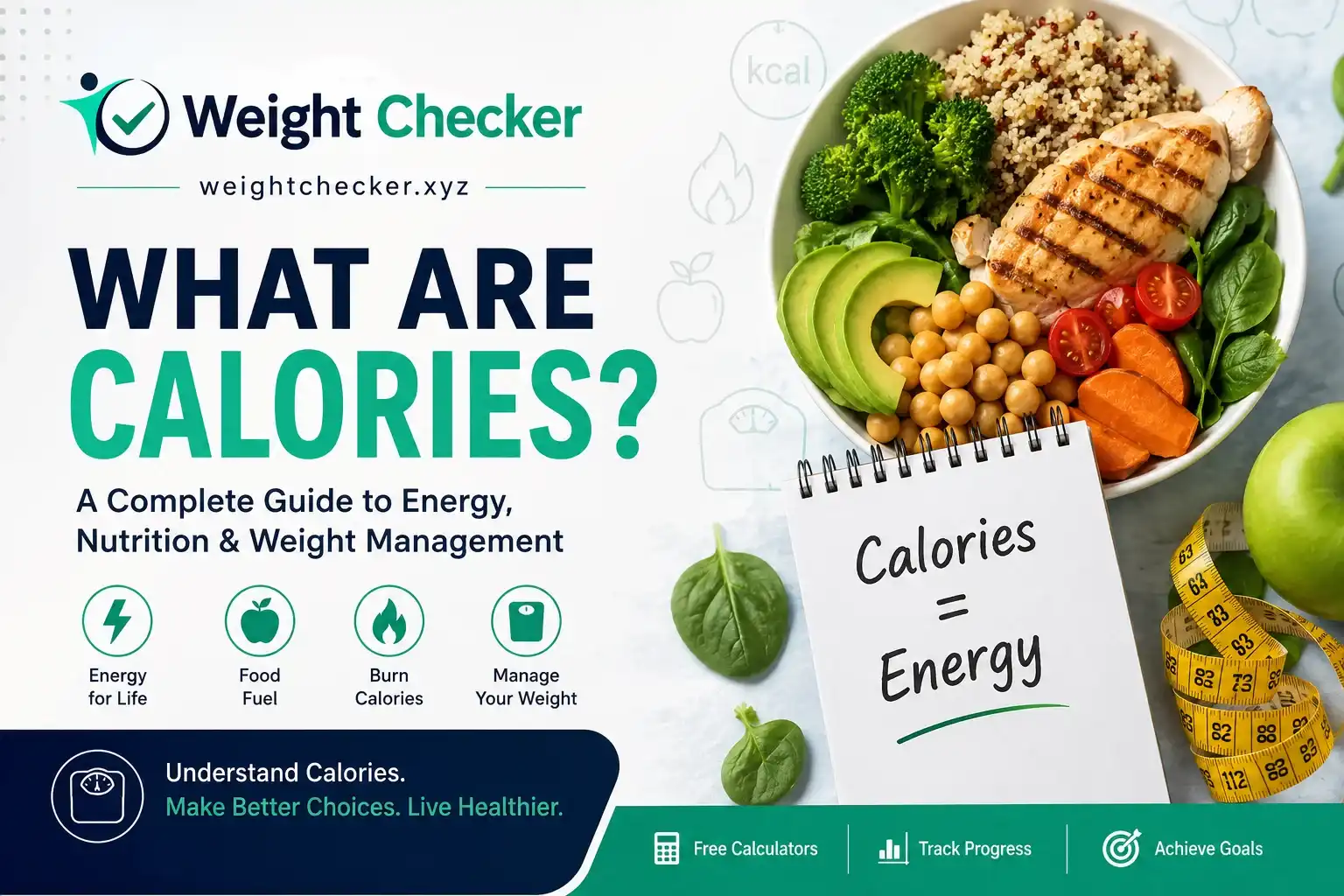
Calories are the body’s source of energy. Every food and drink you consume contains a certain number of calories, which your body uses to perform essential functions such as breathing, digesting food, maintaining body temperature, walking, exercising, and even sleeping.
Understanding calories is one of the most important steps toward achieving your health and fitness goals. Whether you want to lose weight, gain muscle, or simply maintain a healthy lifestyle, knowing how calories work helps you make smarter food choices.
At Weight Checker (weightchecker.xyz), our goal is to make nutrition and weight management easy to understand with reliable health information and practical tools.
Quick Answer
Calories are units of energy found in food and drinks. Your body burns calories to fuel every activity, from breathing and sleeping to exercising and thinking. Consuming more calories than you burn leads to weight gain, while burning more than you consume leads to weight loss.
Table of Contents
- What Are Calories?
- Why Are Calories Important?
- How Do Calories Work?
- Types of Calories
- Where Do Calories Come From?
- Calories in Different Foods
- How Many Calories Do You Need?
- Calories In vs. Calories Out
- Calories and Weight Loss
- Calories and Weight Gain
- Healthy Ways to Manage Calories
- Common Calorie Myths
- Frequently Asked Questions
- Final Thoughts
Why Are Calories Important?
Your body constantly requires energy to function. Even if you spend the entire day resting, your heart continues beating, your lungs keep breathing, your brain stays active, and your organs continue working.
Calories provide the fuel for these essential processes.
Without enough calories, your body may experience:
- Low energy
- Fatigue
- Muscle loss
- Poor concentration
- Nutrient deficiencies
Consuming too many calories over time may lead to:
- Weight gain
- Increased body fat
- Obesity
- Heart disease
- Type 2 diabetes
- High blood pressure
Maintaining the right calorie balance is essential for overall health.
How Do Calories Work?
Think of your body as a car.
- Food = Fuel
- Calories = Energy
- Body = Engine
When you eat food, your body converts it into energy. That energy is used immediately for physical activity or stored for future use.
If you eat more calories than your body needs, the excess energy is stored primarily as body fat.
If you consume fewer calories than you burn, your body uses stored fat for energy, resulting in weight loss.
Where Do Calories Come From?
Calories come from three main macronutrients.
| Nutrient | Calories per Gram | Main Function |
| Carbohydrates | 4 | Primary energy source |
| Protein | 4 | Builds and repairs muscles |
| Fat | 9 | Long-term energy and hormone production |
Alcohol also provides approximately 7 calories per gram, but it offers little nutritional value.
Examples of Calories in Common Foods
| Food | Calories |
| Apple | 95 |
| Banana | 105 |
| Egg | 70 |
| Slice of Bread | 80 |
| Cooked Rice (1 cup) | 205 |
| Chicken Breast (100g) | 165 |
| Oatmeal (1 cup) | 154 |
| Milk (1 cup) | 120 |
| Almonds (28g) | 164 |
| Soft Drink (330ml) | 140 |
Knowing the calorie content of everyday foods can help you make informed dietary choices.
How Many Calories Do You Need Per Day?
Daily calorie needs vary based on several factors, including:
- Age
- Gender
- Height
- Weight
- Activity level
- Fitness goals
- Metabolism
General daily recommendations:
| Person | Calories Per Day |
| Adult Women | 1,800–2,400 |
| Adult Men | 2,200–3,000 |
| Active Athletes | 2,800–4,000+ |
These are general estimates. Your individual calorie needs may be higher or lower depending on your lifestyle and body composition.
Using a calorie calculator or TDEE calculator can provide a more personalized estimate.
Calories In vs. Calories Out
One of the most important concepts in nutrition is the balance between calories consumed and calories burned.
Calories In
Calories you get from:
- Meals
- Snacks
- Drinks
- Desserts
Calories Out
Calories your body burns through:
- Breathing
- Digestion
- Walking
- Exercise
- Daily activities
- Sleeping
Your weight changes based on this balance.
| Situation | Result |
| Calories In > Calories Out | Weight Gain |
| Calories In < Calories Out | Weight Loss |
| Calories In = Calories Out | Weight Maintenance |
Calories and Weight Loss
To lose weight, you need a calorie deficit, meaning you consume fewer calories than your body burns.
Healthy ways to create a calorie deficit include:
- Eating smaller portions
- Choosing nutrient-dense foods
- Increasing daily activity
- Strength training
- Walking regularly
- Limiting sugary drinks
A moderate calorie deficit is generally easier to maintain than an extreme restriction.
Calories and Weight Gain
If your goal is to gain healthy weight or build muscle, you should consume slightly more calories than your body burns while focusing on nutrient-rich foods and resistance training.
Good high-calorie foods include:
- Nuts
- Peanut butter
- Eggs
- Lean meats
- Whole grains
- Dairy products
- Avocados
- Healthy oils
The quality of calories matters just as much as the quantity.
Are All Calories the Same?
From an energy perspective, one calorie is always one calorie.
However, different foods affect your body differently.
For example:
- 200 calories of vegetables provide fiber, vitamins, and minerals.
- 200 calories of candy provide mostly added sugar with fewer nutrients.
Choosing whole, minimally processed foods helps you stay full longer and supports better overall health.
Empty Calories vs. Nutrient-Dense Calories
Empty Calories
These foods provide energy but few nutrients.
Examples include:
- Soda
- Candy
- Pastries
- Sugary cereals
- Chips
- Fast food desserts
Nutrient-Dense Calories
These foods provide energy along with vitamins, minerals, fiber, and protein.
Examples include:
- Fruits
- Vegetables
- Whole grains
- Fish
- Chicken
- Beans
- Greek yogurt
- Nuts
- Seeds
Prioritizing nutrient-dense foods can improve both health and satiety.
Tips for Managing Calories
Follow these practical strategies:
- Read nutrition labels.
- Measure portion sizes.
- Eat more vegetables.
- Include protein in every meal.
- Drink enough water.
- Limit sugary beverages.
- Cook more meals at home.
- Avoid mindless snacking.
- Stay physically active.
- Track your calorie intake if needed.
Small, consistent habits often lead to sustainable results.
Common Myths About Calories
Myth 1: Eating fewer calories is always better.
Very low-calorie diets can slow metabolism, reduce muscle mass, and make it harder to meet nutritional needs.
Myth 2: Carbs are bad.
Carbohydrates are an important energy source. Whole grains, fruits, and vegetables can be part of a healthy diet.
Myth 3: Fat always causes weight gain.
Healthy fats support hormone production, brain function, and nutrient absorption. Portion size is key.
Myth 4: Skipping meals burns more fat.
Skipping meals can increase hunger and may lead to overeating later in the day.
Benefits of Understanding Calories
Learning about calories helps you:
- Make healthier food choices
- Reach your weight goals
- Improve athletic performance
- Build healthy eating habits
- Prevent overeating
- Understand nutrition labels
- Support long-term health
Key Takeaways
- Calories are units of energy found in food and beverages.
- Your body uses calories for every bodily function and physical activity.
- Weight management depends on balancing calories consumed with calories burned.
- Nutrient-dense foods provide more health benefits than empty-calorie foods.
- Understanding calories helps you make informed decisions about nutrition, fitness, and long-term health.
Conclusion
Calories are the foundation of nutrition and energy balance. Whether your goal is to lose weight, gain muscle, or maintain a healthy lifestyle, understanding how calories work empowers you to make better choices every day.
Remember that healthy eating isn’t just about reducing calories—it’s about choosing foods that nourish your body while meeting your energy needs. By combining balanced nutrition with regular physical activity, you can build sustainable habits that support long-term wellness.
For more health guides, calorie-related resources, and easy-to-use calculators, visit Weight Checker (weightchecker.xyz) and explore tools designed to help you track your progress and achieve your health goals.
Frequently Asked Questions (FAQs)
What are calories in simple words?
Calories are units of energy that your body gets from food and drinks to perform daily activities and maintain vital functions.
Do calories make you gain weight?
Calories themselves do not cause weight gain. Consistently consuming more calories than your body burns can lead to weight gain over time.
How many calories should I eat daily?
Most adults need between 1,800 and 3,000 calories per day, depending on age, sex, body size, and activity level.
Are calories important for weight loss?
Yes. Creating a moderate calorie deficit is one of the key factors in losing weight while maintaining overall health.
Which foods are low in calories?
Some naturally low-calorie foods include leafy greens, cucumbers, tomatoes, broccoli, berries, apples, and soups made with vegetables.
Can I lose weight without counting calories?
Yes. Many people lose weight by controlling portions, eating more whole foods, increasing physical activity, and reducing sugary drinks. However, tracking calories can help improve awareness and consistency.