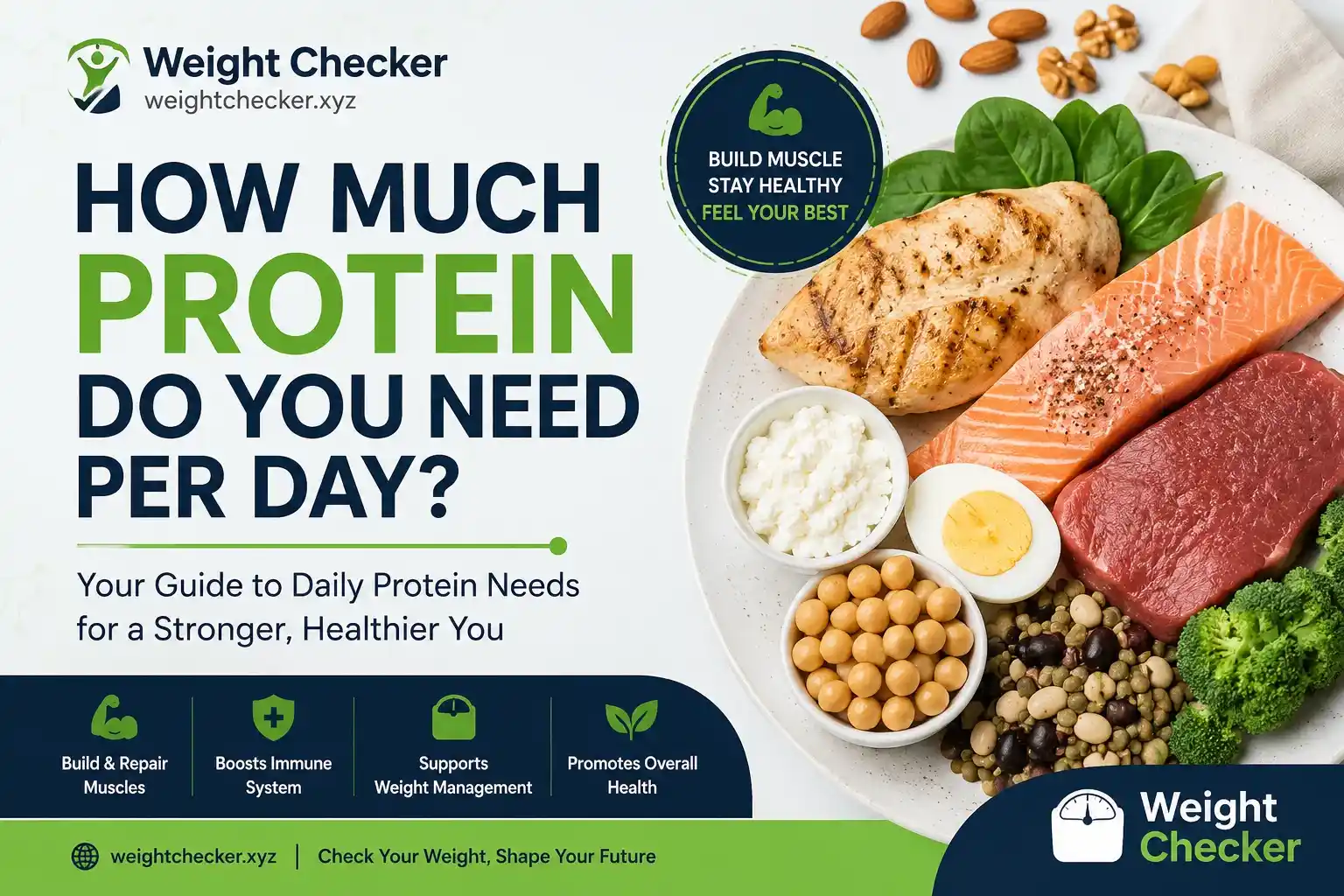
Protein is one of the most important nutrients your body needs every day. It helps build and repair muscles, supports healthy skin and hair, strengthens bones, produces enzymes and hormones, and keeps your immune system working properly.
Many people wonder, “How much protein do you need per day?” The answer depends on factors such as your body weight, age, activity level, pregnancy, and fitness goals. Eating the right amount of protein can improve overall health while supporting muscle maintenance, weight management, and recovery.
At Weight Checker (weightchecker.xyz), we believe understanding your daily nutrition needs is an important step toward achieving a healthier lifestyle.
Why Is Protein Important?
Protein is made up of amino acids, which are often called the building blocks of the body. Your body uses protein to:
- Build and repair muscles
- Support healthy bones
- Produce enzymes and hormones
- Create antibodies that fight infections
- Maintain healthy skin, hair, and nails
- Support tissue growth and repair
Without enough protein, your body cannot function efficiently.
How Much Protein Do You Need Per Day?
The Recommended Dietary Allowance (RDA) for healthy adults is:
0.8 grams of protein per kilogram of body weight
or
0.36 grams per pound of body weight
This amount is enough to meet the basic nutritional needs of most adults.
Quick Examples
| Body Weight | Daily Protein Needed |
| 110 lb (50 kg) | 40 g |
| 140 lb (64 kg) | 51–53 g |
| 165 lb (75 kg) | 60 g |
| 180 lb (82 kg) | 66 g |
| 220 lb (100 kg) | 80 g |
These values are general recommendations. Individual needs may vary.
Protein Needs by Activity Level
Your activity level plays a major role in determining protein requirements.
Sedentary Adults
If you exercise very little, the RDA of 0.8 g per kg is generally sufficient.
Active Adults
People who exercise regularly often benefit from more protein to support muscle recovery and performance.
Athletes and Bodybuilders
Strength training and endurance athletes usually require higher protein intake because of increased muscle repair and growth.
Pregnant Women
Pregnancy increases protein requirements because protein supports:
- Baby’s growth
- Placenta development
- Increased blood supply
- Breast tissue development
Many experts recommend 75–100 grams of protein per day during pregnancy. Always consult your healthcare provider for personalized advice.
Can Eating More Protein Be Beneficial?
Higher protein intake may provide several benefits when combined with a balanced diet.
Potential advantages include:
- Better muscle maintenance
- Improved recovery after exercise
- Increased feeling of fullness
- Support for healthy aging
- Easier weight management
However, more protein is not always better. A balanced diet remains the healthiest approach.
Best Sources of Protein
Choosing nutrient-rich protein foods is just as important as meeting your daily protein target.
Animal Protein Sources
- Chicken breast
- Turkey
- Salmon
- Tuna
- Trout
- Haddock
- Greek yogurt
- Cottage cheese
- Eggs
- Milk
Plant Protein Sources
- Beans
- Lentils
- Chickpeas
- Peas
- Nuts
- Seeds
- Whole grains
- Soy products
Plant-based proteins also provide fiber, vitamins, minerals, and antioxidants that support overall health.
Think About the Whole Protein Package
When selecting protein foods, don’t focus only on the protein content.
Choose foods that are:
- Low in saturated fat
- Rich in vitamins and minerals
- Low in added sugars
- Minimally processed
- High in overall nutritional value
For example, grilled fish is generally a healthier choice than processed meat because it provides protein along with heart-healthy nutrients.
Does Protein Help With Weight Loss?
Protein can be helpful during weight loss because it:
- Keeps you feeling full longer
- Helps preserve lean muscle
- May reduce unnecessary snacking
- Supports metabolism while losing weight
However, protein alone is not a magic solution. Successful weight loss also depends on:
- Total calorie intake
- Regular physical activity
- Good sleep
- Healthy eating habits
- Consistency over time
Tips to Meet Your Daily Protein Goal
Try these simple habits:
- Include protein in every meal.
- Eat a variety of animal and plant protein foods.
- Choose lean meats whenever possible.
- Add Greek yogurt to breakfast.
- Snack on nuts or cottage cheese.
- Include beans in soups and salads.
- Drink enough water throughout the day.
- Balance protein with fruits, vegetables, and whole grains.
Final Thoughts
Knowing how much protein you need per day is an important part of maintaining good health. While the general recommendation for adults is 0.8 grams of protein per kilogram of body weight, your ideal intake depends on your age, activity level, health status, and personal goals.
Instead of simply eating more protein, focus on choosing high-quality protein sources that provide additional vitamins, minerals, and other beneficial nutrients. Combined with a balanced diet and regular exercise, the right amount of protein can support muscle health, weight management, and overall well-being.
For more health guides, nutrition calculators, and wellness tools, visit Weight Checker at weightchecker.xyz.
Frequently Asked Questions
How much protein do I need per day to build muscle?
People who perform regular strength training generally require more protein than sedentary adults. Combined with resistance exercise, adequate protein supports muscle growth and recovery.
Is too much protein harmful?
Most healthy people can safely consume moderate amounts of protein as part of a balanced diet. Extremely high-protein diets may not be suitable for everyone, especially those with certain medical conditions. Consult your healthcare provider if you have concerns.
Which protein source is the healthiest?
There is no single best source. A combination of lean meats, fish, dairy, beans, lentils, nuts, seeds, and whole grains provides excellent nutrition.
Can I get enough protein without eating meat?
Yes. Plant-based foods such as beans, lentils, soy products, nuts, seeds, and whole grains can provide sufficient protein when consumed as part of a balanced diet.
Should I eat protein at every meal?
Including protein with each meal may help support muscle maintenance, improve satiety, and distribute protein intake evenly throughout the day.