
One of the most common nutrition questions is “How many calories should I eat?” The answer depends on several personal factors, including your age, gender, height, weight, activity level, and health goals.
Whether you’re trying to lose weight, gain muscle, or maintain your current weight, understanding your daily calorie needs is the first step toward success.
At Weight Checker (weightchecker.xyz), we help you make informed health decisions using easy-to-use calculators and evidence-based information. This guide explains everything you need to know about daily calorie intake and how to estimate your ideal calorie target.
What Are Calories?
Calories are units of energy that your body uses to perform every function, including:
- Breathing
- Walking
- Exercising
- Digesting food
- Thinking
- Sleeping
- Maintaining body temperature
Every food and drink contains calories that provide your body with energy.
If you consistently consume more calories than you burn, you’ll likely gain weight. If you eat fewer calories than you burn, you’ll generally lose weight.
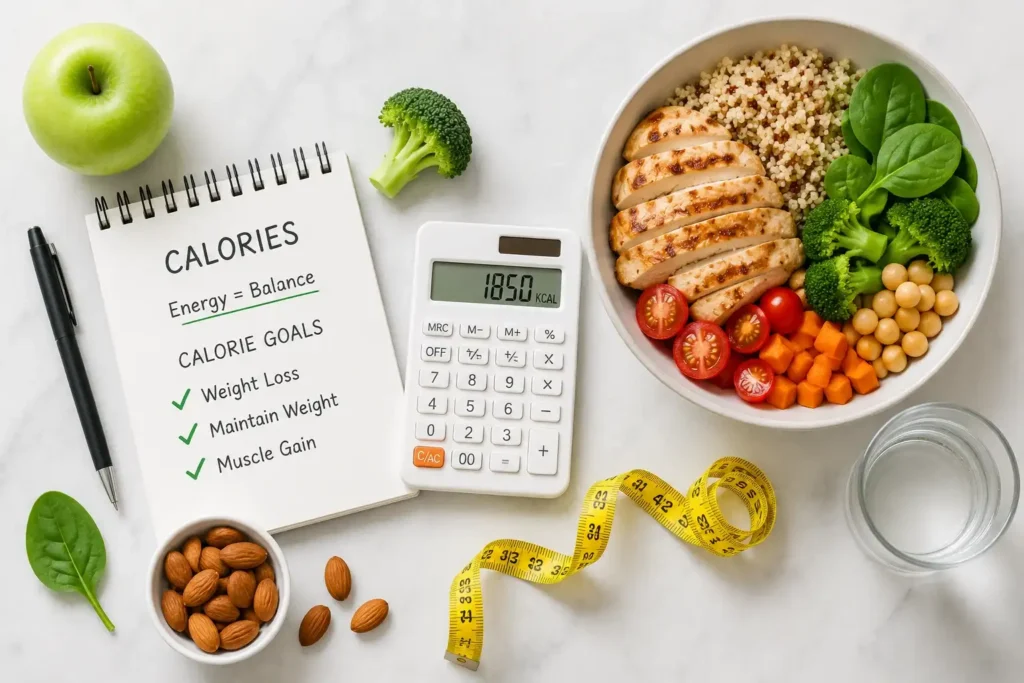
How Many Calories Should I Eat?
There is no single number that works for everyone.
Your daily calorie needs depend on:
- Age
- Sex
- Height
- Weight
- Activity level
- Body composition
- Metabolism
- Health conditions
- Fitness goals
Most adults require somewhere between:
| Person | Approximate Calories |
| Adult Women | 1,800–2,400 calories/day |
| Adult Men | 2,200–3,000 calories/day |
These are general estimates and should not replace personalized calculations.
Factors That Affect Daily Calorie Needs
1. Age
As you get older, metabolism generally slows down, meaning your body may require fewer calories.
2. Gender
Men usually require more calories because they often have more muscle mass and a larger body size.
3. Height and Weight
Larger bodies require more energy to function.
4. Activity Level
The more active you are, the more calories your body burns.
Activity levels include:
- Sedentary (little or no exercise)
- Lightly active
- Moderately active
- Very active
- Extra active
5. Your Goal
Your calorie target changes depending on whether you want to:
- Lose fat
- Maintain weight
- Build muscle
- Improve athletic performance
Daily Calorie Recommendations by Goal
Weight Loss
To lose weight, you need a calorie deficit.
A safe recommendation is reducing your intake by approximately 300–500 calories per day, which can support gradual, sustainable weight loss for many people.
Avoid extremely low-calorie diets unless recommended by a healthcare professional.
Weight Maintenance
To maintain your weight, eat approximately the same number of calories that your body burns each day.
Muscle Gain
Building muscle generally requires:
- A moderate calorie surplus
- Strength training
- Adequate protein intake
- Consistent recovery
Many people increase daily intake modestly while monitoring progress.
How to Calculate Your Daily Calories
Daily calorie needs are usually estimated in two steps.
Step 1: Calculate Your BMR
Your Basal Metabolic Rate (BMR) is the number of calories your body burns at complete rest.
Step 2: Calculate Your TDEE
Your Total Daily Energy Expenditure (TDEE) estimates how many calories you burn in an average day after accounting for physical activity.
Your TDEE is typically used to determine your calorie target.
Tip: Use the calorie and TDEE calculators on Weight Checker to receive a personalized estimate in seconds.
Average Daily Calories by Activity Level
| Activity Level | Women | Men |
| Sedentary | 1,600–2,000 | 2,000–2,400 |
| Lightly Active | 1,800–2,200 | 2,200–2,600 |
| Moderately Active | 2,000–2,400 | 2,400–2,800 |
| Very Active | 2,200–2,800 | 2,800–3,200+ |
Remember these are estimates, not exact prescriptions.
What Happens If You Eat Too Many Calories?
Consistently eating more calories than your body uses may lead to:
- Weight gain
- Increased body fat
- Higher risk of obesity
- Elevated blood pressure
- Increased risk of type 2 diabetes
- Heart disease risk over time
What Happens If You Eat Too Few Calories?
Eating too little may result in:
- Fatigue
- Muscle loss
- Slower metabolism
- Nutrient deficiencies
- Poor workout performance
- Increased hunger
- Difficulty maintaining weight loss
Healthy Ways to Manage Your Calories
Instead of focusing only on numbers, prioritize food quality.
Choose:
- Lean protein
- Whole grains
- Vegetables
- Fruits
- Healthy fats
- Low-fat dairy
- Plenty of water
Limit:
- Sugary drinks
- Ultra-processed foods
- Fried foods
- Excess sweets
- High-calorie snacks with low nutritional value
Tips to Reach Your Calorie Goals
- Track your meals consistently.
- Eat enough protein.
- Include fiber-rich foods.
- Stay hydrated.
- Exercise regularly.
- Get enough sleep.
- Monitor your progress every few weeks.
- Adjust calories based on results.
Common Mistakes People Make
Many people:
- Guess portion sizes.
- Ignore drinks and snacks.
- Eat too little while dieting.
- Overestimate calories burned during exercise.
- Focus only on calories instead of nutrition.
- Frequently change diets before seeing results.
Consistency matters more than perfection.
Why Use Weight Checker’s Calorie Tools?
At Weight Checker, we provide easy-to-use health calculators that help estimate your daily calorie needs based on your personal information.
Our tools can help you:
- Estimate daily calorie intake
- Calculate TDEE
- Calculate BMR
- Estimate BMI
- Track health goals
- Make informed nutrition decisions
These tools are designed for educational purposes and should complement not replace professional medical advice.
Conclusion
Understanding how many calories you should eat is the foundation of successful weight management. There is no universal calorie target because everyone’s body, lifestyle, and goals are different.
By estimating your daily calorie needs using your BMR and TDEE, you can make informed decisions whether your goal is weight loss, maintenance, or muscle gain.
Use the free health calculators on Weight Checker (weightchecker.xyz) to estimate your calorie needs and take the guesswork out of your nutrition journey.
Frequently Asked Questions (FAQs)
How many calories should I eat to lose weight?
Many adults aim for a modest calorie deficit of around 300–500 calories per day, though the right amount depends on your individual energy needs.
Is 2,000 calories a day enough?
For some adults, yes. However, calorie needs vary depending on age, body size, activity level, and personal goals.
How many calories should I eat to gain muscle?
Muscle gain typically requires a moderate calorie surplus combined with strength training and adequate protein intake.
How can I calculate my exact calorie needs?
The most accurate estimate comes from calculating your BMR and TDEE using your age, sex, height, weight, and activity level. Weight Checker’s calculators can help you estimate these values.
Does exercise increase calorie needs?
Yes. More physical activity generally increases the number of calories your body burns, which may increase your daily calorie requirements.
Can eating too few calories slow metabolism?
Long-term, severe calorie restriction may reduce energy expenditure and contribute to muscle loss. Sustainable calorie targets are generally more effective.