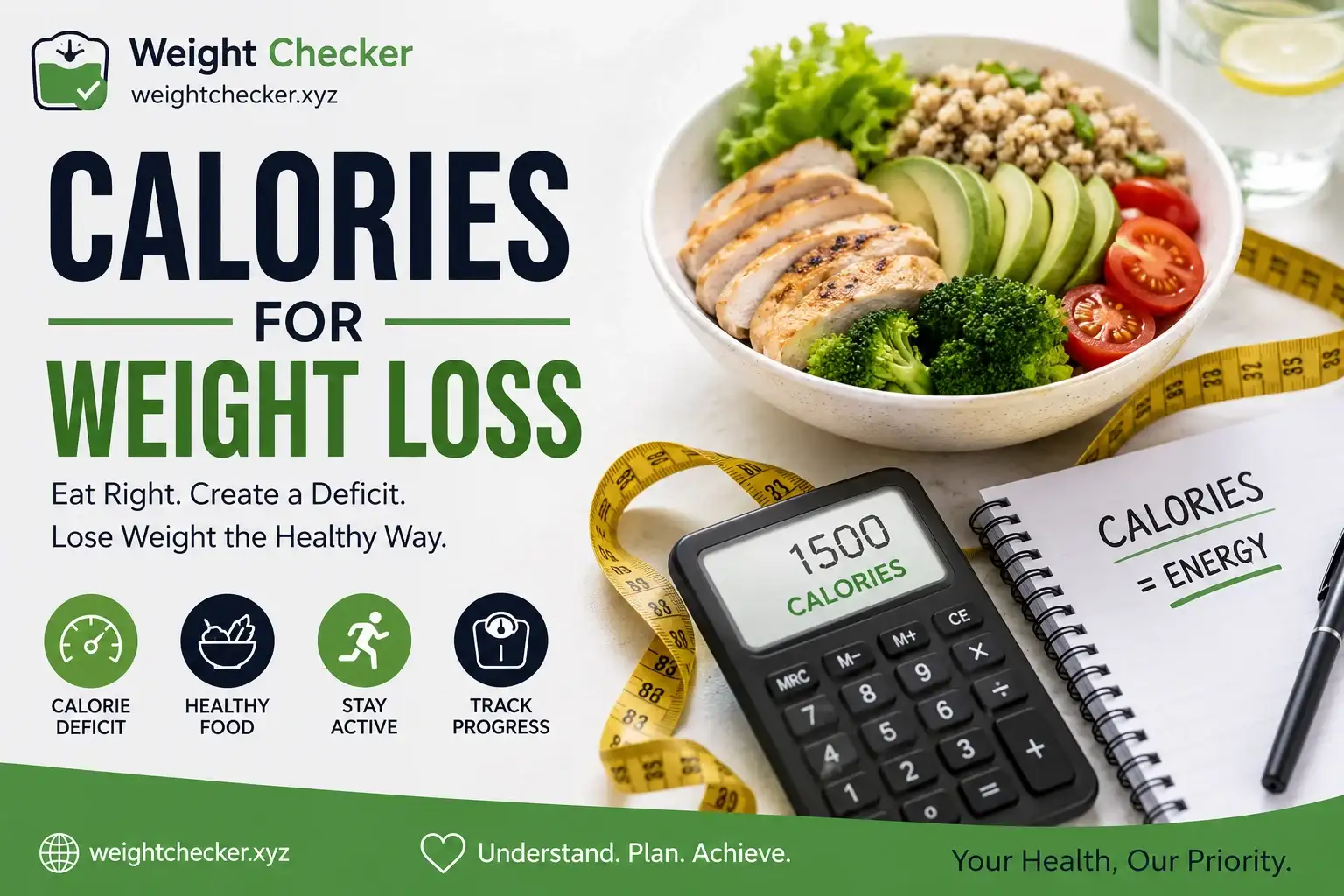
Losing weight isn’t about starving yourself, it’s about eating the right number of calories consistently. Understanding calories is the foundation of every successful weight loss plan. Whether your goal is to lose a few pounds or make a long term lifestyle change, knowing your calorie needs helps you achieve sustainable results.
At Weight Checker (weightchecker.xyz), we provide accurate health calculators and easy to understand guides to help you make informed decisions about your health. This guide explains everything you need to know about calories for weight loss, including how many calories you should eat, how to calculate your calorie deficit, and practical tips to lose weight safely.
What Are Calories?
Calories are units of energy that your body uses to perform every function, including:
- Breathing
- Walking
- Exercising
- Digesting food
- Maintaining body temperature
- Supporting organ function
Every food and drink contains calories. Your body burns calories throughout the day, even while resting.
When you consume:
- More calories than you burn: You gain weight.
- Fewer calories than you burn: You lose weight.
- The same number of calories you burn: Your weight stays the same.

Why Calories Matter for Weight Loss
Weight loss happens when you create a calorie deficit.
A calorie deficit means your body burns more calories than you eat. To make up the difference, your body uses stored fat for energy.
For example:
- Daily calories burned: 2,300
- Calories eaten: 1,800
Calorie deficit = 500 calories
Maintaining this deficit consistently can lead to gradual, healthy fat loss.
How Many Calories Should You Eat to Lose Weight?
There isn’t one perfect number because everyone’s body is different.
Your calorie needs depend on:
- Age
- Gender
- Height
- Weight
- Activity level
- Body composition
- Weight loss goal
General recommendations:
| Goal | Daily Calorie Deficit |
| Slow weight loss | 250 calories |
| Healthy weight loss | 500 calories |
| Faster (under supervision) | 750–1,000 calories |
A 500-calorie daily deficit is commonly recommended because it may lead to approximately 1 pound (0.45 kg) of weight loss per week.
Calculate Your Weight Loss Calories
Instead of guessing, calculate your daily calorie needs.
A good approach is:
- Calculate your Basal Metabolic Rate (BMR).
- Calculate your Total Daily Energy Expenditure (TDEE).
- Subtract your desired calorie deficit.
For example:
- TDEE: 2,400 calories
- Weight-loss deficit: 500 calories
Daily calorie target:
2,400 − 500 = 1,900 calories
You can use the calculators available on Weight Checker (weightchecker.xyz) to estimate your calorie needs more accurately.
Safe Calorie Deficit for Weight Loss
A moderate calorie deficit is more effective than an extreme one.
Benefits include:
- Better energy levels
- Easier to maintain
- Preserves muscle mass
- Reduces hunger
- Supports long-term success
Avoid crash diets that severely restrict calories because they can:
- Slow metabolism
- Increase muscle loss
- Cause fatigue
- Lead to nutrient deficiencies
- Increase the risk of regaining weight
Foods That Help You Stay Within Your Calories
Choosing filling, nutrient dense foods makes weight loss easier.
High-Protein Foods
- Chicken breast
- Eggs
- Greek yogurt
- Fish
- Cottage cheese
- Lentils
Protein helps preserve muscle while keeping you full longer.
High-Fiber Foods
- Vegetables
- Fruits
- Oats
- Brown rice
- Beans
- Whole grains
Fiber improves fullness and supports digestion.
Healthy Fats
- Avocados
- Nuts
- Seeds
- Olive oil
Healthy fats are calorie dense, so portion control is important.
Tips to Reduce Calories Without Feeling Hungry
Try these simple strategies:
- Eat more vegetables.
- Increase protein intake.
- Drink water before meals.
- Replace sugary drinks with water.
- Limit processed snacks.
- Eat slowly.
- Control portion sizes.
- Cook more meals at home.
- Get enough sleep.
- Stay physically active.
Small daily changes often produce better long term results than drastic diets.
Exercise and Calories
Exercise increases the number of calories your body burns.
Good options include:
- Walking
- Running
- Cycling
- Swimming
- Strength training
- HIIT workouts
Combining a calorie-controlled diet with regular exercise usually produces better results than either approach alone.
Common Weight Loss Mistakes
Avoid these mistakes:
- Eating too few calories
- Skipping meals regularly
- Drinking sugary beverages
- Ignoring portion sizes
- Not eating enough protein
- Expecting rapid results
- Following fad diets
- Not tracking calorie intake
Consistency is more important than perfection.
How Fast Can You Lose Weight?
Healthy weight loss is generally:
- 0.5–1 kg (1–2 pounds) per week
Faster weight loss is possible for some people, especially at the beginning, but gradual progress is usually more sustainable and easier to maintain.
Should You Count Calories?
Counting calories isn’t required for everyone, but it can help if you:
- Are just starting your weight loss journey
- Frequently overeat
- Have reached a weight-loss plateau
- Want a better understanding of portion sizes
Many people eventually learn to estimate portions without tracking every meal.
Daily Habits That Support Weight Loss
Healthy habits make calorie control easier:
- Plan meals in advance.
- Eat breakfast if it helps you manage hunger.
- Include protein in every meal.
- Choose whole foods most of the time.
- Stay hydrated.
- Exercise regularly.
- Sleep 7–9 hours each night.
- Manage stress.
Why Use Weight Checker?
At Weight Checker (weightchecker.xyz), you’ll find practical tools to support your health journey, including calculators that can help estimate calorie needs, TDEE, BMI, and more. These tools make it easier to set realistic goals and monitor your progress with confidence.
Final Thoughts
Understanding calories for weight loss is one of the most effective ways to take control of your health. By creating a sensible calorie deficit, eating nutritious foods, staying active, and remaining consistent, you can lose weight safely and maintain your results over time.
Rather than following restrictive fad diets, focus on building healthy habits that fit your lifestyle. For personalized estimates of your daily calorie needs and other health metrics, visit Weight Checker (weightchecker.xyz) and use its calculators to support your weight management journey.
Frequently Asked Questions (FAQs)
How many calories should I eat to lose weight?
It depends on your age, weight, height, activity level, and goals. A common approach is to eat about 500 fewer calories than your body burns each day.
Is 1,200 calories enough for weight loss?
For some people, 1,200 calories may be appropriate, but it can be too low for many adults. Individual calorie needs vary, so it’s best to base your intake on your estimated energy requirements.
How many calories should I burn daily?
There is no universal target. Your body naturally burns calories throughout the day, and additional activity increases that amount. Your TDEE is a useful estimate of your total daily calorie expenditure.
Can I lose weight without exercising?
Yes. Weight loss is possible through a calorie deficit alone, although combining healthy eating with exercise offers additional health benefits and can help preserve muscle mass.
Does eating fewer calories always mean faster weight loss?
No. Extremely low-calorie diets can slow your metabolism, increase muscle loss, and be difficult to maintain. A moderate calorie deficit is generally more sustainable.
Should I count calories forever?
Not necessarily. Many people count calories temporarily to understand portion sizes and eating habits before transitioning to a more intuitive approach.