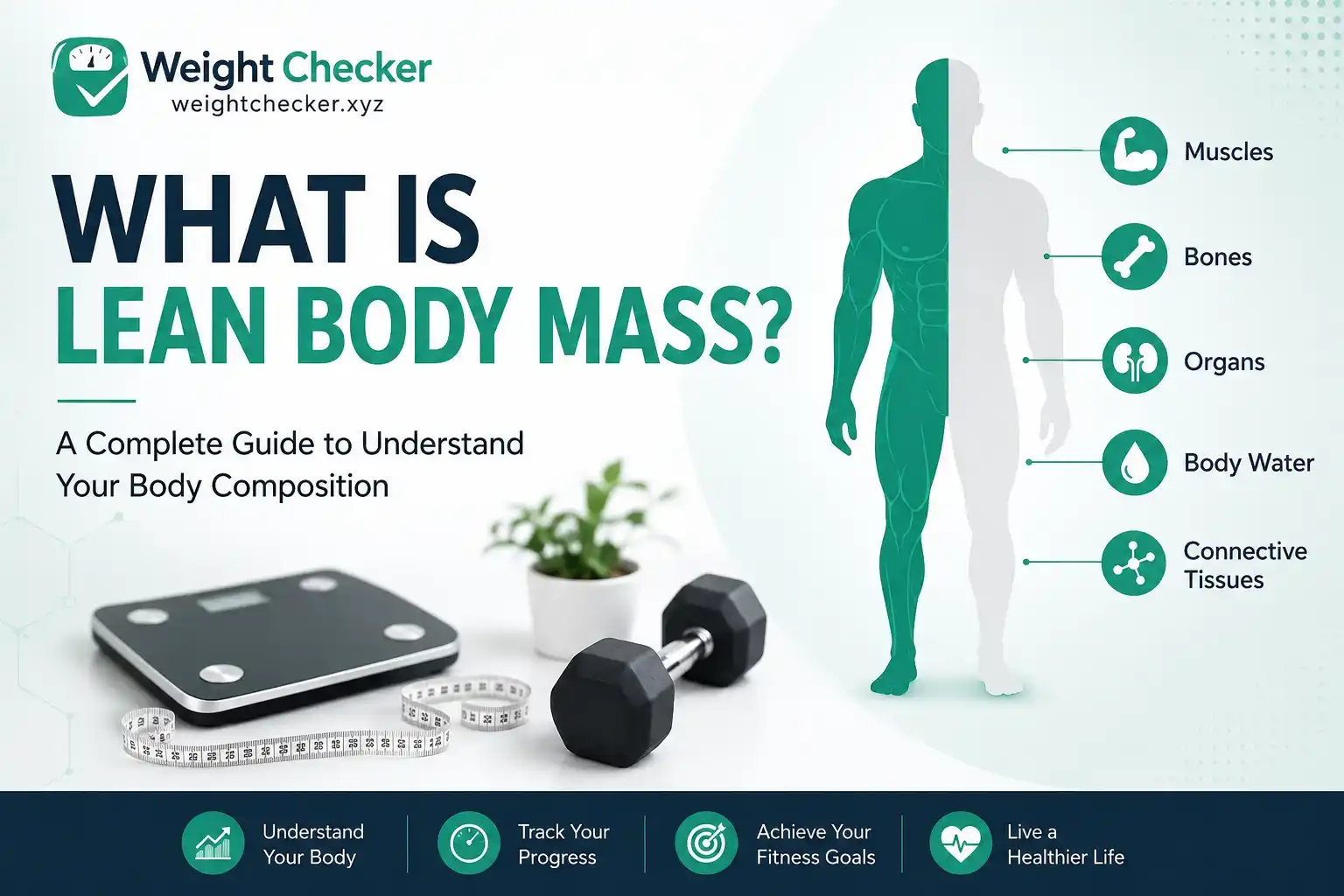
Lean body mass (LBM) is the total weight of everything in your body except stored body fat. It includes your muscles, bones, organs, water, connective tissues, and other non-fat tissues.
Understanding what lean body mass is can help you look beyond the number on the weighing scale. Two people can have the same body weight but very different amounts of muscle, fat, and lean tissue.
For people working on weight loss, muscle gain, or overall fitness, lean body mass is an important part of understanding body composition.
What Is Lean Body Mass?
Lean body mass is your total body weight minus your body fat mass.
In simple terms:
Lean Body Mass = Total Body Weight − Fat Mass
For example, if a person weighs 70 kg and has 20% body fat:
- Body weight = 70 kg
- Body fat = 14 kg
- Lean body mass = 56 kg
So, the person’s estimated lean body mass is 56 kg.
Lean body mass is sometimes used interchangeably with “fat-free mass,” although technically the terms can differ depending on how body composition is measured.
What Does Lean Body Mass Include?
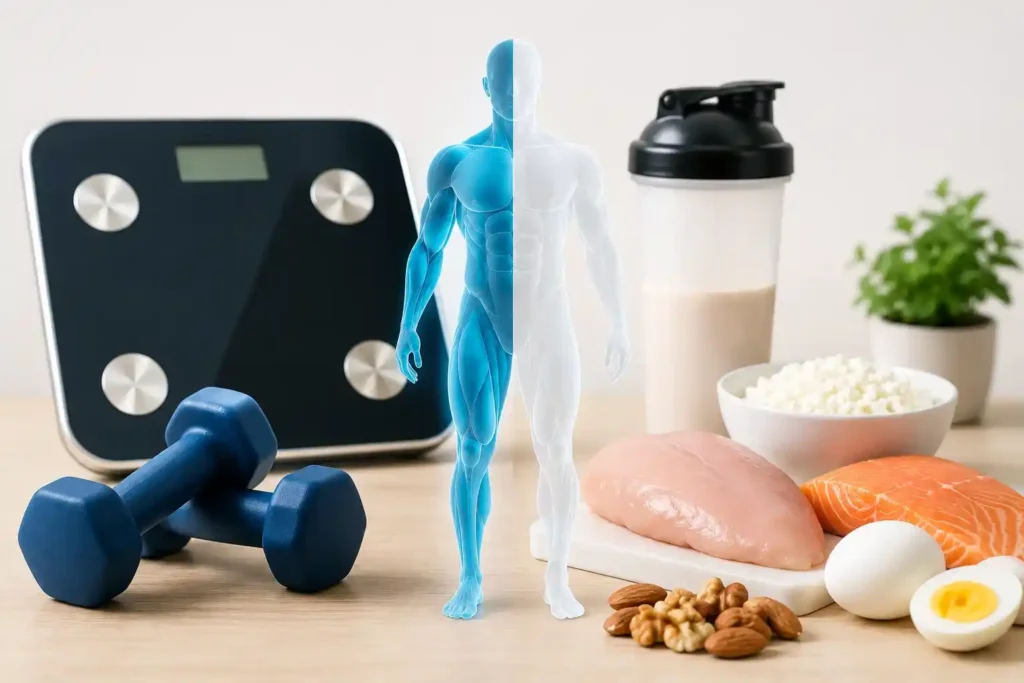
Lean body mass includes almost everything in your body that isn’t stored fat.
It can include:
- Skeletal muscle
- Bones
- Organs
- Body water
- Connective tissues
- Tendons and ligaments
- Other non-fat tissues
Muscle is an important component of lean body mass, but lean body mass is not the same thing as muscle mass.
This distinction is important because a person can increase or decrease lean body mass through changes in water, glycogen, muscle tissue, and other components.
Lean Body Mass vs. Muscle Mass
One of the most common questions about lean body mass is whether it means the same thing as muscle mass.
It does not.
Muscle mass refers primarily to your muscle tissue, while lean body mass includes muscle plus other non-fat components of the body.
For example, if your body contains:
- 30 kg of muscle
- 10 kg of bone and organs
- 15 kg of water and other lean tissues
Your total lean body mass would be greater than your muscle mass.
Therefore, you should not assume that every increase in lean body mass represents new muscle.
Why Is Lean Body Mass Important?
Knowing your lean body mass can provide more information about your body composition than body weight alone.
1. It Provides More Context Than Body Weight
Your scale tells you how much you weigh, but it doesn’t tell you what that weight consists of.
Tracking lean body mass alongside body weight and body-fat percentage can provide a better picture of changes in your body.
2. It Helps With Fitness Goals
If your goal is to build muscle, maintaining or increasing lean body mass can be useful when evaluating your progress.
However, measurements should be interpreted over time rather than based on a single reading.
3. It Can Help During Weight Loss
During weight loss, the goal is generally to reduce excess body fat while maintaining as much lean tissue as reasonably possible.
Tracking body composition can therefore provide additional information beyond simply watching the number on the scale.
4. It Helps You Understand Body Composition
Body composition describes how much of your body consists of fat and non-fat components.
Lean body mass is one part of that picture.
How Do You Calculate Lean Body Mass?
There are several ways to estimate lean body mass.
The simplest approach is to use your body weight and estimated body-fat percentage.
Basic Formula
Lean Body Mass = Body Weight × (1 − Body Fat Percentage)
For example, suppose someone weighs 80 kg and has an estimated body-fat percentage of 25%.
First, convert 25% to a decimal:
25% = 0.25
Then:
80 × (1 − 0.25) = 60 kg
The estimated lean body mass is therefore 60 kg.
This is an estimate because the accuracy depends heavily on how accurately body-fat percentage has been measured.
How Is Body Fat Percentage Measured?
Your estimated lean body mass depends on your estimated body-fat percentage, so the measurement method matters.
Common methods include:
- Skinfold measurements
- Bioelectrical impedance analysis (BIA)
- DEXA scans
- Hydrostatic weighing
- Air displacement measurements
- Other body-composition assessment methods
Different methods can produce different results. Even the same method can show changes caused by hydration, food intake, exercise, and other factors.
For that reason, it is usually more useful to look at trends over time rather than becoming concerned about a small change from one measurement to another.
What Is a Healthy Lean Body Mass?
There isn’t one universal number that represents a “healthy” lean body mass for everyone.
Lean body mass varies according to factors such as:
- Age
- Sex
- Height
- Body weight
- Genetics
- Muscle development
- Physical activity
- Body composition
A taller person will generally have more total lean mass than a shorter person, while someone with more muscular development may have considerably more lean mass than another person of the same height and weight.
Therefore, lean body mass should be interpreted in the context of your overall body composition and individual characteristics.
How Can You Increase Lean Body Mass?
If your goal is to increase lean body mass, building and maintaining muscle can be an important part of your strategy.
Focus on Resistance Training
Strength training provides a stimulus for your muscles to adapt and become stronger.
Common resistance exercises include:
- Squats
- Deadlifts
- Push-ups
- Rows
- Pull-ups
- Lunges
- Resistance-machine exercises
A consistent training program is generally more important than constantly changing exercises.
Eat Enough Protein
Protein provides amino acids that your body needs to build and repair tissues.
Good protein sources include:
- Eggs
- Chicken
- Fish
- Dairy products
- Beans
- Lentils
- Soy foods
- Lean meats
Your overall nutritional needs depend on your body, activity level, and goals.
Get Enough Calories and Nutrients
Building muscle generally requires adequate energy and nutrients.
A balanced diet containing protein, carbohydrates, healthy fats, vitamins, minerals, and sufficient fluids can support training and recovery.
Prioritize Recovery
Muscle development doesn’t happen only during workouts. Recovery is also important.
Adequate sleep, rest days, hydration, and appropriate training volume can all contribute to a sustainable fitness routine.
Can You Lose Fat Without Losing Lean Body Mass?
It is possible to reduce body fat while maintaining a substantial amount of lean mass, although results vary from person to person.
Strategies that may help include:
- Using a moderate calorie deficit
- Eating adequate protein
- Performing resistance training
- Getting enough sleep
- Avoiding unnecessarily aggressive dieting
- Tracking progress over time
The objective during fat loss is often body recomposition improving the ratio of lean tissue to body fat rather than focusing exclusively on scale weight.
Lean Body Mass and Weight Loss
Lean body mass is particularly useful when evaluating weight-loss progress.
Imagine two people each lose 5 kg.
Person A loses mostly body fat while maintaining most of their lean tissue.
Person B loses a combination of fat and lean tissue.
Both people have lost the same amount of weight, but their changes in body composition are different.
This is why body weight alone doesn’t always tell the complete story.
For people interested in monitoring weight, body composition, and related measurements, Weight Checker can be used as part of a broader approach to understanding personal health and fitness metrics.
Is Higher Lean Body Mass Always Better?
Not necessarily.
Having more lean body mass can be beneficial, particularly when it reflects healthy levels of muscle and physical function. However, there isn’t a single ideal lean body mass number for everyone.
Your appropriate body composition depends on your:
- Height
- Age
- Sex
- Genetics
- Fitness goals
- Lifestyle
- Overall health
Rather than trying to maximize lean body mass at all costs, focus on maintaining a healthy and functional body composition.
Final Thoughts
So, what is lean body mass? It is the weight of everything in your body other than stored fat. It includes muscle, bones, organs, water, connective tissue, and other non-fat components.
Understanding lean body mass can help you interpret changes in your body more accurately than relying on scale weight alone. Whether your goal is weight loss, muscle gain, or improved fitness, looking at body composition can give you useful additional context.
Remember that body-composition measurements are estimates and can vary depending on the measurement method. Focus on long-term trends, consistent habits, and overall health rather than a single number.
Weight Checker aims to make weight and body-composition information easier to understand so you can make more informed decisions about your fitness journey.
Frequently Asked Questions About Lean Body Mass
What is lean body mass in simple terms?
Lean body mass is the weight of your body excluding stored body fat. It includes muscle, bones, organs, body water, and other non-fat tissues.
Is lean body mass the same as muscle mass?
No. Muscle mass is one component of lean body mass. Lean body mass also includes bones, organs, water, connective tissue, and other non-fat components.
How do I calculate lean body mass?
A basic estimate can be calculated using body weight and body-fat percentage:
LBM = Body Weight × (1 − Body Fat Percentage)
For example, an 80-kg person with 25% body fat would have an estimated lean body mass of 60 kg.
Does lean body mass include water?
Yes. Body water is generally included in lean or fat-free body mass.
Can lean body mass increase while losing weight?
Yes. Depending on training, nutrition, starting body composition, and other factors, a person may lose body fat while maintaining or increasing lean tissue.
Is lean body mass more important than body weight?
Neither measurement tells the entire story. Body weight is useful, but lean body mass and body-fat percentage can provide additional information about body composition.
How can I maintain lean body mass while losing fat?
Resistance training, adequate protein intake, an appropriate calorie deficit, sufficient sleep, and good overall nutrition can help support lean mass during fat loss.
What is a good lean body mass for my height?
There is no single ideal number. Lean body mass varies based on height, sex, age, genetics, muscle development, and other factors.