Maintaining a healthy weight begins with understanding your Body Mass Index (BMI). Whether you’re trying to lose weight, gain muscle, or simply monitor your overall health, using reliable BMI resources can make a significant difference.
At Weight Checker (weightchecker.xyz), we provide simple, accurate, and easy-to-use BMI tools that help you assess your body weight and make informed health decisions. This guide explores the best BMI resources available, explains how to use them effectively, and highlights trusted organizations that provide evidence-based health information.
What Is BMI?
Body Mass Index (BMI) is a screening measurement that estimates whether your weight is appropriate for your height. It is one of the most commonly used methods for assessing weight status in adults.
BMI Formula
BMI = Weight (kg) ÷ Height² (m²)
For imperial units:
BMI = (Weight in pounds × 703) ÷ Height² (inches²)
Although BMI does not directly measure body fat, it serves as an excellent starting point for evaluating overall health.
Why Reliable BMI Resources Matter
Using trustworthy BMI resources helps you make better health decisions and avoid inaccurate calculations.
Benefits include
- Accurate BMI calculations
- Easy health monitoring
- Weight management planning
- Better understanding of healthy weight ranges
- Progress tracking over time
- Personalized health awareness
- Support for fitness goals
- Improved nutritional planning
Best BMI Resources You Should Use
1. BMI Calculator
A BMI calculator is the quickest way to determine your BMI score.
A good calculator should allow users to:
- Enter height and weight
- Choose metric or imperial units
- Receive instant BMI results
- Display BMI category
- Explain what the result means
Weight Checker offers a fast and easy BMI calculator suitable for everyday use.
2. BMI Chart
A BMI chart helps users understand where their BMI falls within standard weight categories.
Standard BMI Categories
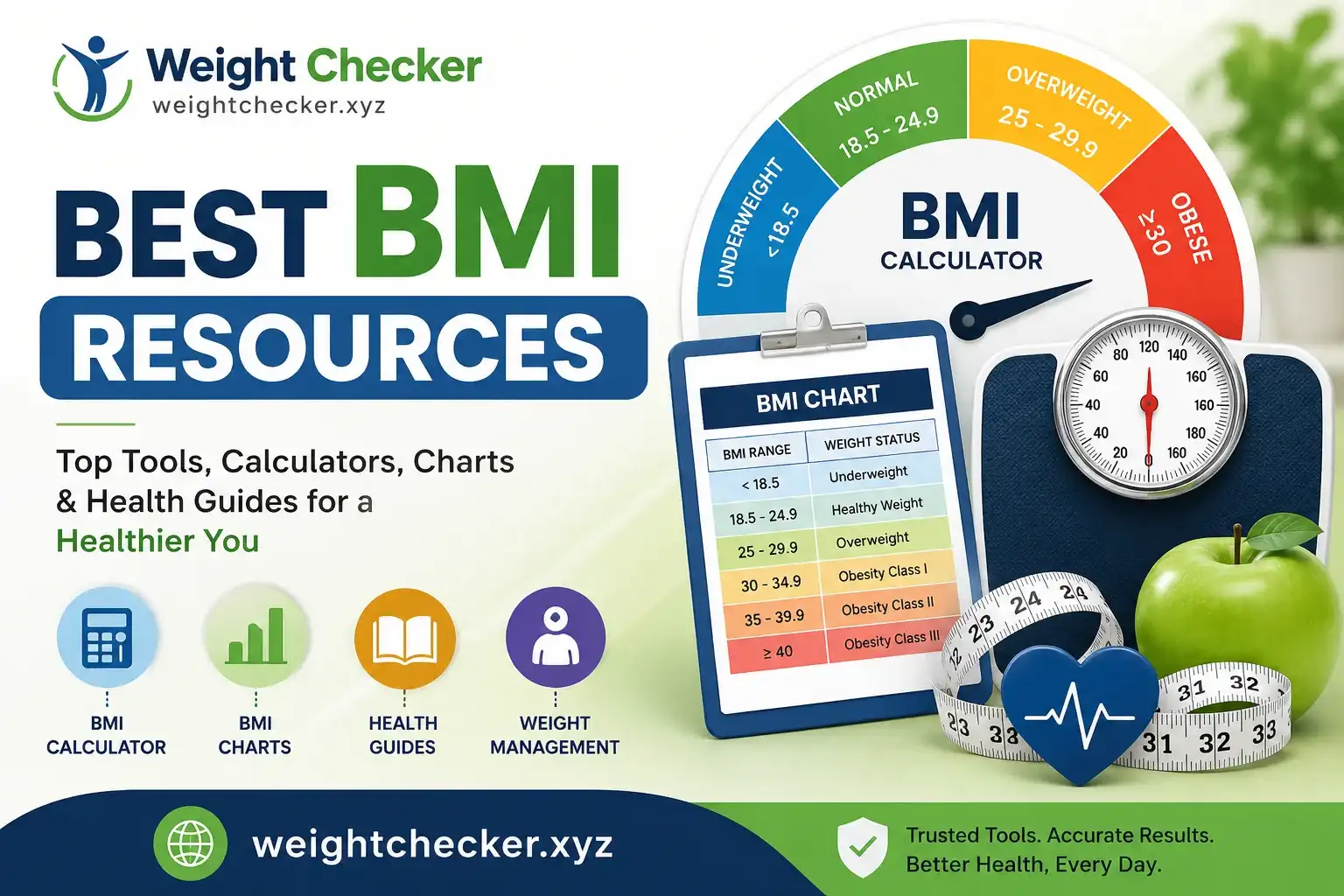
| BMI Range | Weight Status |
| Below 18.5 | Underweight |
| 18.5–24.9 | Healthy Weight |
| 25.0–29.9 | Overweight |
| 30.0–34.9 | Obesity Class I |
| 35.0–39.9 | Obesity Class II |
| 40.0 and above | Obesity Class III |
A BMI chart makes it easier to compare your score with internationally accepted ranges.
3. Healthy Weight Calculator
BMI alone doesn’t always tell the complete story.
A healthy weight calculator estimates:
- Ideal weight range
- Recommended body weight
- Weight goals
- Healthy BMI target
- Progress milestones
4. BMI for Men
Men generally have more lean muscle mass than women, but BMI categories remain the same.
Useful BMI resources for men include:
- Muscle mass information
- Fitness guidance
- Weight recommendations
- Healthy BMI ranges
- Obesity risk information
5. BMI for Women
Women often experience body composition changes due to age, pregnancy, and hormonal changes.
- Healthy BMI chart
- Weight management guides
- Pregnancy-related BMI information
- Age-related weight recommendations
6. Children’s BMI Calculator
Children require age- and sex-specific BMI percentiles instead of adult BMI categories.
Reliable children’s BMI resources provide:
- Growth percentile charts
- BMI-for-age calculations
- Pediatric health guidance
- Healthy growth monitoring
7. Weight Management Guides
The best BMI resources don’t stop at calculating BMI.
They also include guidance on:
- Healthy eating
- Physical activity
- Calorie balance
- Portion control
- Weight loss strategies
- Weight gain recommendations
- Lifestyle improvements
8. Body Composition Information
BMI is only one health indicator.
Other useful measurements include:
- Body fat percentage
- Waist circumference
- Waist-to-height ratio
- Lean muscle mass
- Visceral fat
- Basal Metabolic Rate (BMR)
- Total Daily Energy Expenditure (TDEE)
Combining these measurements provides a more complete picture of your overall health.
Trusted Health Organizations for BMI Information
For accurate and evidence-based health information, consult trusted organizations such as:
- World Health Organization (WHO)
- Centers for Disease Control and Prevention (CDC)
- National Institutes of Health (NIH)
- National Health Service (NHS)
These organizations publish BMI guidelines, obesity research, healthy weight recommendations, and public health resources.
How Weight Checker Helps You
At Weight Checker (weightchecker.xyz), our goal is to simplify health tracking through accurate and user-friendly tools.
Our resources include:
- Free BMI Calculator
- BMI Charts
- BMI Guides
- Weight Loss Articles
- Healthy Weight Information
- BMR Guides
- TDEE Resources
- Nutrition Tips
- Fitness Articles
- Educational Health Content
Whether you’re starting a fitness journey or monitoring long-term health, Weight Checker provides practical tools and educational content to support your goals.
Tips for Using BMI Resources Effectively
Follow these best practices:
- Measure your height accurately.
- Weigh yourself under consistent conditions.
- Use the same measurement units each time.
- Monitor BMI regularly rather than daily.
- Combine BMI with waist measurements.
- Consider body composition if you are highly muscular.
- Consult healthcare professionals for medical advice.
- Focus on long-term healthy habits instead of short-term changes.
Limitations of BMI
Although BMI is a useful screening tool, it has limitations.
BMI does not account for:
- Muscle mass
- Bone density
- Body fat distribution
- Age-related body composition changes
- Athletic body types
- Pregnancy
- Individual medical conditions
For a more complete health assessment, combine BMI with other measurements and professional medical guidance.
Who Should Use BMI Resources?
BMI resources are valuable for:
- Adults
- Students
- Fitness beginners
- Personal trainers
- Nutritionists
- Healthcare professionals
- Weight loss participants
- Individuals monitoring long-term health
Final Thoughts
BMI is one of the easiest ways to assess weight status, but it is most effective when combined with other health indicators such as waist circumference, body fat percentage, BMR, and TDEE. By using trusted resources and reliable tools like those available at Weight Checker (weightchecker.xyz), you can better understand your health, set realistic goals, and track your progress with confidence.
Frequently Asked Questions (FAQs)
What is the best BMI resource?
A reliable BMI resource includes an accurate calculator, BMI chart, healthy weight guide, and educational content. Weight Checker provides all these resources in one place.
Is BMI accurate?
BMI is an effective screening tool for most adults, but it should not be used as the only measure of health because it does not distinguish between muscle and fat.
What BMI is considered healthy?
A BMI between 18.5 and 24.9 is generally considered a healthy weight for most adults.
Can athletes rely on BMI?
Athletes often have higher muscle mass, which can increase BMI without indicating excess body fat. Additional body composition measurements are recommended.
How often should I check my BMI?
Checking your BMI every few weeks or monthly is sufficient for tracking long-term progress.
Is BMI different for men and women?
The BMI calculation is the same for adult men and women, although body composition differences may affect interpretation.
What should I do if my BMI is high?
Focus on healthy eating, regular physical activity, adequate sleep, and consult a healthcare professional for personalized guidance.
Can BMI measure body fat?
No. BMI estimates weight status based on height and weight but does not directly measure body fat percentage.